
Last updated September 20, 2026
Full 25-point door and opener safety check with every visit - springs, cables, rollers, tracks, and your LiftMaster or Chamberlain opener included
You get a price before we start. It does not change when the truck arrives.
 Before
 After
After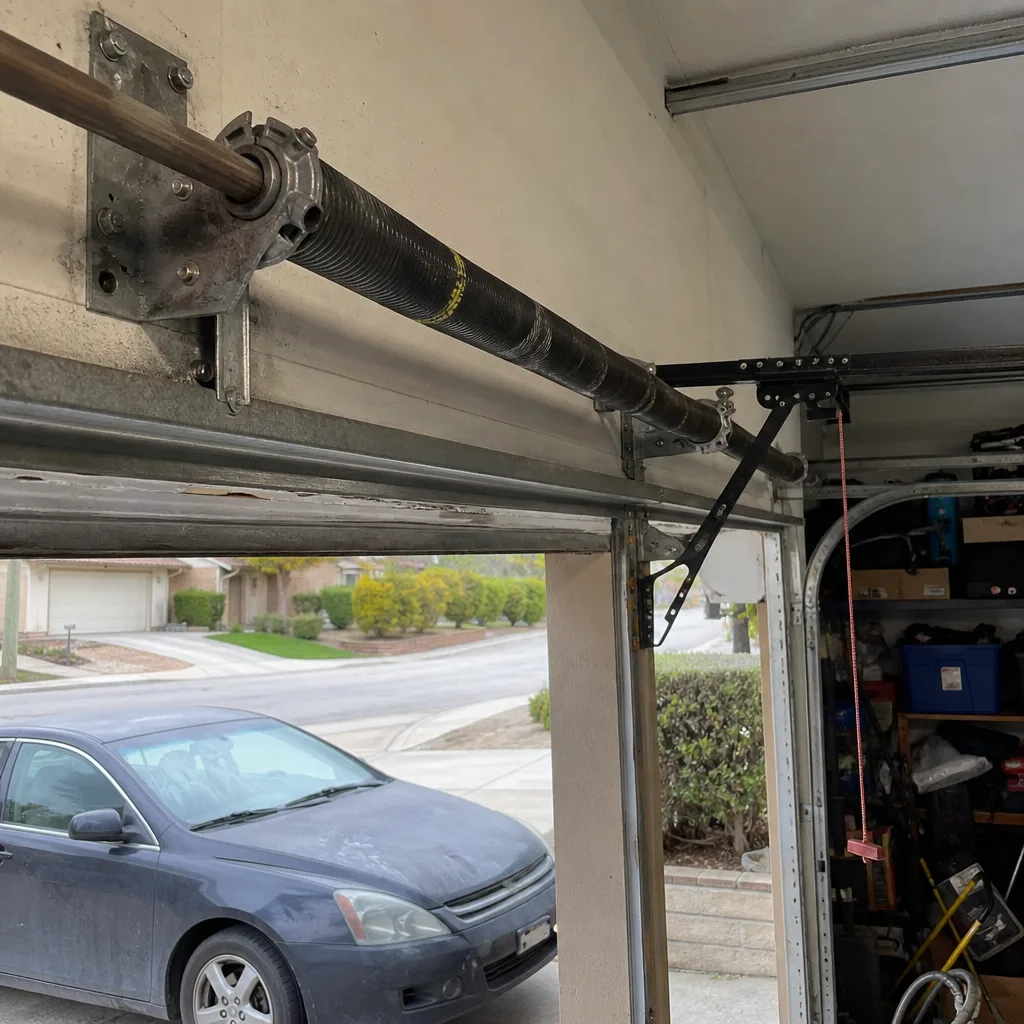 Before
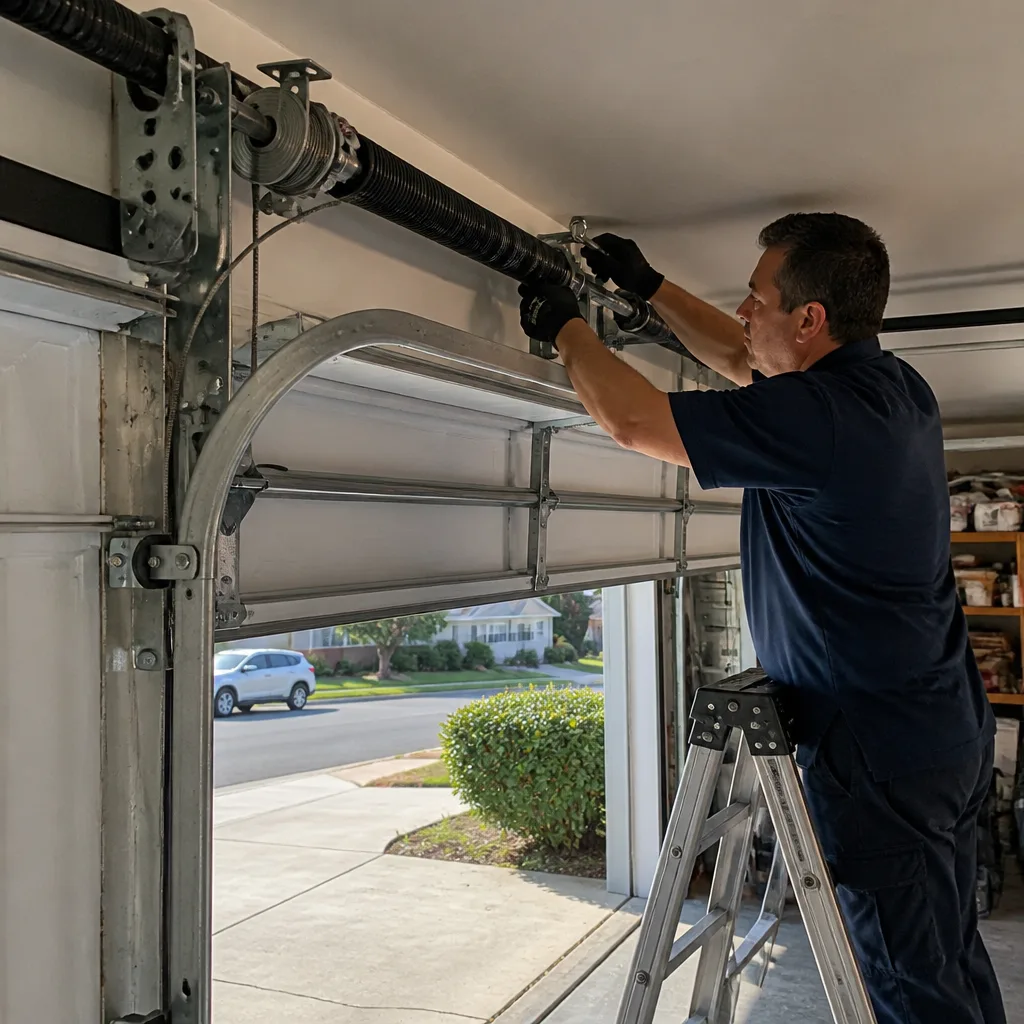 After
After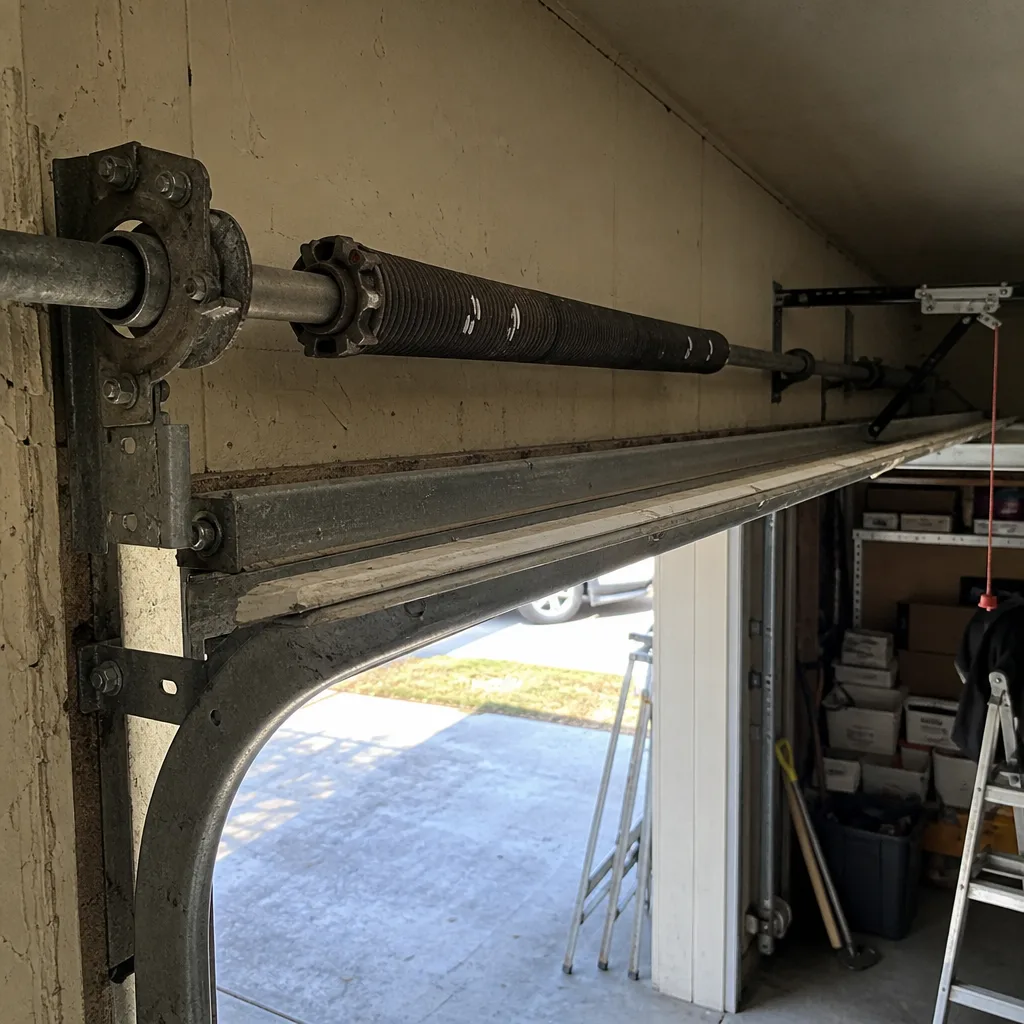 Before
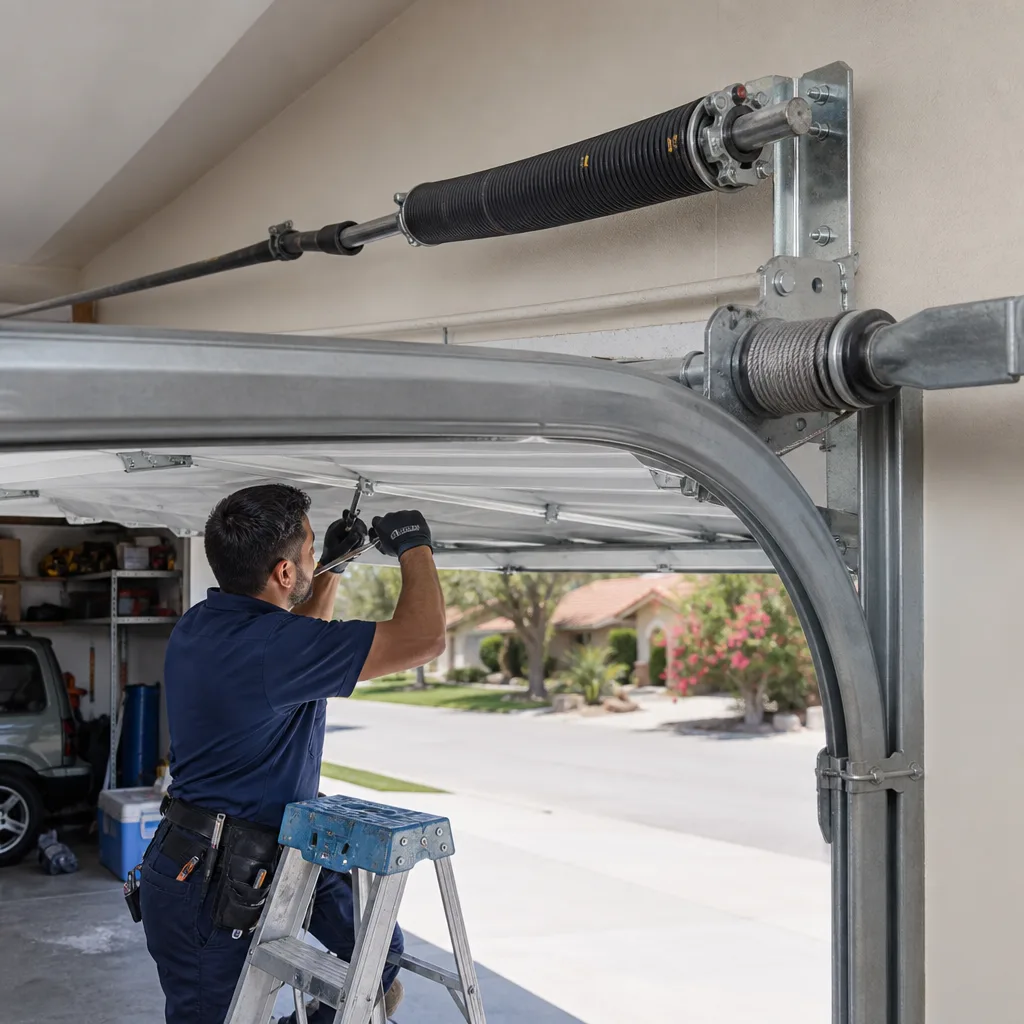 After
AfterDIY vs Professional Garage Door: The Simi Valley Homeowner’s Decision Guide
Here’s a number you won’t find on most garage door websites: a standard 7-foot residential torsion spring stores roughly 350 to 500 foot-pounds of torque when fully wound. That’s enough energy to break a forearm, open a scalp, or kill a person if the winding bar slips during release. But that physics fact applies to exactly one component on your garage door system, and it gets used as a rhetorical cudgel against every kind of homeowner maintenance, including tasks that are genuinely safe for you to do this weekend. This guide separates the three categories most contractors blur: what you can legally and safely do yourself in Simi Valley, what carries documented risk requiring specific tools, and what California code says requires a licensed professional. For more context on local requirements, see our Garage Door Permits, Codes & Inspections in CA: What You Need to Know. You’ll leave knowing exactly where your next project falls and what it actually costs in this market.
Quick Answer
For most Simi Valley homeowners, the right DIY tasks are limited to bottom seal replacement, weatherstripping, opener remote programming, and track lubrication. Spring work, cable replacement, and opener logic board diagnostics fall into a different risk category that warrants professional handling, and California permit requirements on new door installations or structural modifications require licensed contractor sign-off. The DIY-versus-professional decision is less about your skill level and more about which component you’re touching and what the code says about it.
Table of Contents
- The Three-Category Framework: What’s Actually Yours to Touch
- Why the Torsion Spring Is a Different Risk Category Than Everything Else
- What California Code and Simi Valley Permits Say About Garage Door Work
- Safe DIY Tasks: What You Can Do This Weekend (With Steps)
- Legal but Risky: Tasks That Need Tools and Training
- Work That Requires a Licensed Contractor in Simi Valley
- The Honest Cost Comparison: What You Actually Save
- How to Document Your Own Work So It Doesn’t Bite You Later
BeforeAfterThe Three-Category Framework: What’s Actually Yours to Touch
Most garage door advice online sorts work into two buckets: “DIY friendly” and “call a professional.” That binary misses the most important variable, which is whether the task is legal for you to perform under California and Ventura County code. We’ve worked on garage doors across Simi Valley since 2015, and the question homeowners actually need answered is a three-way split:
- Category 1: Safe and legal for homeowners. Bottom seal replacement, weatherstripping, sensor alignment, opener remote programming, track lubrication, and tightening visible bolts. No permit required. No specialized tools. No meaningful injury risk beyond the ordinary.
- Category 2: Legal but carries documented injury risk. Torsion or extension spring replacement, cable replacement, door panel replacement on a loaded door, and opener logic board replacement. California doesn’t require a license for garage door repair specifically, but the injury statistics on spring work are well documented. These tasks require specific tools and a sequence of steps that, done out of order, creates a hazard.
- Category 3: Requires a licensed contractor. New door installation, structural modification to the opening, and any electrical work that involves running new circuits. These trigger permit requirements in Simi Valley, and permits on residential work require licensed contractor sign-off or owner-builder declaration with its own set of restrictions.
The mistake most homeowners make isn’t attempting Category 3 work. It’s assuming Category 1 tasks are riskier than they are because a contractor quoted them alongside spring replacement, or assuming Category 2 tasks are safer than they are because a YouTube video made it look manageable. The categories don’t care about your confidence level. The component does.
Why the Torsion Spring Is a Different Risk Category Than Everything Else
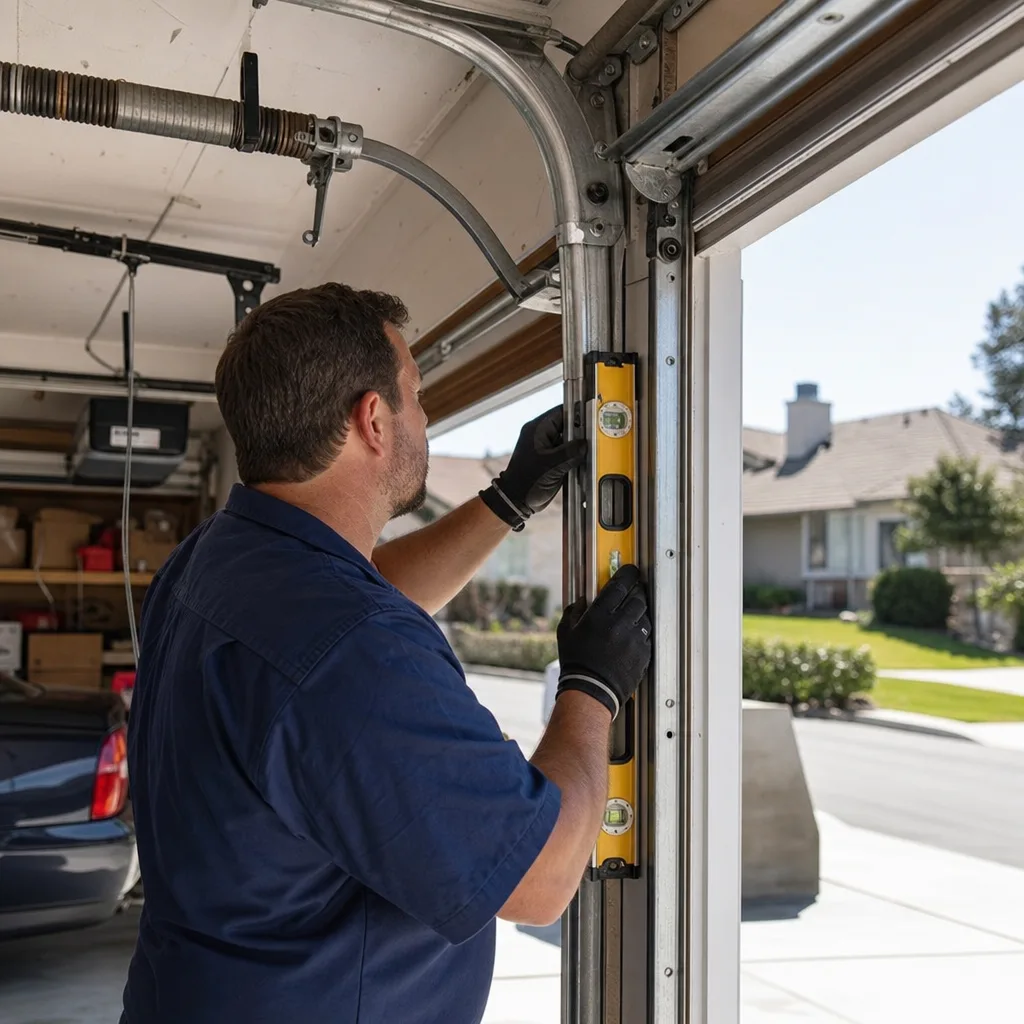
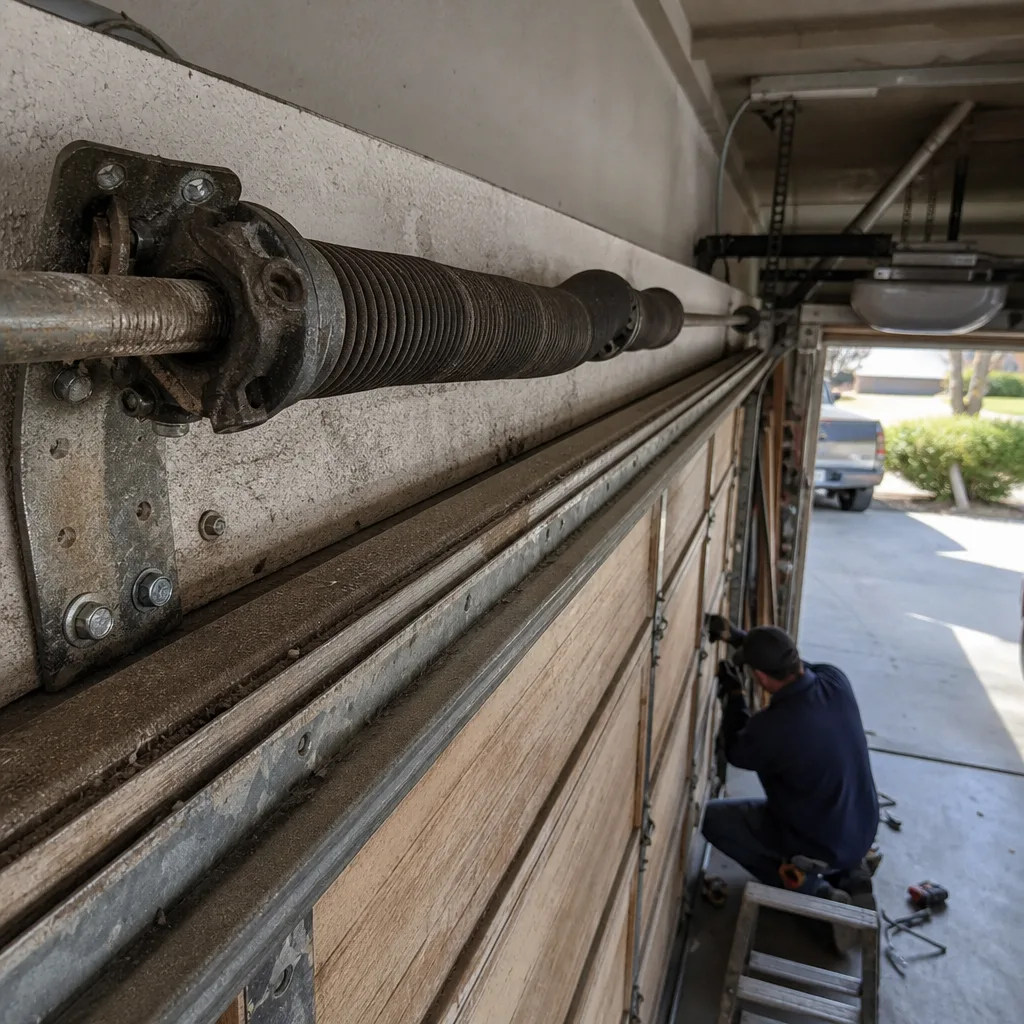
Every garage door component has a job. The rollers guide. The cables lift. The opener pulls. The torsion spring stores energy. It’s the only part on the system designed to hold a significant amount of mechanical energy in a wound state, and that’s the entire reason it occupies its own risk category.
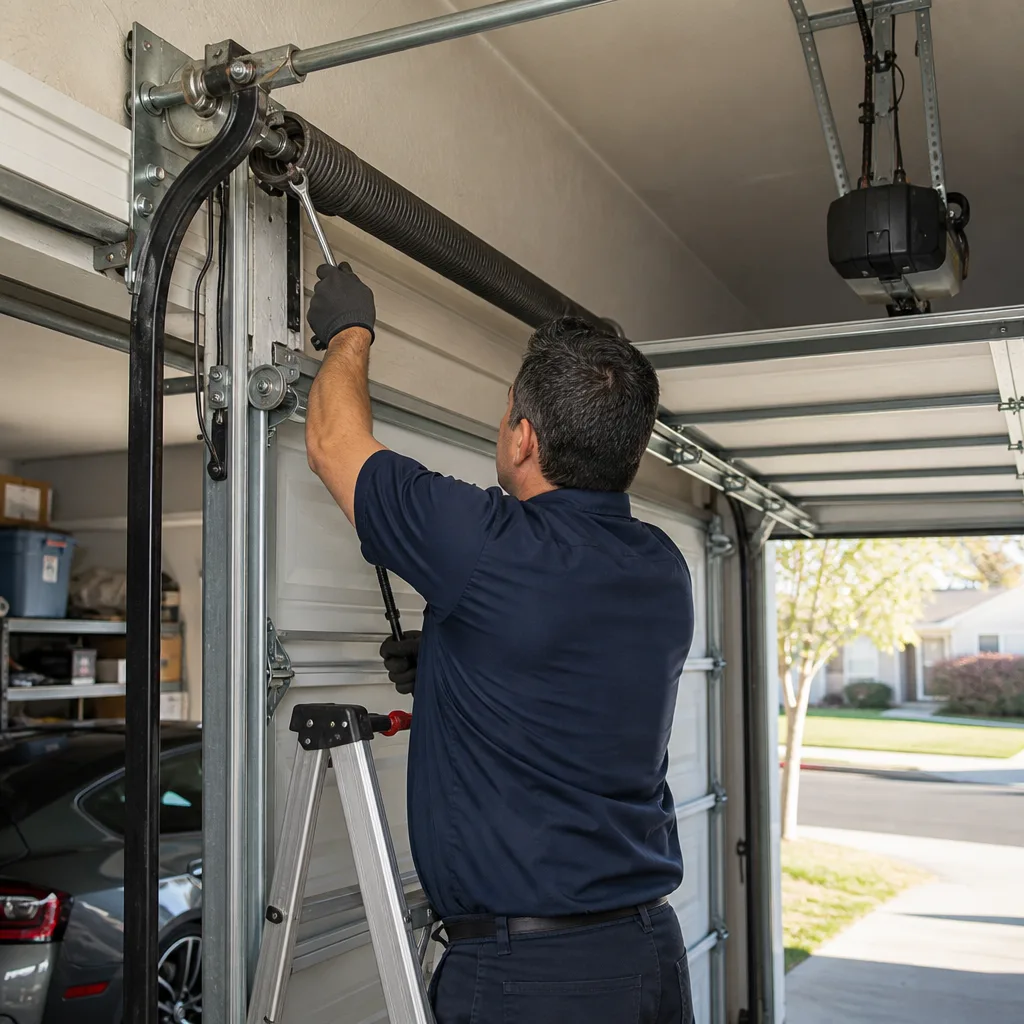
Let’s put the numbers in plain terms. A standard 7-foot residential garage door weighs between 130 and 200 pounds depending on material. The torsion spring’s job is to offset that weight so a 1/2-horsepower opener can move the door with modest effort. To do that, a typical 0.225-inch or 0.250-inch wire diameter spring gets wound 7.5 to 8.5 turns, storing roughly 350 to 500 foot-pounds of torque. If you release that energy improperly, a winding bar becomes a projectile. The documented injuries are not theoretical: forearm fractures, orbital bone fractures, facial lacerations requiring surgical repair, and fatalities.
Here’s the nuance that keeps getting lost. That risk applies to winding and unwinding the spring. It does not extend to cleaning the track, replacing a bottom seal, or programming a LiftMaster remote. When a contractor tells you not to touch a bottom seal because “garage doors are dangerous,” that’s a category error. The danger is concentrated in one component and two cables under tension. Everything else on a residential door system is low-energy or no-energy work.
If you’re considering spring work yourself, the tool cost alone should give you pause. Quality winding bars run $20 to $40. A torsion spring of the correct size runs $50 to $120. You’ll also need a socket set and a level of patience that tolerates zero mistakes. The question isn’t whether you can physically do it. It’s whether the $150 to $350 savings justifies the risk of a mistake you only get to make once. In our experience serving Simi Valley homes, particularly in neighborhoods like Wood Ranch and Big Sky where doors are wider and springs are heavier, that arithmetic rarely favors the homeowner.
What California Code and Simi Valley Permits Say About Garage Door Work
California’s contractor licensing law draws a line that surprises a lot of homeowners. General garage door repair and maintenance does not require a contractor’s license under California Business and Professions Code Section 7045, which exempts work under $500 in labor and materials combined. That means replacing a spring, a cable, a roller, or a sensor falls into a gray zone where unlicensed handymen can legally operate, and you can legally do the work yourself.
That gray zone disappears on installation and structural work. Under California Residential Code Section R105, any project exceeding $500 in materials requires a building permit, and residential permit applications in Simi Valley require either a licensed contractor or an owner-builder declaration. An owner-builder can legally pull their own permit, but they assume full liability for code compliance and workmanship, and current law requires that the work be disclosed if the home is sold within one year of completion. For a full door installation in Simi Valley, where homes in neighborhoods like Texas Tract and Montaire were built across multiple eras with varying header specifications, getting the permit wrong means the sale of your home gets delayed or a future insurance claim gets denied.
The electrical component matters too. A new garage door opener requires a grounded 120-volt outlet on a dedicated or lightly shared circuit. If your Simi Valley garage lacks that outlet, or if you’re adding a second opener, running new electrical work triggers an electrical permit, which requires either a licensed electrician or a C-7 low-voltage contractor for the circuit work. The liability exposure isn’t hypothetical. If an unpermitted installation fails and causes injury or fire, your homeowner’s insurance carrier can deny the claim on the grounds that the work was performed outside code enforcement.
Safe DIY Tasks: What You Can Do This Weekend (With Steps)
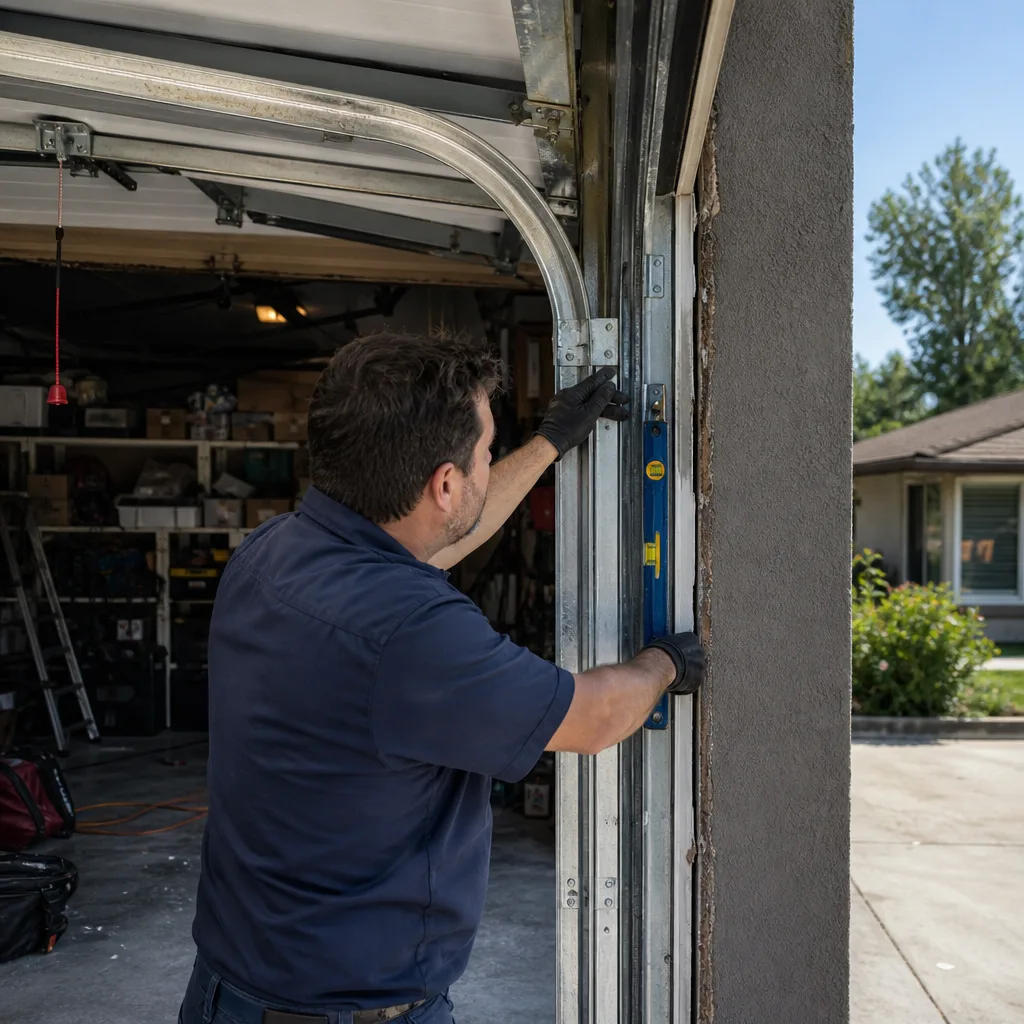
These are the tasks we’d tell a friend to do themselves. They are genuinely safe, legally unencumbered, and the tools cost less than a single service call in Simi Valley. Here’s the step-by-step for the two highest-value ones:
Bottom Seal Replacement
- Close the garage door completely and unplug the opener. This removes motor force from the equation.
- Measure the width of the existing seal channel at the bottom of the door. Most Simi Valley doors use a T-channel or bead-channel seal, and the old seal will have the profile visible once you pull an end free.
- Order the correct profile seal. Universal seals from Genie or Chamberlain work on most brands, but Clopay and Amarr doors sometimes use proprietary channels.
- Pull the old seal out from one end. If it’s stiff from Simi Valley summer heat, lubricate the channel with a small amount of dish soap.
- Feed the new seal through the channel, trim to length, and tuck the ends in. No adhesive needed for channel seals.
Time: 30 to 45 minutes. Cost: $18 to $40 for the seal itself. What a contractor would charge: $130 to $220 including the service call. Your honest savings: $90 to $180.
Opener Remote Programming
- Locate the model number on your opener’s motor unit. In Simi Valley, the dominant brands we see are LiftMaster, Chamberlain, and Genie, and programming sequences differ between them.
- For most Chamberlain and LiftMaster units, press and release the yellow or purple “Learn” button on the motor. You have 30 seconds.
- Press and hold the button on your remote until the opener light blinks or you hear a click. Release.
- Test from inside the garage, then from the driveway.
Time: 10 to 15 minutes. Cost: $0 if you have the remote, $15 to $40 if you need a new one. What a contractor would charge: $95 to $150 for a service call plus remote. Your honest savings: $55 to $150.
Legal but Risky: Tasks That Need Tools and Training
These tasks fall into Category 2. They’re legal for a Simi Valley homeowner to perform, but each carries a documented injury mechanism that’s absent from Category 1 work. The deciding factor isn’t whether you’re handy; it’s whether you own the specific tools and understand the failure modes.
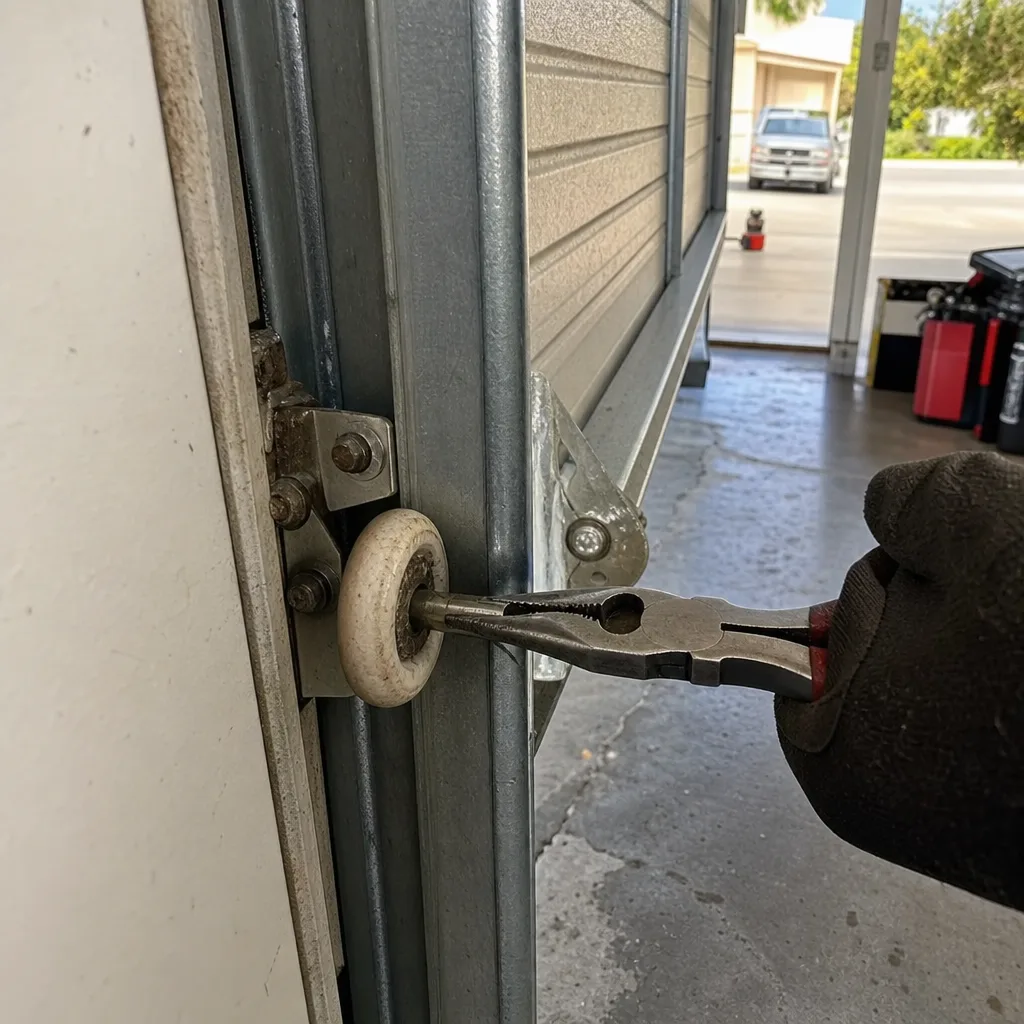
Cable replacement. Garage door cables run under tension when the door is in any position other than fully open. The cable itself isn’t as energetic as a torsion spring, but a frayed cable can snap without warning, and the cable drum can spin when tension releases. If you’ve never worked with cable drums, the failure mode is a lacerated hand. Tools required: an actual cable replacement kit, a pair of locking pliers, and a second person for doors over 8 feet wide.
Panel replacement on a loaded door. A dented bottom panel on a Clopay or Amarr door can be replaced without removing the door, but the door remains under spring tension the entire time. If you loosen the wrong hinge, the panel can shift and the spring load transfers unevenly to the sections above. This is how doors come off their tracks and land on cars or people. A replacement panel for a standard Simi Valley two-car garage door runs $200 to $450 for the panel alone, and the job requires a minimum of two people and a clear understanding of which hinges carry the load in each position.
Torsion spring replacement. We covered the energy numbers above. The tool and training issue is this: the winding procedure has exactly zero tolerance for error, and the failure mode is a steel bar traveling at approximately the velocity of a thrown baseball. If you choose to do this yourself, you need matched winding bars of the correct diameter, a spring of the correct wire size and length for your door weight, and a helper who can stand outside the arc of the bars. The total tool and part investment runs $70 to $160. A professional spring replacement in Simi Valley runs $180 to $340 installed, with a warranty that follows the part.
Work That Requires a Licensed Contractor in Simi Valley
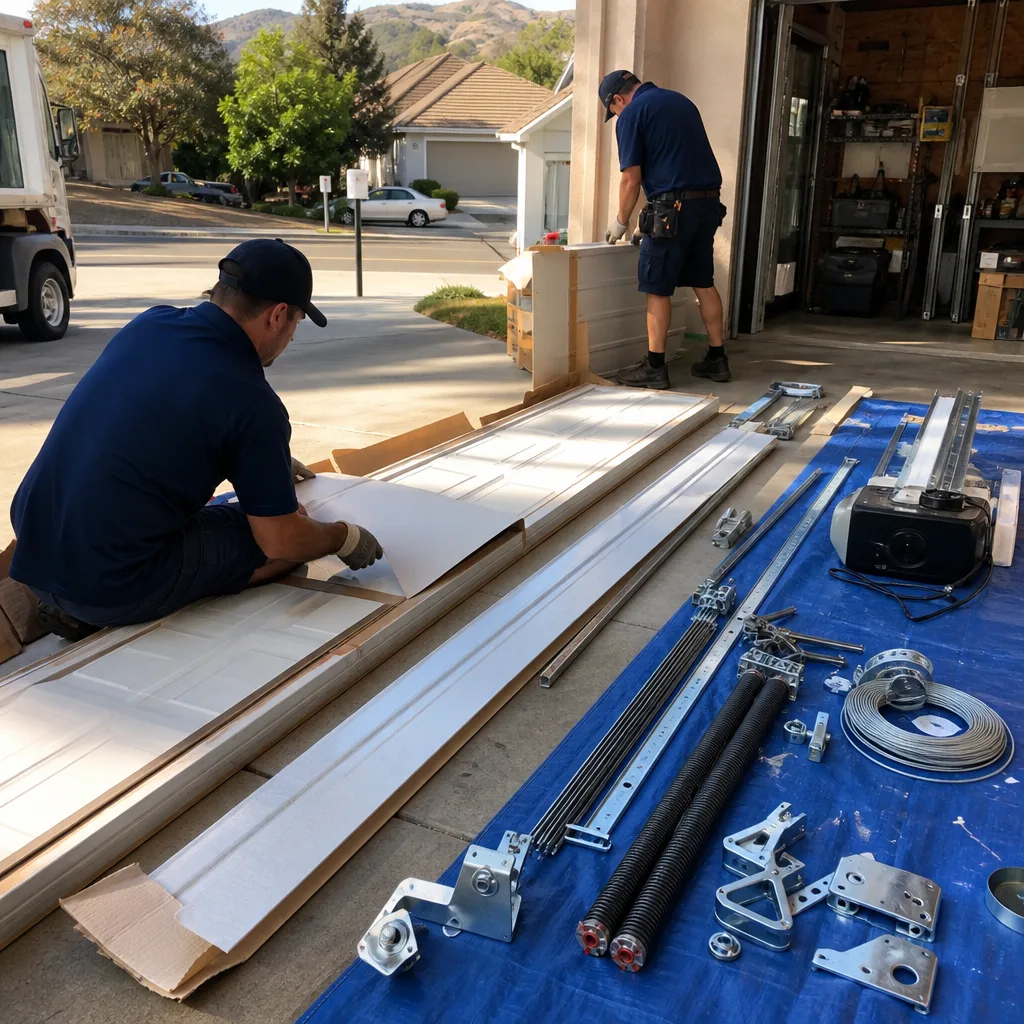
Category 3 is the short list, and it’s worth memorizing because it’s the one that can create legal and financial exposure you won’t see coming.
New door installation. A full replacement door in Simi Valley triggers a building permit when materials exceed $500. The permit requires either a licensed contractor or an owner-builder declaration. If you take the owner-builder route, you own the liability for header adequacy, tracking alignment, and code compliance, and that liability follows the house. If a future buyer’s inspector finds a non-compliant installation, you’re negotiating against your own work.
Structural modification. Converting a single door to a double door, enlarging an opening, or replacing a beam that supports the door header requires structural plans and a permit. No Simi Valley homeowner should attempt this work without a licensed contractor because the failure mode is the header failing under load and the wall above it coming down.
New electrical circuits. Adding a 120-volt circuit for an opener, or moving an outlet, falls under California Electrical Code and requires either a licensed electrician or a licensed C-7 contractor. Running a circuit through an exposed garage wall is the kind of work that looks simple and fails inspection nine times out of ten in our experience.
The Honest Cost Comparison: What You Actually Save
Here’s the table nobody publishes because it makes the DIY-versus-professional decision less dramatic than the YouTube thumbnails suggest.
- Bottom seal replacement: DIY cost $18 to $40. Pro cost $130 to $220. You save $90 to $180. Sensible to DIY.
- Track lubrication and bolt tightening: DIY cost $10 to $20. Pro cost $90 to $140. You save $70 to $120. Sensible to DIY.
- Opener remote programming: DIY cost $0 to $40. Pro cost $95 to $150. You save $55 to $150. Sensible to DIY.
- Sensor realignment: DIY cost $0. Pro cost $80 to $120. You save $80 to $120. Sensible to DIY.
- Roller replacement (all rollers, standard door): DIY cost $40 to $90 for nylon rollers plus 2 to 3 hours. Pro cost $140 to $230. You save $50 to $140. Borderline. Access to the bottom roller bracket requires releasing cable tension, which is where homeowners create the most avoidable hazards.
- Cable replacement (one side): DIY cost $25 to $60 in parts plus 2 hours and a helper. Pro cost $150 to $280. You save $90 to $220. The risk-adjusted savings rarely justify this one.
- Torsion spring replacement: DIY cost $70 to $160 in parts and tools plus 2 to 3 hours. Pro cost $180 to $340. You save $110 to $180. Given the energy stored in the spring and the injury consequences, this is the one where the savings are most misleading.
- Full door installation: Not a DIY task that’s legal or sensible. Pro cost in Simi Valley runs $1,100 to $3,800 depending on material and insulation. The permit, the liability, and the warranty all sit on the contractor’s side.
The pattern is clear. The tasks worth doing yourself are the low-energy, low-skillset ones with savings in the $50 to $180 range. The tasks with higher savings are precisely the ones where the injury risk and the code exposure eat the savings in a hurry.
How to Document Your Own Work So It Doesn’t Bite You Later
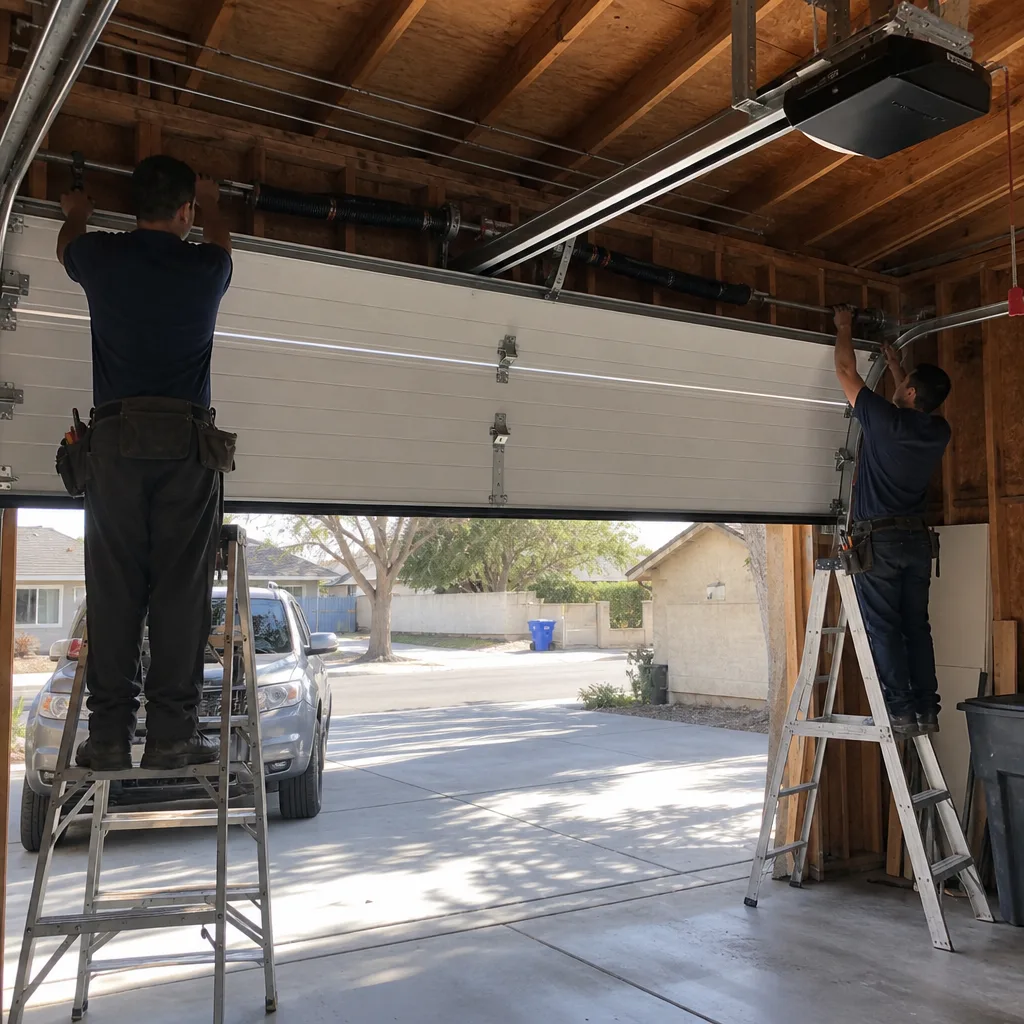
If you do handle a Category 1 or Category 2 task yourself, the documentation you keep matters more than the work itself. Our Garage Door Repair Maintenance Checklist for Simi Valley Homeowners can help you track what was done and when. When a contractor later services your door, a clean paper trail prevents two problems: error diagnosis that blames your work, and warranty disputes on parts you didn’t touch.
Here’s the format we recommend, and it’s what we look for when we arrive at a Simi Valley home where the homeowner has done prior work:
- Date and task, in one line. “Replaced bottom seal, T-channel profile, 16-foot door, November 2024.” This tells the next technician what you touched and when.
- Part brand and model, if applicable. “Chamberlain universal seal, item KC1100.” If the part fails later, the warranty claim needs that information.
- Tool used, if any, for Category 2 work. “Cable replacement performed with locking pliers and manufacturer-specific cable kit.” This establishes that you didn’t improvise the load-bearing components.
- Anything you did NOT touch. “Springs untouched. Opener untouched.” This protects you if a spring fails six months later and the installer tries to blame your bottom seal work.
Keep this record in a simple note file or a physical log attached to the opener rail. It takes five minutes and it eliminates the two most common conflicts we see on service calls: “the last guy broke it” and “that part wasn’t like that before.” When a contractor sees a dated, specific maintenance log, the conversation shifts from blame to diagnosis, which is where the actual fix lives.
Common Mistakes to Avoid
- Using a screwdriver instead of winding bars on a torsion spring. The screwdriver will slip, and the spring will release into the path of your hand. This mistake accounts for a significant portion of the garage door injuries seen in emergency rooms every year.
- Releasing the emergency pull cord while the door is open and loaded. The cord is designed for use when the door is in the closed or fully open position. Pulling it mid-travel sends the door crashing down under its own weight, and in Simi Valley’s older neighborhoods like Montaire, where original doors are heavier, that fall can damage the door, the track, or a person in the path.
- Assuming an unlicensed handyman can pull a Simi Valley permit for a full door replacement. They cannot. The permit requires either a licensed contractor or an owner-builder declaration, and if the handyman files it in your name, you own the liability.
- Lubricating the garage door track. The track itself should be dry. The lubrication goes on the rollers, hinges, and spring. Oiled tracks collect Simi Valley dust and turn into a grinding paste that shortens roller life.
- Replacing a torsion spring with a differently sized one. The spring is matched to the door by weight, drum geometry, and cable length. A spring rated for a lighter door will not lift your door properly, and a heavier spring can overload the opener motor and shorten its life.
- Ignoring a frayed cable because the door still works. A frayed cable on a 7-foot door is a countdown, not a warning. When it goes, the door drops on one side, the panel racking can pull the other cable out of its drum, and the repair bill triples.
- Drilling into the door header to mount a new opener without checking the structure. Some Simi Valley garages in older construction have headers that cannot safely support a conventional opener mount. Drywall screws into an undersized header create a failure point that fails when the door is mid-travel.
When to Call a Professional
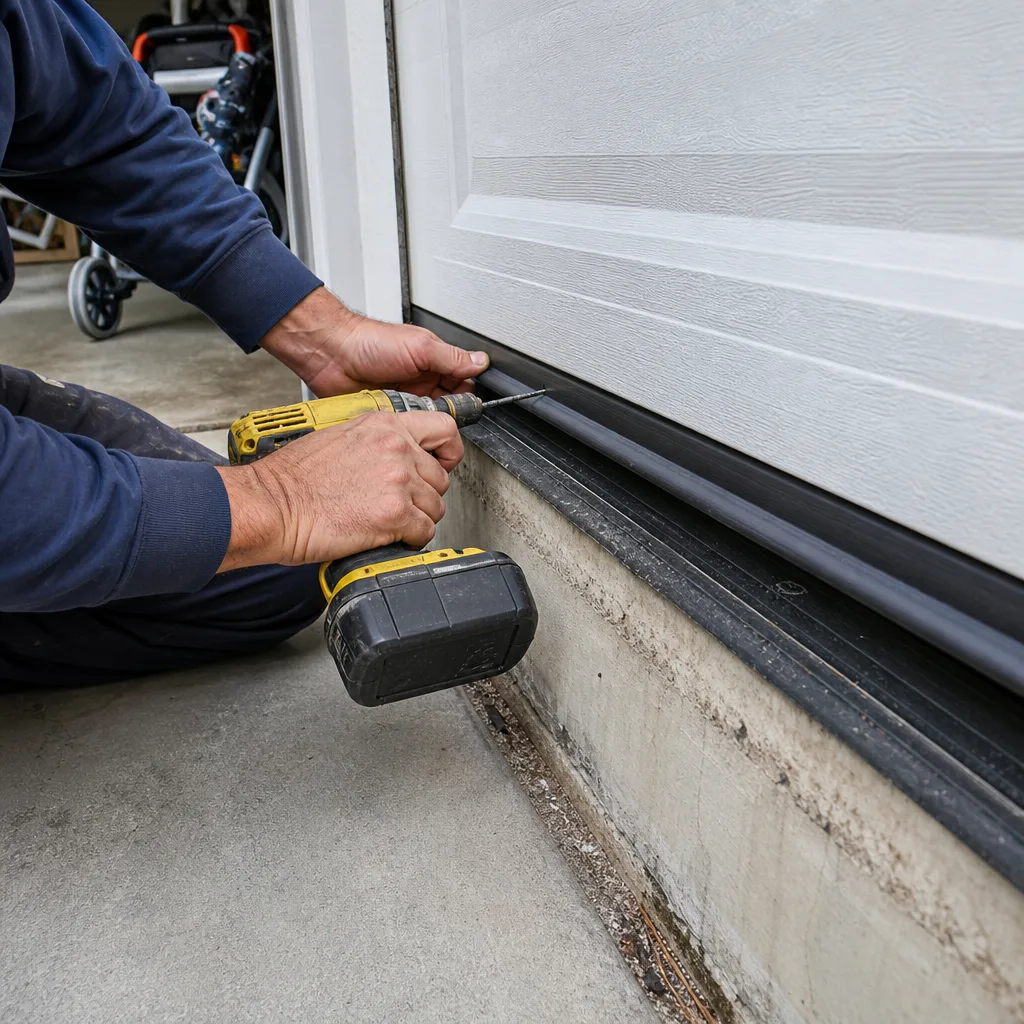
Call a professional when the component in question stores energy or bears load: torsion springs, cables, drums, or bottom roller brackets under tension. Call when the work triggers a permit, which in Simi Valley means full door installation, structural modification, or new electrical circuits. Call when you’ve already attempted a repair and the door is now partially disassembled, because that’s the state where diagnosing the original problem is hardest and harming the door is easiest. And call when the door is your only method of securing the garage, because a door that won’t close in a Simi Valley neighborhood is a security exposure you don’t want open overnight. Servo Garage Doors Simi Valley offers free estimates across Simi Valley, including emergency service with a live person answering the phone 24/7. You can also browse more guides & resources on our blog. Call (661) 964-4530 and you’ll get a flat, written price before any work starts, per Clause 1 of The Haven Standard.
Frequently Asked Questions
Yes, garage door repair including spring replacement is legal for homeowners and unlicensed handymen under California Business and Professions Code Section 7045, provided the job stays under $500 in labor and materials. That legality doesn’t change the fact that torsion springs store 350 to 500 foot-pounds of wound energy and the documented injury rate on DIY spring work is significant. Legal and sensible are different categories. Call (661) 964-4530 for a flat price on spring replacement in Simi Valley, and the warranty follows the part.
Torsion spring replacement in Simi Valley typically runs $180 to $340 installed, depending on spring size, door weight, and whether you need one spring or two replaced as a matched pair. Parts alone run $50 to $120, which puts the labor and the liability at the remaining amount. Every job at Servo Garage Doors gets a written price before work begins, so there’s no ambiguity. Call (661) 964-4530 for a specific quote on your door.
Bottom seal replacement, weatherstripping, opener remote programming, sensor realignment, and track lubrication are all safe for a Simi Valley homeowner to perform with basic tools and no meaningful injury risk. Each of these tasks takes under an hour and saves between $50 and $180 versus a professional service call. We’ve covered the step-by-step for the two highest-value ones above.
Yes, full door installation that exceeds $500 in materials requires a building permit in Simi Valley, and the permit application requires either a licensed contractor or an owner-builder declaration with full liability assumed. Door repair and parts replacement do not trigger a permit. If you’re unsure which category your project falls into, call (661) 964-4530 and we’ll tell you before anything gets scheduled.
On the safe DIY tasks, your honest savings range from $50 to $180 per task. On the riskier tasks like cable and spring replacement, the headline savings of $90 to $220 shrink considerably when you factor in tool rental, the cost of a second person’s time, and the medical and repair costs if something goes wrong. The DIY savings that hold up are on the low-energy, low-stakes work.
First, check that the photo eye sensors at the bottom of each track are aligned; a blinking light on the sensor means one is out of alignment or obstructed. If the sensors are clean and aligned and the door still refuses to close, you likely have a limit switch or force setting issue on the logic board, which needs professional diagnostic tools. Servo Garage Doors answers calls live 24/7 and can typically have a technician to your Simi Valley home the same day. Call (661) 964-4530.
The Bottom Line
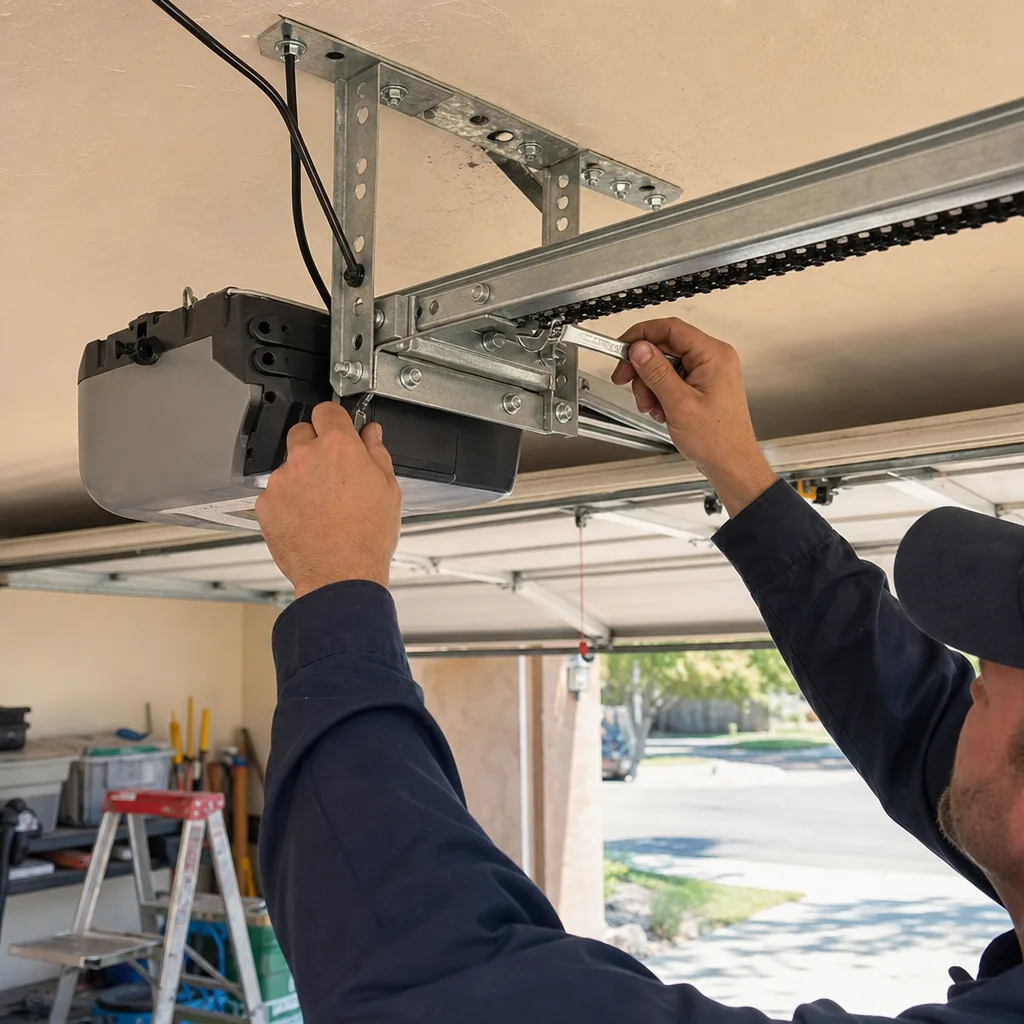
The DIY-versus-professional question for garage doors in Simi Valley comes down to three categories: safe and legal work you can do this weekend with modest savings, legal but risky work where the savings rarely justify the injury exposure, and work that requires a licensed contractor under California code and local permit rules. The torsion spring is the one component that deserves the fear it gets, and everything else deserves more nuance than the industry gives it. The smart play is to handle the Category 1 tasks yourself, keep a clean documentation log, and hire a licensed professional for anything that stores energy, bears load, or triggers a permit. If you’re unsure where your next project falls, Servo Garage Doors Simi Valley offers free estimates and written prices before any work starts. Call (661) 964-4530.
Written by Marcus Deller, Owner at Servo Garage Doors Simi Valley, serving Simi Valley since 2015.