
Last updated September 20, 2026
Full 25-point door and opener safety check with every visit - springs, cables, rollers, tracks, and your LiftMaster or Chamberlain opener included
You get a price before we start. It does not change when the truck arrives.
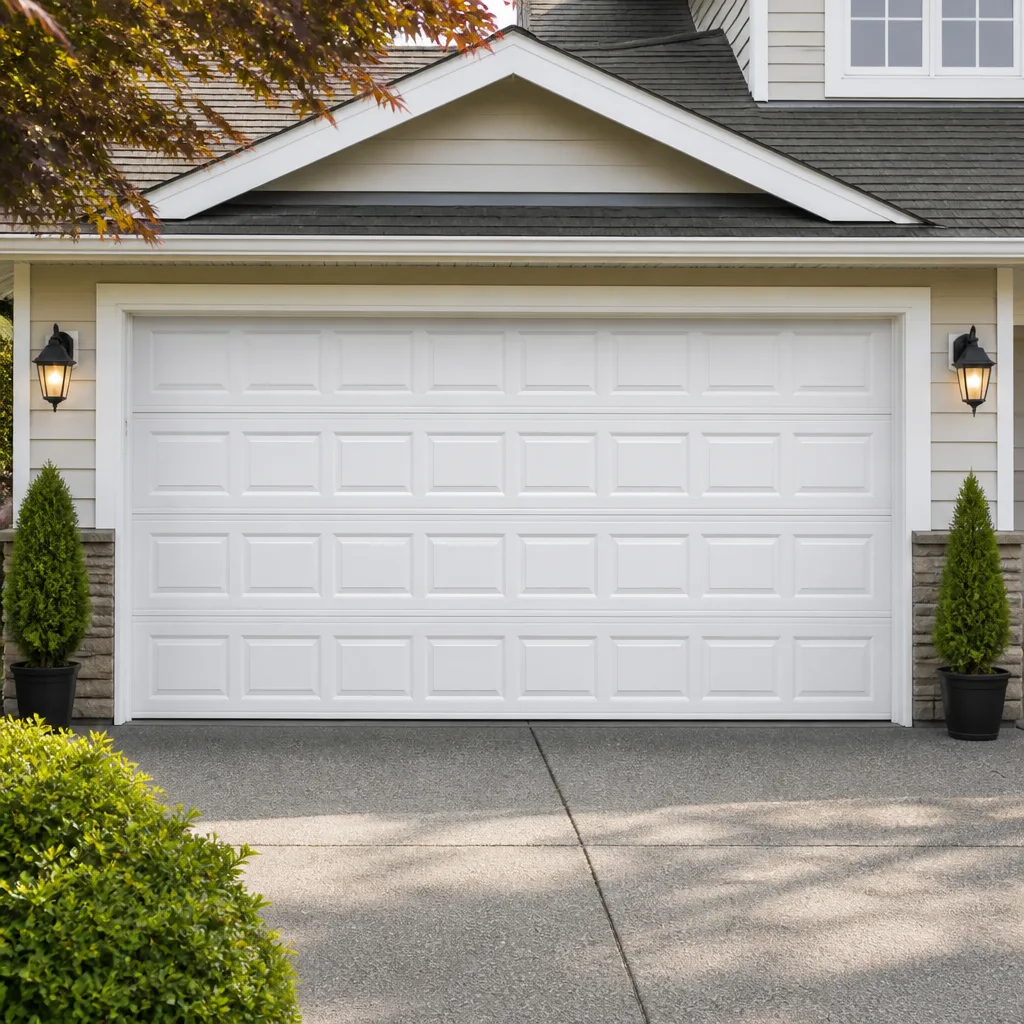
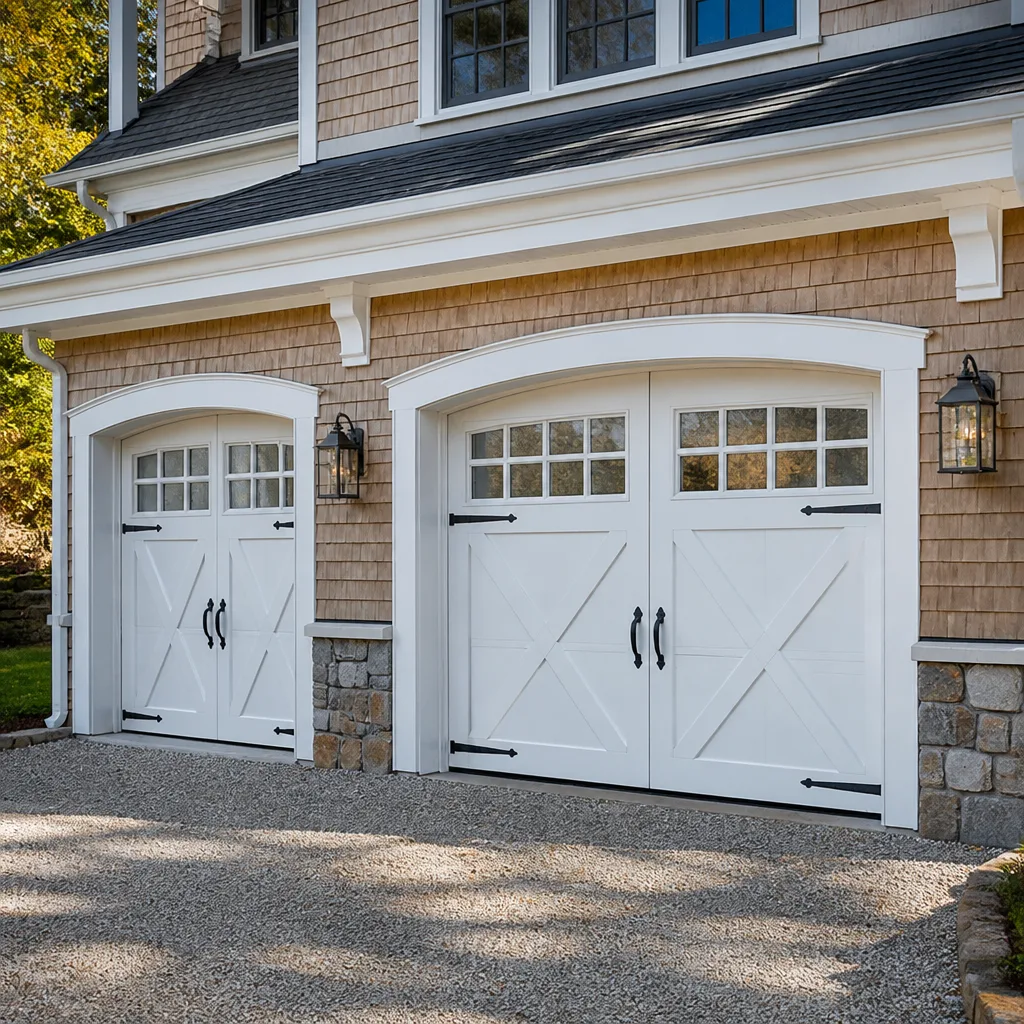
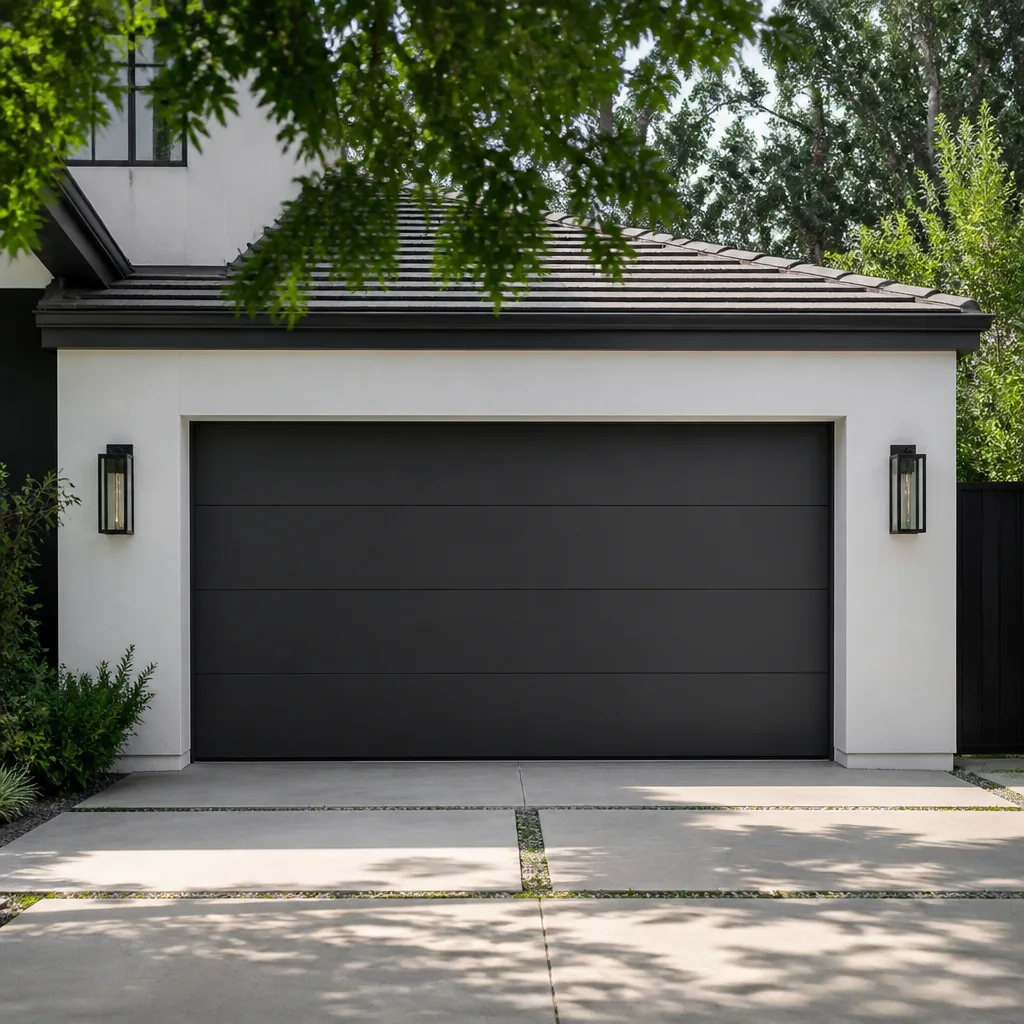
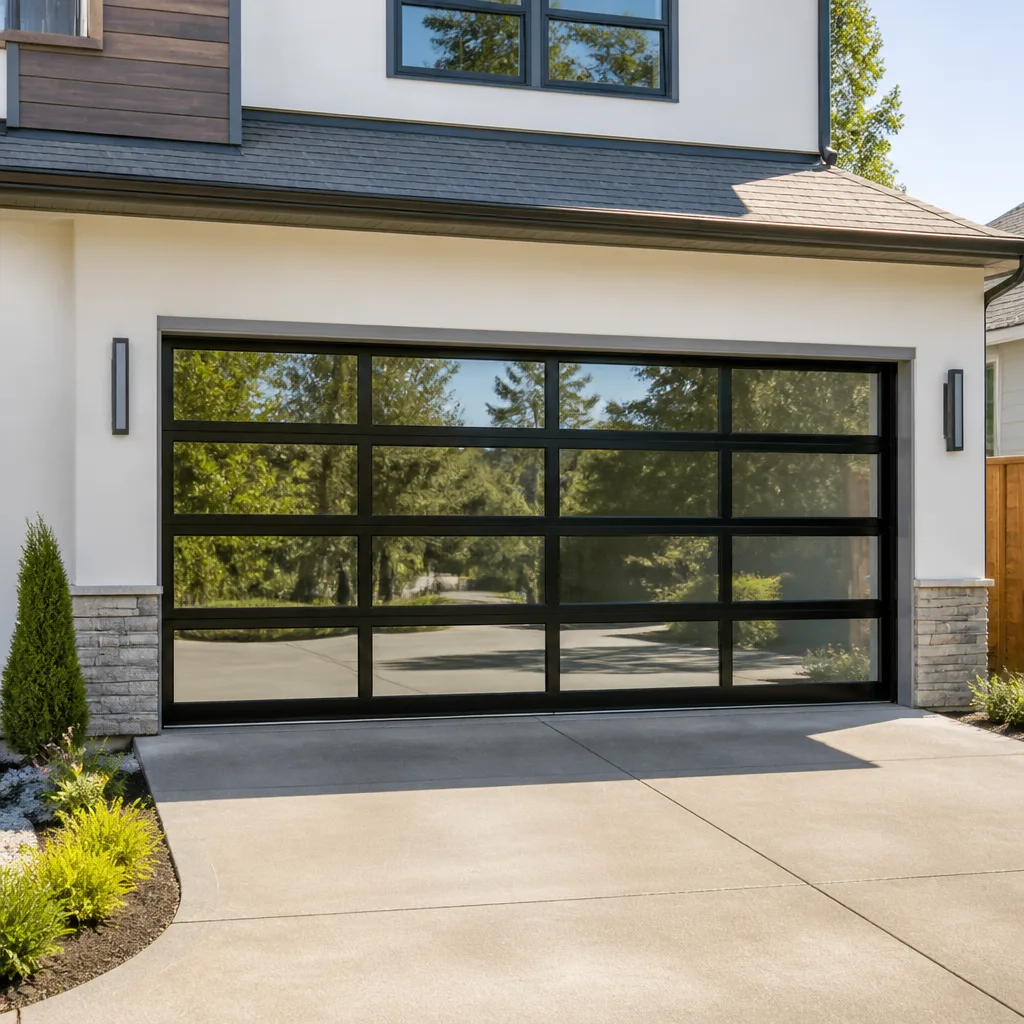
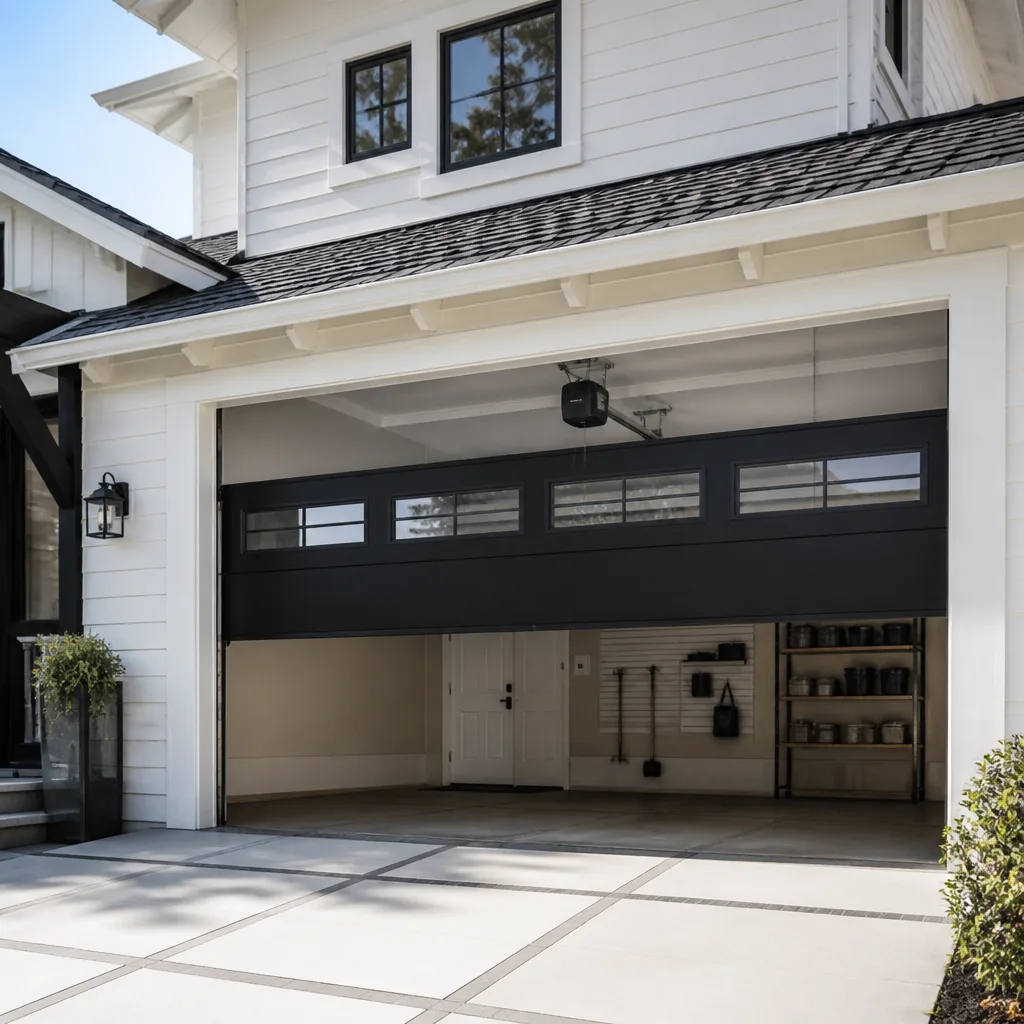
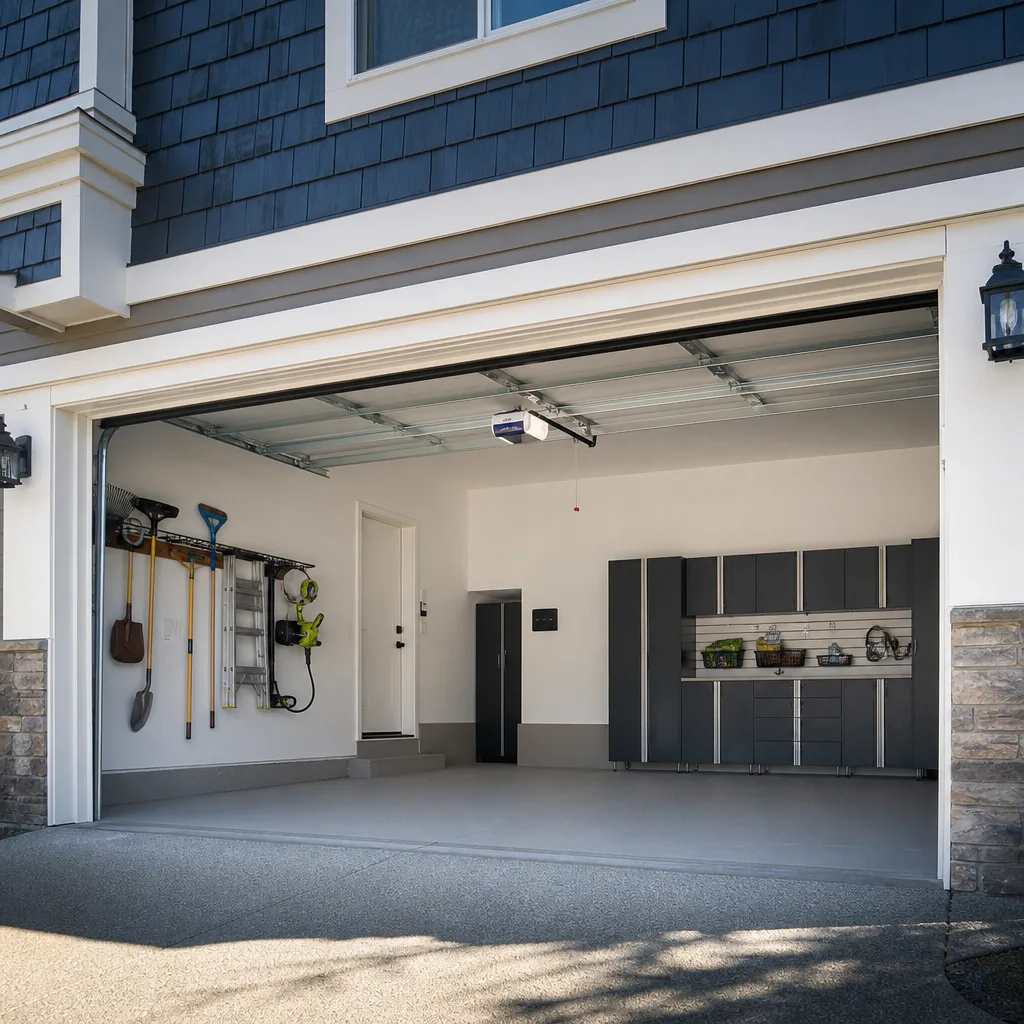
 Before
 After
After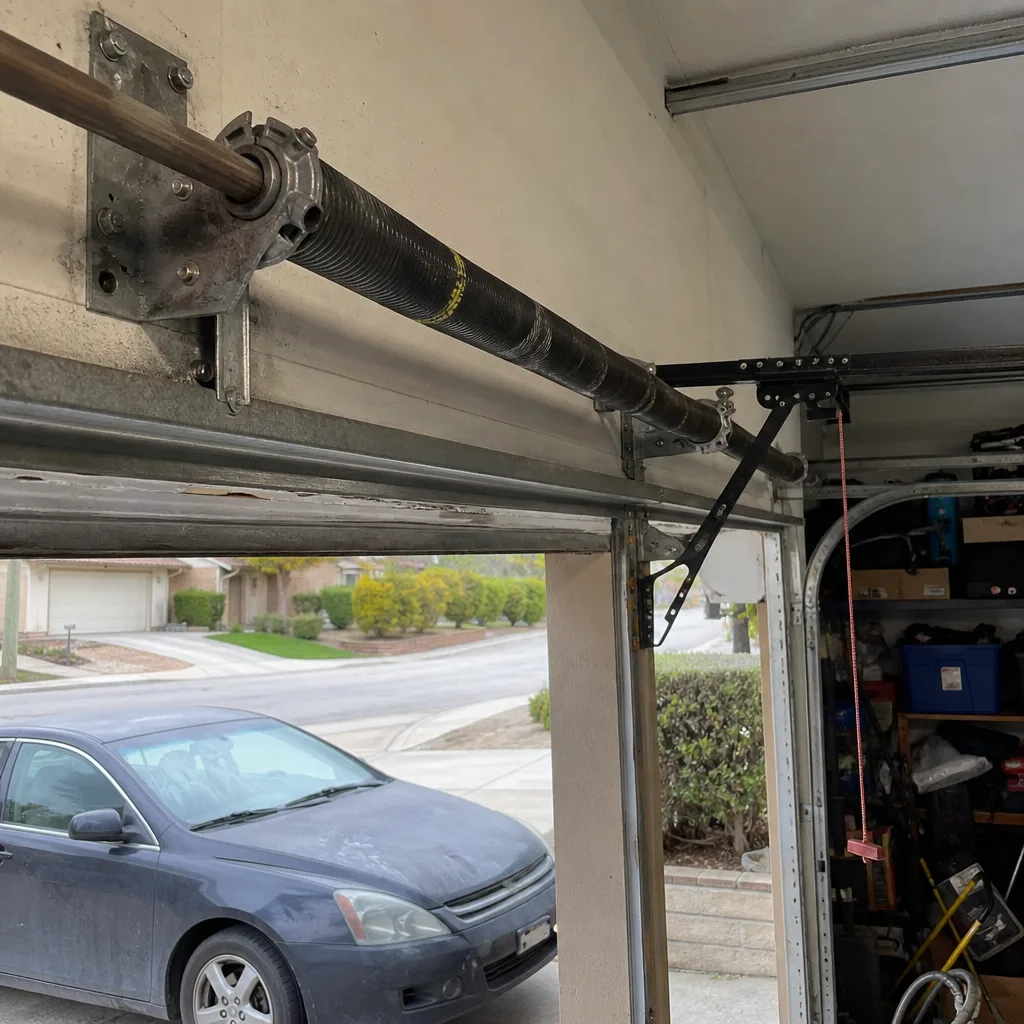 Before
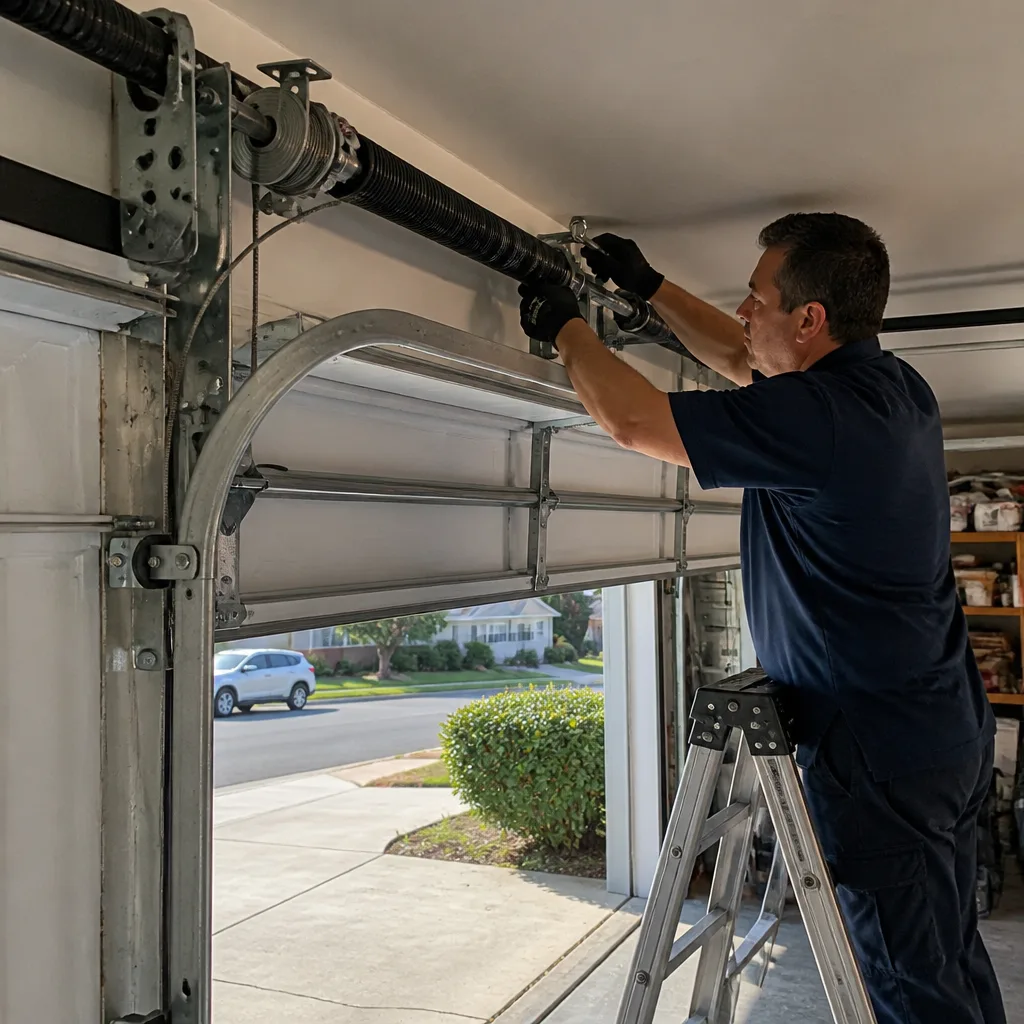 After
After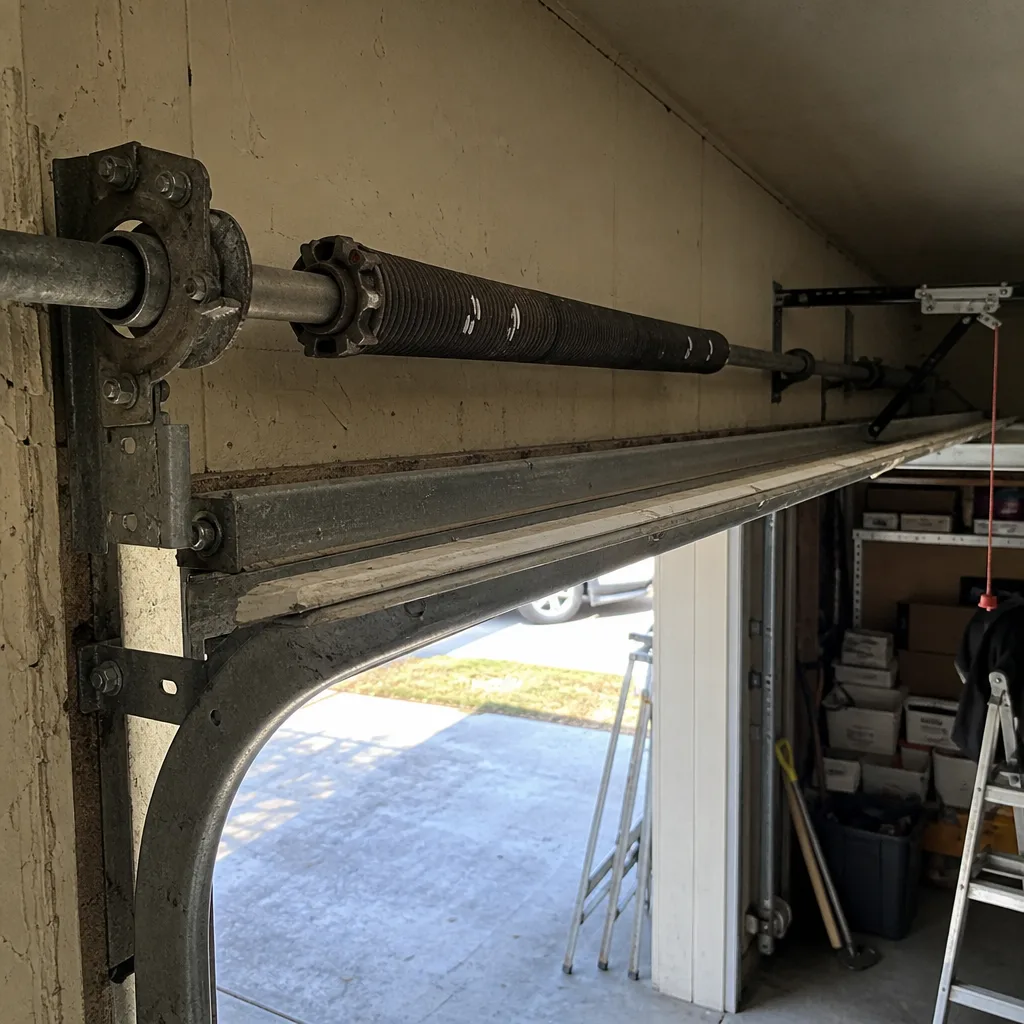 Before
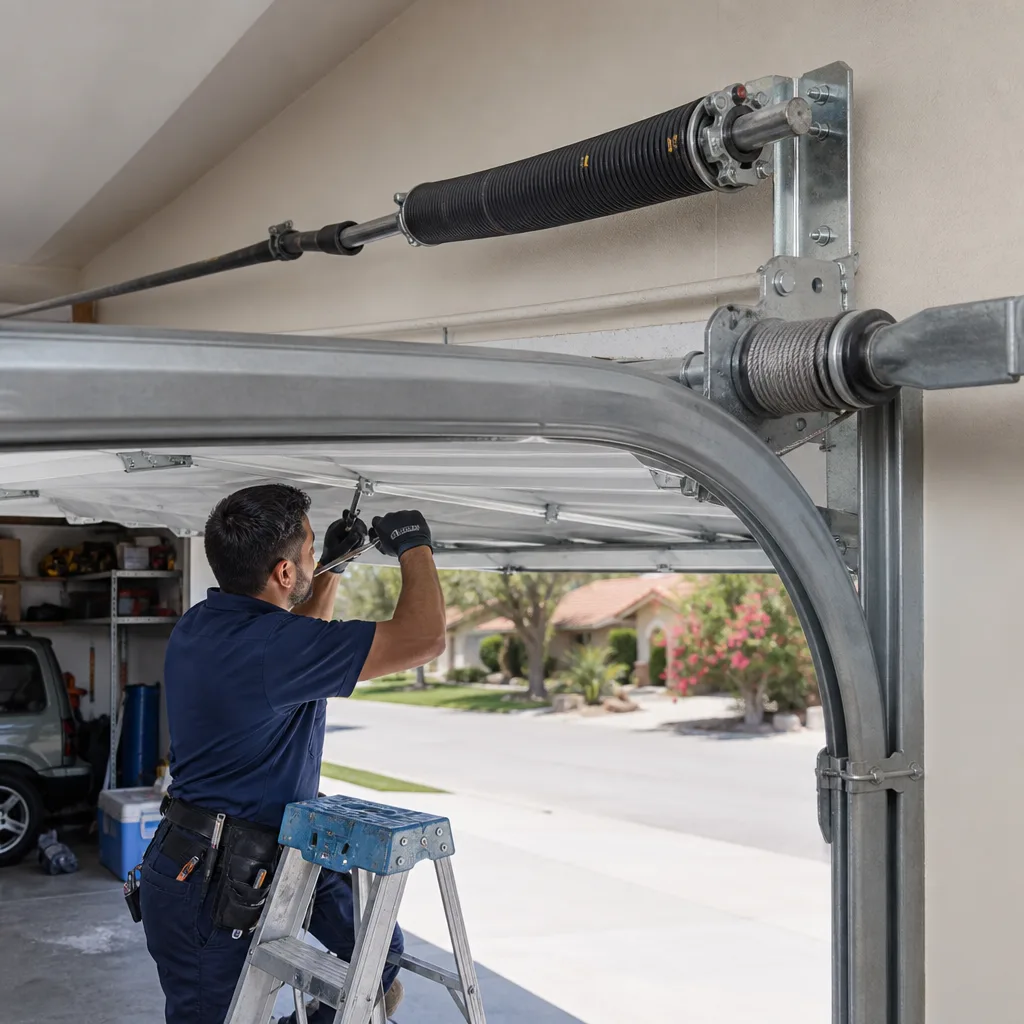 After
AfterGarage Door Warning Signs: A Simi Valley Homeowner’s Reference Guide
A garage door that hesitates for two seconds before moving is already showing a limit switch or trolley carriage wear pattern that, if documented and addressed now, costs roughly $80 to $140. The same symptom ignored for 90 days typically escalates to a full opener replacement at $350 to $600. This guide is organized differently than the symptom lists you’ve seen: every warning sign below is mapped to the specific component responsible, the failure mechanism behind it, and the real dollar difference between fixing it now and replacing it later. That’s the information homeowners in Simi Valley actually need, because our climate and our neighborhoods create a specific set of wear patterns that generic guides don’t address. For a deeper look at local conditions, see The Complete Guide to Garage Door in Simi Valley.
Quick Answer
Most garage door warning signs trace back to one of six components: torsion springs, extension springs, cables, rollers, the opener’s logic board, or the trolley carriage. The earliest reliable indicators are a door that hesitates before moving, a grinding sound during travel, or visible cable fray near the bottom roller bracket. In Simi Valley, spring failures are the most common service call we see, and the typical repair runs $180 to $340 when caught early versus $450 to $800 when a broken spring is allowed to damage the cable drums and opener gear.
Table of Contents
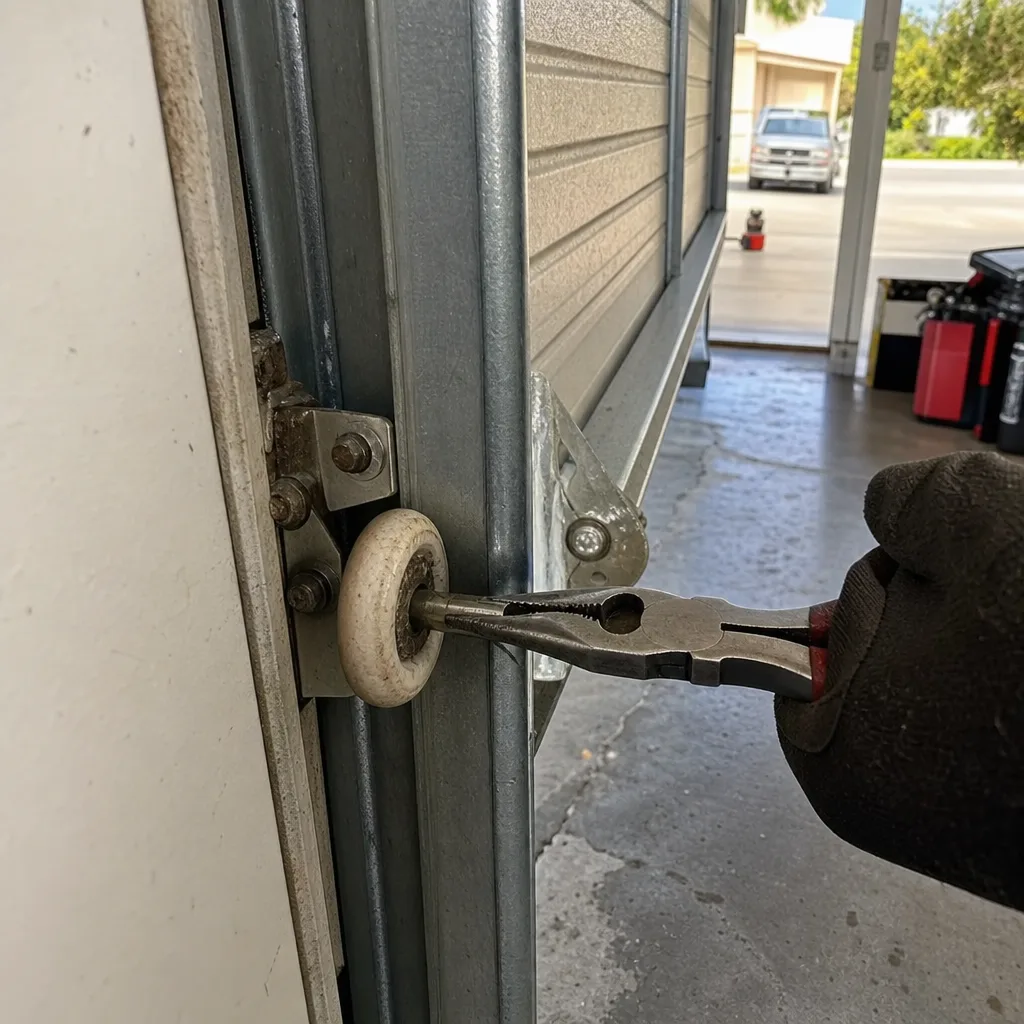
- The Symptom-to-Component Table: What You Hear, What’s Failing
- Spring Warning Sign or Cable Warning Sign? The Two-Second Manual Lift Test
- Cost Trajectories: Six Simi Valley Failure Patterns and the Dollar Penalty for Waiting
- Warning Signs That Are Actually Normal Operation: What Not to Fix
- The Photo Documentation Protocol: What to Capture Before You Call Anyone
- Why Simi Valley Specifically Accelerates Certain Garage Door Failures
- Opener Warning Signs: Limit Switch, Logic Board, and Trolley Carriage Wear
- Common Mistakes to Avoid
- When to Call a Professional
- Frequently Asked Questions
- The Bottom Line
BeforeAfterThe Symptom-to-Component Table: What You Hear, What’s Failing
Every sound a garage door makes is data. The problem is that most warning sign guides stop at the sound and never name the part behind it. Here’s the mapping we use on service calls across Simi Valley, from the Texas Tract to the Wood Ranch hillsides:
- Grinding or metallic scraping during travel - Roller wear. The ball bearings inside the roller seize, and the roller begins sliding against the track instead of rolling. The sound is the steel-on-steel contact. Early fix: $80 to $140 for a full roller replacement set. Ignored: the roller carves a groove into the track, and the track replacement adds $120 to $200 to the bill.
- Slapping or banging when the door reaches the fully open position - Torsion spring over-tension or worn limit switch. If the door slams into the stops, the opener isn’t decelerating properly, or the spring is lifting with too much force. Early fix: $80 to $140 for limit switch adjustment or spring tension correction. Ignored: the repeated impact breaks spot welds on the top panel, and a panel replacement runs $350 to $600.
- Two-second hesitation before movement starts - Trolley carriage wear or limit switch drift. The opener’s logic board sends the command, but the carriage doesn’t engage immediately. This is the single most predictive early warning sign we see in Simi Valley. The fix is typically $80 to $140. The ignored version is a full opener replacement at $350 to $600, and in some cases a damaged rail if the carriage detaches under load.
- Door rises unevenly, with one side higher than the other - Cable wear or drum misalignment. The cable on one side is stretching or has slipped a groove on the drum. This is never normal, and it’s a safety issue because the imbalance puts asymmetric load on the spring. Early fix: $100 to $160 for cable adjustment or replacement. Ignored: the door can come off track, and the repair bill climbs to $250 to $400, sometimes higher if a panel bends.
- Heavy door that resists manual lift and drops fast when released - Torsion spring failure or significant tension loss. This is the one warning sign that most homeowners correctly identify, but they often misattribute it to the opener. The spring does the lifting work; the opener just guides it. A door that feels 40 to 60 pounds heavier than normal has a spring problem, period.
- Clicking sound at the end of the cycle, followed by the door reversing - Limit switch or safety sensor misalignment. On some opener models, the click is the internal relay signaling that the limit was reached, and the reversal means the controller thinks something is obstructing the path.
Spring Warning Sign or Cable Warning Sign? The Two-Second Manual Lift Test
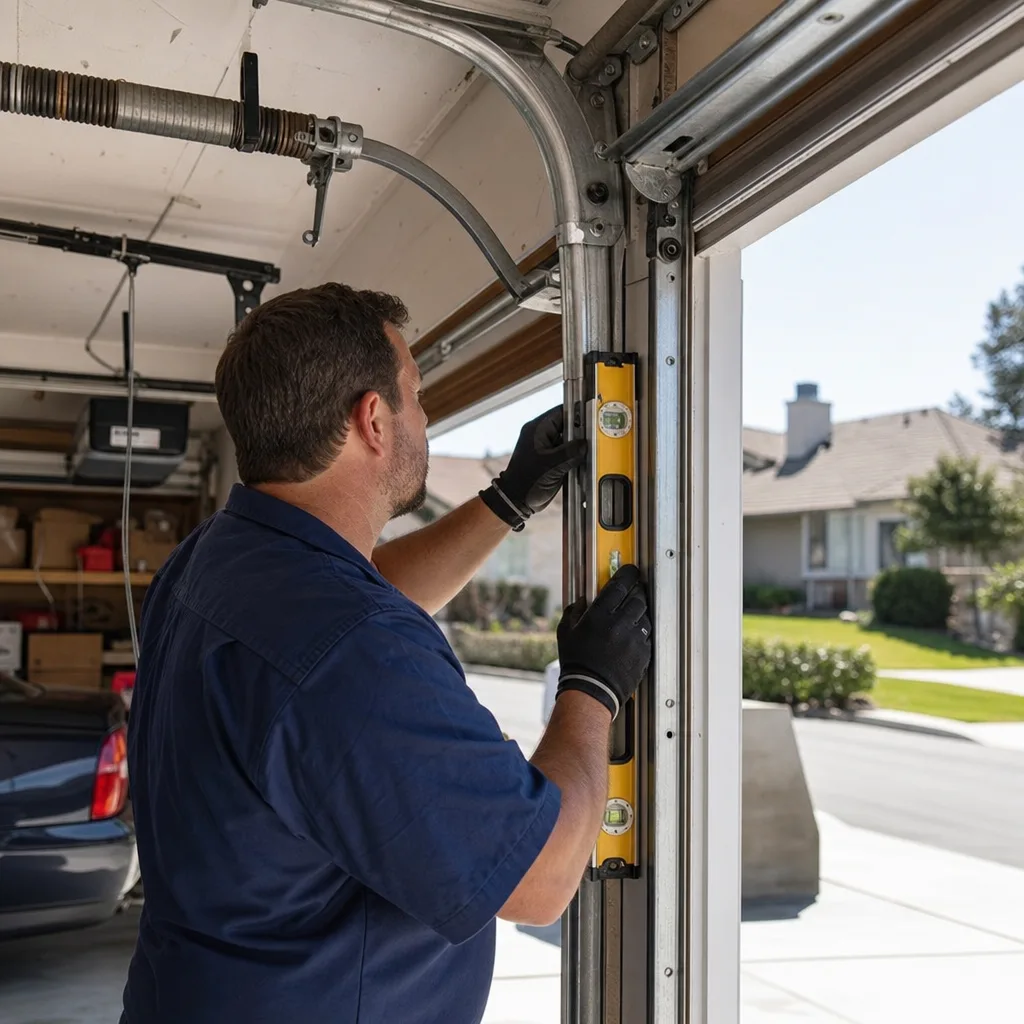
Both spring failure and cable failure produce the same general complaint: “the door feels heavy.” But the repair is different, and so is the urgency. Here’s how to tell them apart in two seconds, using the door itself as the diagnostic tool.
- Pull the emergency release cord - the red handle hanging from the trolley - to disconnect the door from the opener. Do this with the door closed.
- Lift the door manually to waist height - about three feet off the ground. A properly tensioned door should stay in place when you release it. It should feel like it weighs 8 to 15 pounds at your hand because the spring is carrying most of the weight.
- Observe what happens when you release the door at three feet:
- Door holds at three feet and feels balanced - spring is functioning. The problem is elsewhere: opener, rollers, or track.
- Door drops fast or feels like it weighs 60+ pounds - spring failure or severe tension loss. Call a professional. Torsion springs are under thousands of pounds of tension and are genuinely dangerous to service without the right tools and training.
- Door holds but one side edges downward, or you hear a metallic pinging - cable wear or a cable that’s about to slip off the drum. This is also a call-a-professional situation, but it’s a different repair than a spring replacement.
This test matters because the repair quote should match the failed component. A worn cable is a $100 to $160 fix. A torsion spring replacement is $180 to $340. Walking into a quote without knowing which one you need means you’re evaluating the number without knowing whether it’s fair for the actual work.
Cost Trajectories: Six Simi Valley Failure Patterns and the Dollar Penalty for Waiting
This is the section where we stop talking about symptoms and start talking about money. Every delay has a price. Here are the six failure patterns we see most often in Simi Valley, with the cost of addressing them in the first two weeks of noticing the symptom versus the cost of addressing them 60 to 90 days later.
| Failure Pattern | Early Repair Cost | Delayed Repair Cost | What Escalates |
|---|---|---|---|
| Worn rollers (grinding sound) | $80-$140 | $200-$340 | Roller seizure carves track grooves; track replacement needed |
| Limit switch drift (hesitation or slamming) | $80-$140 | $350-$600 | Repeated impacts crack opener gear or weld points; full opener replacement |
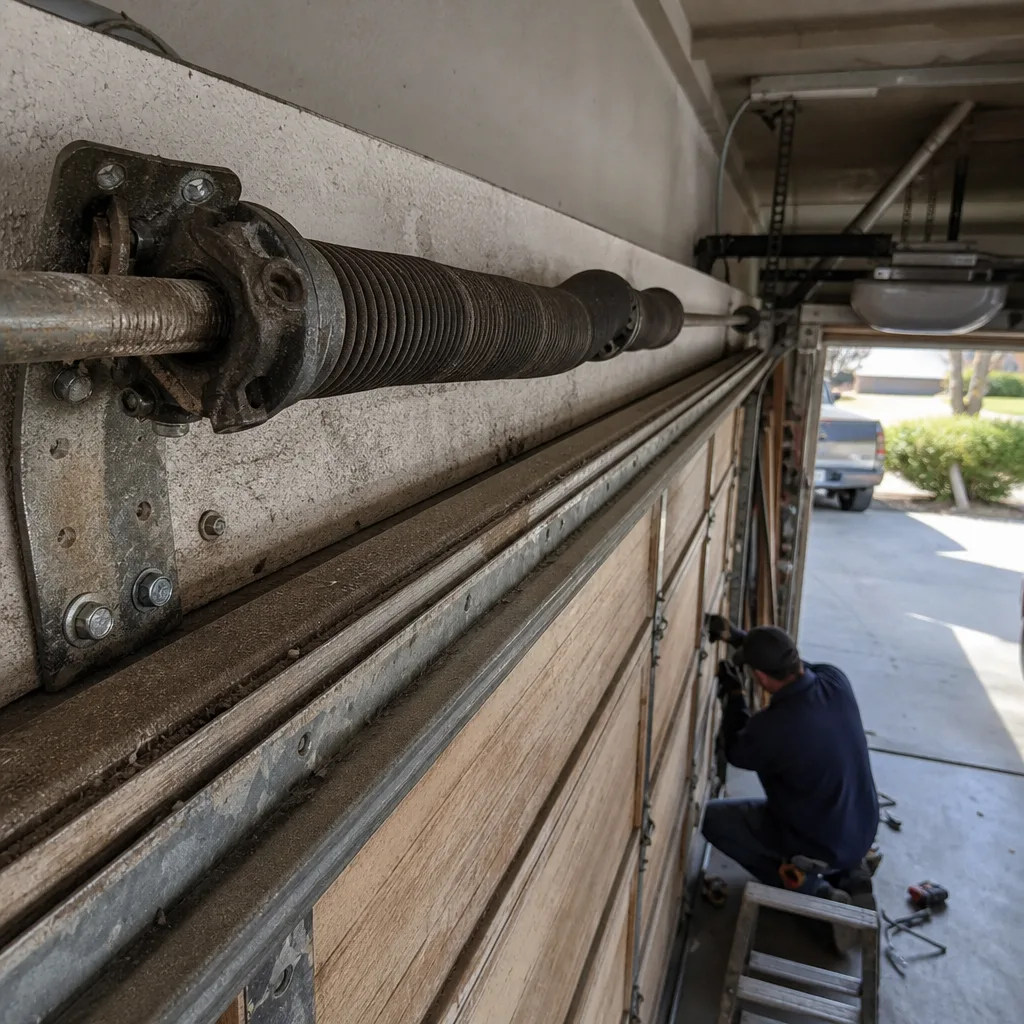
| Torsion spring tension loss (heavy door) | $180-$340 | $450-$800 | Door drops on cables, cables fray, drum cracks, opener gear strips |
| Cable fray (visible wire strands near bottom bracket) | $100-$160 | $250-$400 | Cable snaps under load, door comes off track, panel damage possible |
| Trolley carriage wear (hesitation, jerky start) | $80-$140 | $350-$600 | Carriage detaches from rail, door becomes inoperable, opener damaged |
| Safety sensor misalignment (reversing door) | $60-$100 | $120-$200 | Intermittent operation forces manual override, additional wear on other components |
The pattern is consistent: the early fix is almost always under $350, and the delayed fix is almost always over $450. The difference isn’t just the part cost. It’s the secondary damage that happens when one failed component is allowed to keep doing its job badly while everything around it absorbs the stress.
One observation from our work across Simi Valley since 2015: the homes in the older tracts near Royal Avenue and Cochran Street tend to have original springs and cables from the 1990s or early 2000s, and those components are at the end of their service life. If your home was built before 2005 and you’ve never replaced the springs, the warning signs aren’t a question of if. They’re a question of which symptom shows up first.
Warning Signs That Are Actually Normal Operation: What Not to Fix
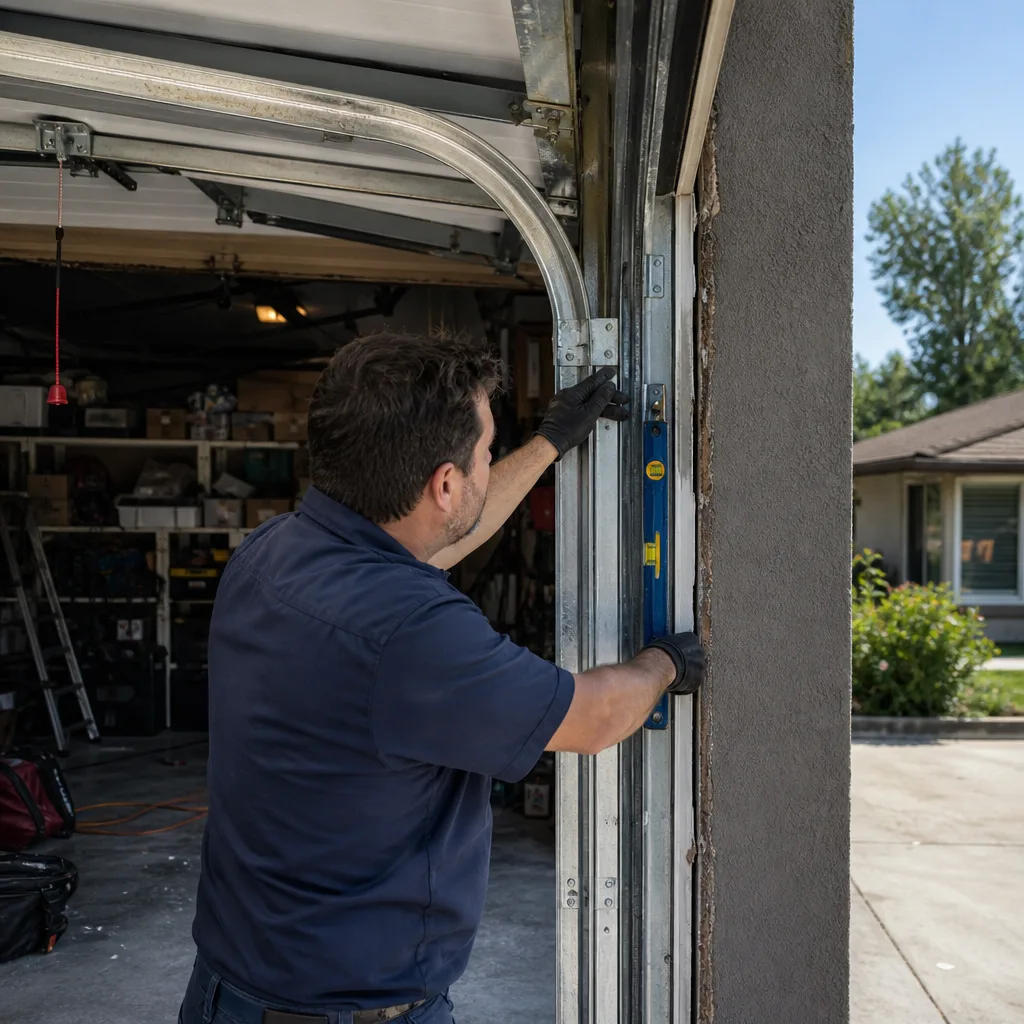
Not everything that seems wrong is wrong. Some behaviors get misread as failure, and a homeowner who doesn’t know the difference can pay for a repair that wasn’t needed. Here are the false alarms we talk people out of on a regular basis:
- Minor seasonal speed variation - Garage door openers move slightly slower in cold weather because the grease in the rails and the screw drive thickens. In Simi Valley winters, overnight lows in the 30s and 40s can make an opener run 10 to 15 percent slower for the first cycle or two. If it smooths out after the first full cycle, that’s normal. If the slowdown persists, that’s a different conversation.
- Single-cycle reversal on cold mornings - This is usually the safety sensors picking up condensation or a thin frost layer on the lens. Wipe the lens, try again. If it reverses again, call someone. If it doesn’t, you just saved yourself a service call.
- Audible relay click at cycle end - That click is the opener’s internal relay switching the motor off. It’s the sound of the machine doing what it’s designed to do. Some openers are louder than others. A faint click at the end of travel is not a problem. A loud bang at the end of travel is, and that’s the slamming symptom we covered earlier.
- Door creaks but operates smoothly - A creak without grinding, hesitation, or uneven travel is usually a hinge that needs lubrication, not a structural failure. Use a silicone-based lubricant on the hinges and rollers once a year. If the creak continues after lubrication, then it’s worth looking deeper.
The Photo Documentation Protocol: What to Capture Before You Call Anyone
If there’s one habit that will save you money and frustration on any garage door issue, it’s photographing the problem before you pick up the phone. A contractor who can see the failed component before they dispatch a truck can tell you what they’re likely walking into. Clause 4 of The Haven Standard is built on this exact idea: the customer sees the failed part before anyone quotes a replacement. You shouldn’t have to wait for a technician to arrive to know what’s wrong.
Here’s the protocol we recommend to every Simi Valley homeowner, and it takes about three minutes:
- Photograph the full door from inside the garage, closed - one straight-on shot showing both tracks, both cables, and the spring assembly. This gives the technician context for the system they’re working with.
- Photograph the torsion spring specifically - the spring is mounted on the header above the closed door. Get close enough to show whether the spring is a single coil or a double-coil setup. If the spring is broken, you’ll typically see a clean gap in the coil where the break happened. That’s the money shot.
- Photograph the cables at the bottom roller brackets - the cables attach to the bottom corners of the door. Frayed wire strands are visible here before anywhere else. Shoot both sides.
- Photograph anything that looks like it’s wearing or rubbing - a shiny groove in the track, a black dust pile on the header above the spring, a roller that sits at an angle. These are evidence of the failure mechanism.
- Send all photos before the visit - text or email them to the contractor. If they tell you they don’t need the photos and will assess on site, that’s fine. If they tell you the photos are a waste of time, find someone else. The photos are how the price stays honest.
This is the same documentation we deliver on every service visit, but in reverse. What we found, what we did, and what it looked like before and after. The photo record is included on every job, not offered as an add-on. When a customer asks “why should I trust this quote,” the answer is the photos. Not a handshake.
For homeowners researching broader garage door issues, our Garage Door Repair in Simi Valley page covers the full scope of repair work we handle, with the same component-level detail.
Why Simi Valley Specifically Accelerates Certain Garage Door Failures
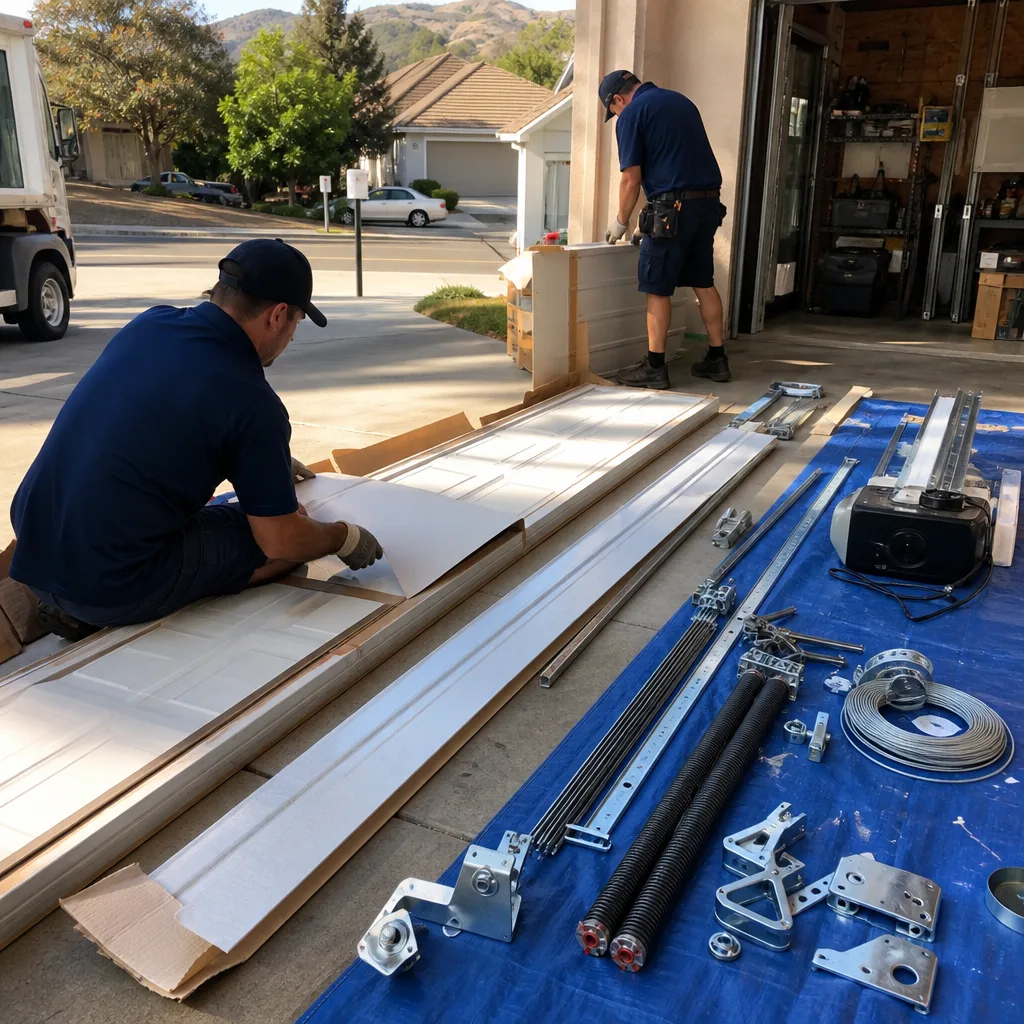
Garage doors fail differently in different places. Here’s what we’ve documented across 18,000 garage doors made right since 2015 in Simi Valley and the surrounding Ventura County communities:
- Temperature swings stress the torsion spring - Simi Valley’s diurnal temperature range is wider than most coastal communities, with summer days over 100 degrees and nights dropping into the 60s. Steel torsion springs expand and contract with every swing. Over 10,000 cycles, that thermal cycling contributes to metal fatigue. Most residential springs are rated for 10,000 cycles, which translates to 8 to 12 years of typical use in Simi Valley. When a spring rated for 10,000 cycles fails at year 9, it’s not a defect. It’s math.
- Santa Ana wind dust loads the rollers - The dry, dusty Santa Ana events that roll through in the fall deposit fine particulate on everything, including the garage door track and roller bearings. Without periodic lubrication, the dust accelerates roller bearing wear. This is why we see more roller failures in the northern Simi Valley neighborhoods that catch more wind exposure than in the sheltered valley floor.
- Foundation settling in the eastern tracts misaligns tracks - Some of the homes in east Simi Valley, particularly those built on the older alluvial soils, experience minor foundation settling over decades. A quarter-inch of settling at the garage slab translates to a track that’s slightly out of true, which means the door is fighting the track on every cycle. The symptom is usually uneven travel or a rubbing sound on one side.
- Garage-adjacent living space puts a premium on quiet operation - In the newer hillside developments where the garage sits directly under a bedroom or adjacent to the kitchen, a grinding roller isn’t just a mechanical problem. It’s a quality-of-life problem. Homeowners in those neighborhoods tend to catch warning signs earlier because they hear them every time the door cycles.
All of this means that any guide to garage door warning signs has to account for local conditions. A door in Simi Valley wears differently than a door in San Francisco or Phoenix. The symptoms are the same, but the timeline and the failure mechanism are not.
Opener Warning Signs: Limit Switch, Logic Board, and Trolley Carriage Wear
The opener is the most misunderstood component in the garage door system. It doesn’t lift the door. The spring lifts the door; the opener guides it along the track and controls the cycle. When an opener fails, it’s almost always one of three internal components:
Limit switch drift
The limit switch tells the opener where “fully open” and “fully closed” are. When it drifts out of calibration, the opener either stops short or runs past. The symptom you’ll notice first is the door slamming at the top of travel or not sealing fully at the bottom. The fix is a simple adjustment for a technician who knows the opener’s control board layout. We carry parts for LiftMaster, Chamberlain, and Genie openers on the truck, and the switch adjustment or replacement typically runs $80 to $140.
Logic board failure
The logic board is the opener’s brain. When it starts to fail, the symptoms are erratic: the door opens but won’t close, or the remote works intermittently, or the wall button works but the remote doesn’t. A failing logic board can sometimes be reset, but if the failure is component-level, replacement is the honest fix. A new logic board runs $120 to $200. If the opener is over 15 years old and the board fails, we’ll usually recommend opener replacement instead, because the new board is a bridge, not a solution. A full opener replacement with installation runs $350 to $600.
Trolley carriage wear
The trolley carriage is the part that physically connects the opener rail to the door arm. It rides back and forth on every cycle, and over time the internal teeth that engage with the drive belt or chain wear down. You’ll hear a rattle at startup, or notice the door jerks forward before settling into smooth travel. That hesitation is the carriage slipping before it grips. If caught early, the carriage replacement is $80 to $140. If ignored until the carriage strips completely, the opener can run without moving the door, and in rare cases the carriage can bind and damage the rail. At that point, you’re into a full replacement.
If you’re dealing with opener issues specifically, our Garage Door Opener Repair & Installation in Simi Valley page covers the full range of opener work, including the brands we service and what the repair process looks like from quote to photo record.
Common Mistakes to Avoid
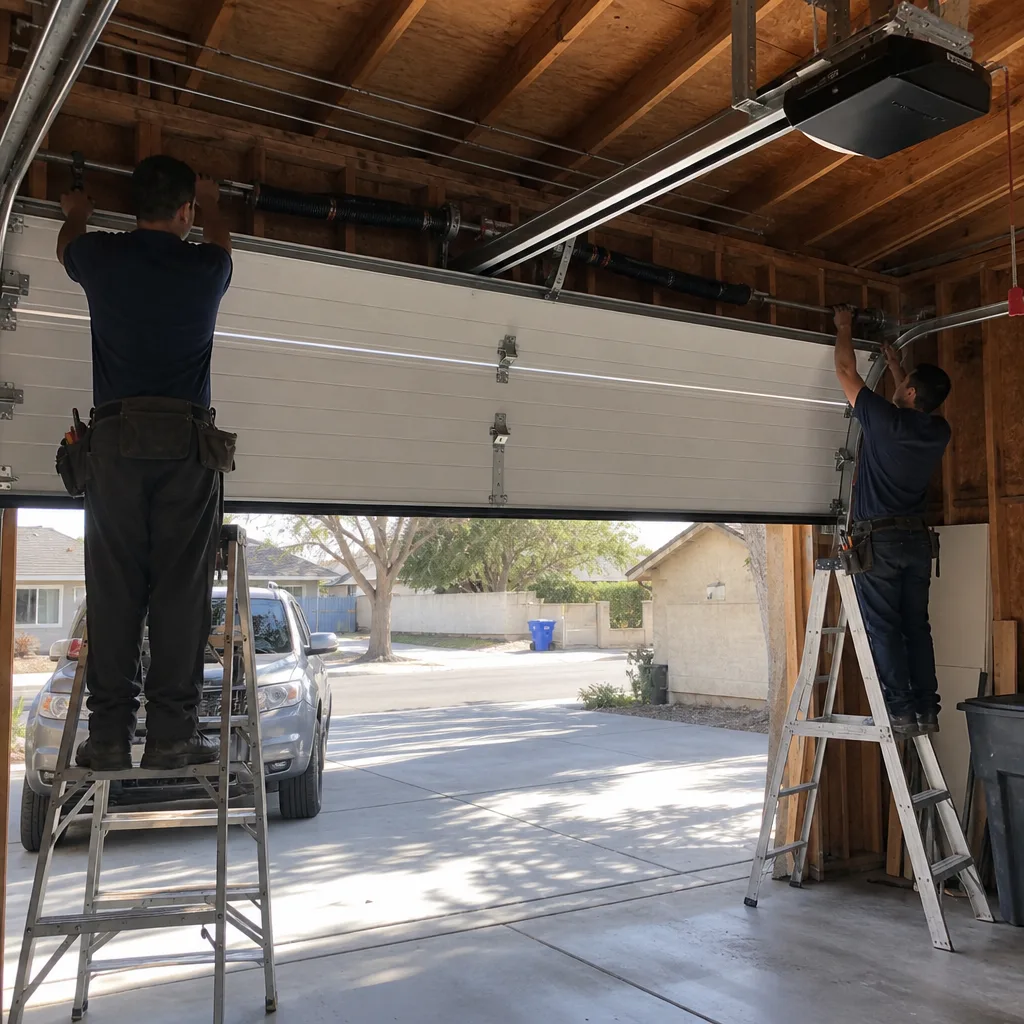
- Lubricating a failing roller instead of replacing it - Lubrication quiets a worn roller for about a week, then the grinding returns louder. The bearing is already damaged. Replacing the roller set costs $80 to $140; the money spent on lubricant doesn’t extend the roller’s life, it just delays the diagnosis.
- Ignoring a door that’s slightly out of balance because “it still works” - A door that’s even 10 pounds out of balance on one side is putting asymmetric stress on the spring, cables, and opener every single cycle. Balance problems don’t self-correct. They escalate.
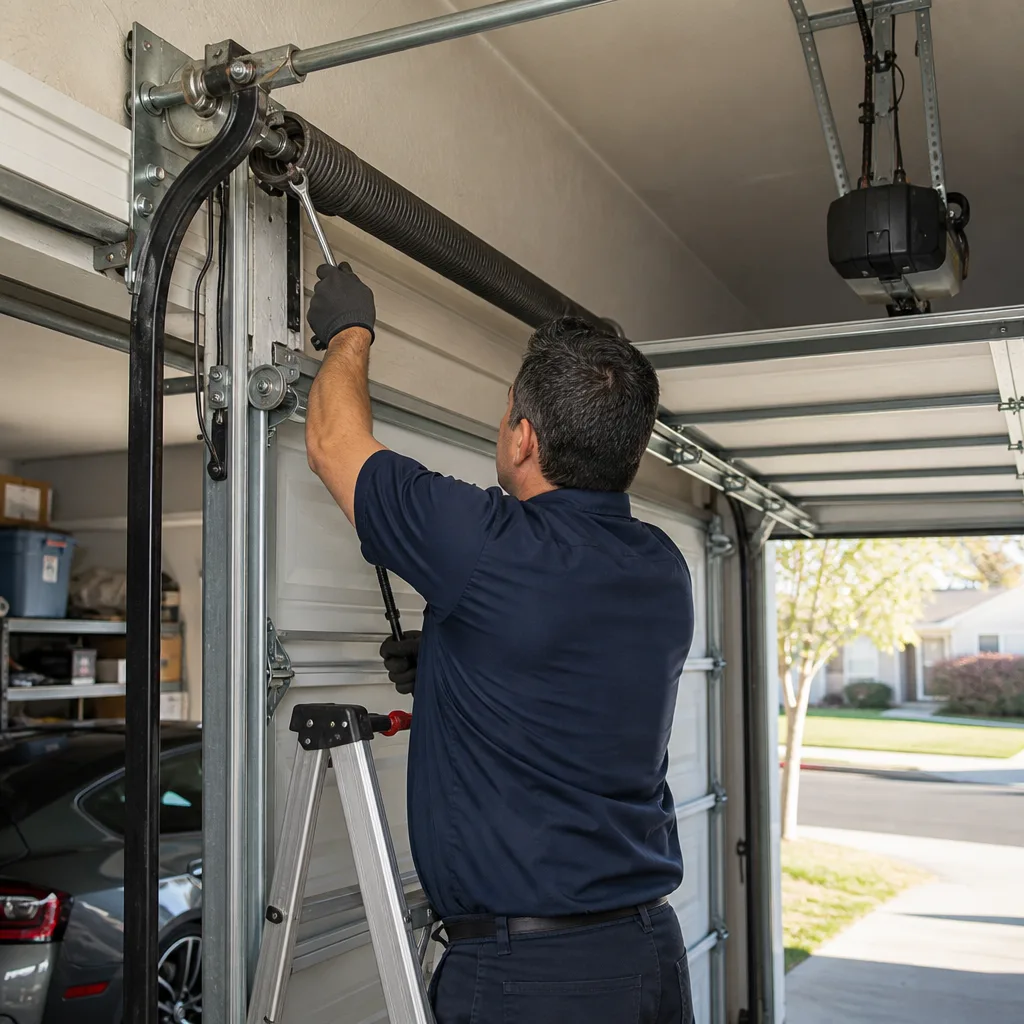
- DIY torsion spring replacement - The torsion spring is under enough tension to cause serious injury or death if it releases while being handled. This is one repair that should never be a weekend project. A professional has the winding bars, the right spring wire diameter for your door weight, and the experience to do it safely.
- Replacing the opener when the spring is the problem - If the door feels heavy when disengaged from the opener, the opener isn’t the issue. Replacing a functioning opener to solve a spring problem means you’ve spent $350 to $600 and the door still won’t lift properly.
- Waiting for a total failure before calling - The two-second hesitation, the grinding sound, the slightly crooked travel: these are all early warnings. The dollar penalty for waiting 60 to 90 days is documented in the table above. The repair doesn’t get cheaper with age.
- Accepting a quote that doesn’t specify the component being replaced - “Garage door repair” could mean anything. A written quote should name the part: torsion spring, roller set, limit switch, cable. If the quote doesn’t specify, ask for it in writing. If the contractor won’t put it in writing, find one who will.
When to Call a Professional
Some warning signs warrant immediate attention. If your door is visibly dropping on one side, if the torsion spring has a visible break, if the door came off the track, or if the cables are frayed and releasing individual wire strands, stop using the door and call a professional. These are safety issues, not convenience issues. A door that comes off track while opening can fall, and a garage door falling is heavier than most people expect: a 16-foot double door can weigh 250 to 400 pounds even when it’s a lightweight model. Servo Garage Doors Simi Valley offers free estimates across Simi Valley and answers the phone 24/7, including emergency calls. Call (661) 964-4530 and a real person picks up, not a recording.
For homeowners considering replacement rather than repair, our Garage Door Installation in Simi Valley page walks through the full installation process, including material options from Clopay, Amarr, and Wayne Dalton, and what the written quote covers.
Frequently Asked Questions
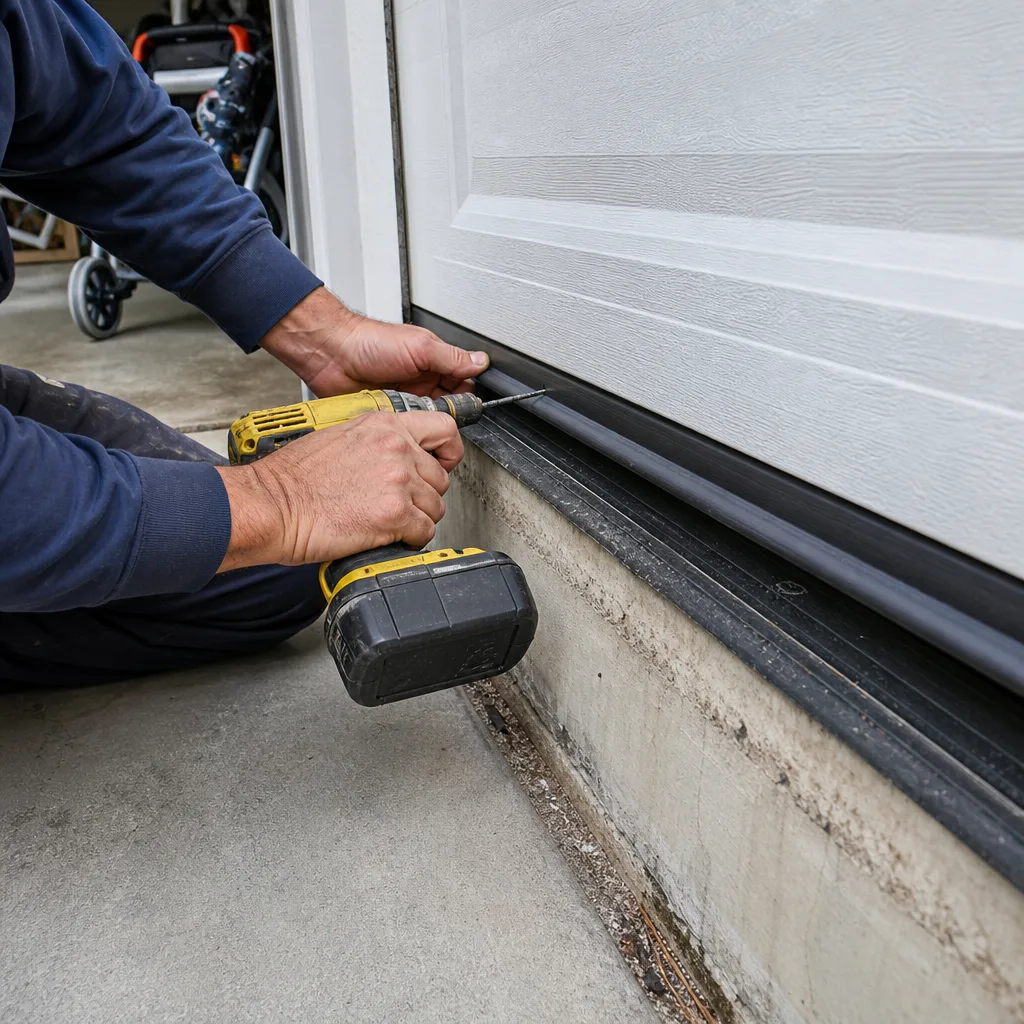
Garage door spring repair in Simi Valley typically costs $180 to $340 for a torsion spring replacement on a standard 7-foot residential door, including the spring, installation, and a written scope of work before any labor begins. Extension spring systems on older doors typically run $150 to $250. The exact price depends on the door weight, spring wire diameter, and whether a single or double spring setup is required. Call (661) 964-4530 for a written quote, not a verbal ballpark.
Yes, most garage door repairs in Simi Valley can be completed the same day the call comes in. Spring replacements, roller replacements, cable repairs, and limit switch adjustments are all same-day jobs for a technician with the right parts on the truck. We carry inventory for all major brands including LiftMaster, Chamberlain, Genie, and Craftsman, which means most repairs don’t require a return visit. Emergency calls are answered 24/7 by a live person, and if you call before noon, a same-day visit is usually available.
No, not with Servo Garage Doors Simi Valley. The price we quote is a flat, written price given before any work starts, and we honor that price. If the technician finds something unexpected during the job, we stop and document it with photos, then present a written addendum for approval before proceeding. You never receive a bill that’s higher than the number you agreed to. That’s Clause 1 of The Haven Standard, and it’s not negotiable.
We service all eight major garage door brands: LiftMaster, Chamberlain, Genie, Clopay, Amarr, Wayne Dalton, Craftsman, and Raynor. Parts for these brands are stocked on the truck where practical, which is why most repairs in Simi Valley are completed in a single visit. If you have a door brand outside this list, we can usually source the parts within a day or two and provide a written quote before any work begins.
Most residential torsion springs are rated for 10,000 cycles, which translates to 8 to 12 years of typical use in Simi Valley, where most homeowners cycle their door two to four times per day. Springs with a 20,000-cycle rating last approximately 15 to 20 years. If your home was built before 2005 and the springs have never been replaced, you’re living on borrowed time regardless of what the door looks like today.
Our technicians carry the most commonly replaced components on the truck: torsion springs in multiple wire diameters, extension springs, roller sets, cables, limit switches, and trolley carriages. For most repair calls in Simi Valley, the work is completed in the same visit. If your door requires a less common part, you’ll know before the visit ends, and we’ll schedule the return with a written price for the remaining work.
Yes, if you perform the two-second manual lift test described earlier in this guide. Pull the emergency release cord, lift the door to three feet, and observe. A door that drops fast or feels heavy indicates a spring problem. A door that holds but edges downward on one side, or shows visible fraying at the bottom cable brackets, indicates a cable problem. Photograph both and send them to us before you call. We can usually identify the failed component before the truck rolls.
The Bottom Line
The cheapest garage door repair is the one you don’t defer. Every symptom in this guide has a documented cost trajectory, and in every case the early fix costs less than half of the delayed repair. Simi Valley’s climate and housing stock make certain failures more likely: spring fatigue from thermal cycling, roller wear from Santa Ana dust, and track misalignment from gradual foundation settling. The homeowner who photographs the symptom before calling a contractor, asks for a written price that names the specific component, and demands documentation of what was found and what was done is the homeowner who pays a fair price. That’s the entire point of the Servo Garage Doors Simi Valley home service model, and it’s the reason we document every job with photos rather than handshakes.
Written by Marcus Deller, Owner at Servo Garage Doors Simi Valley, serving Simi Valley since 2015.