
Last updated September 20, 2026
Full 25-point door and opener safety check with every visit - springs, cables, rollers, tracks, and your LiftMaster or Chamberlain opener included
You get a price before we start. It does not change when the truck arrives.
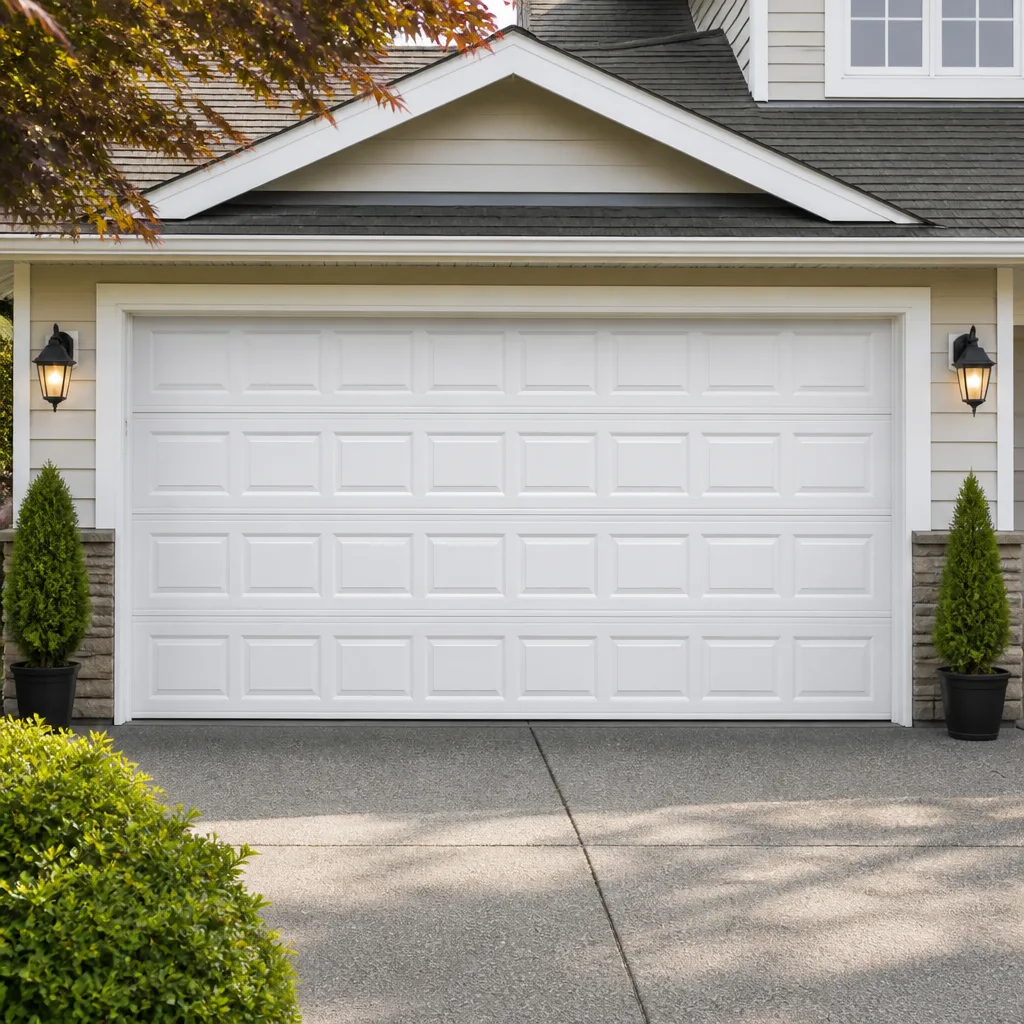
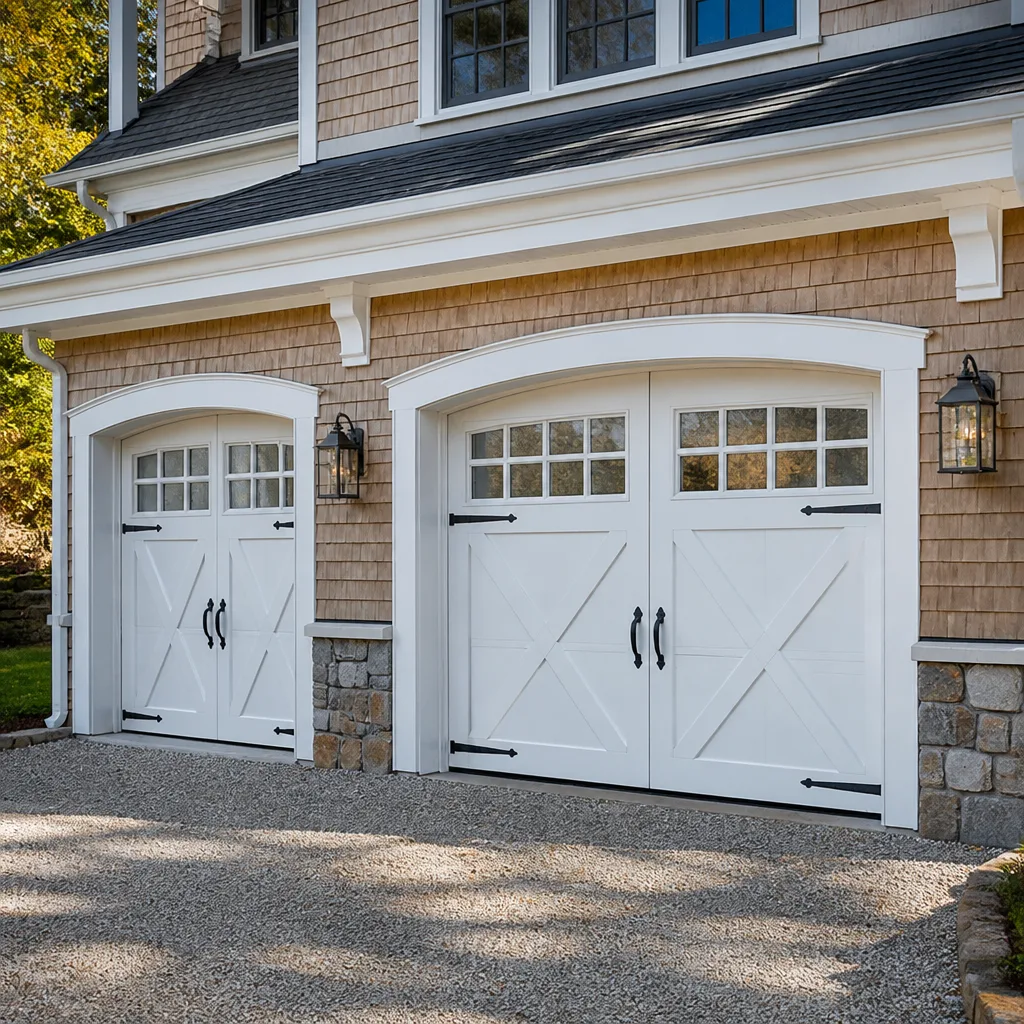
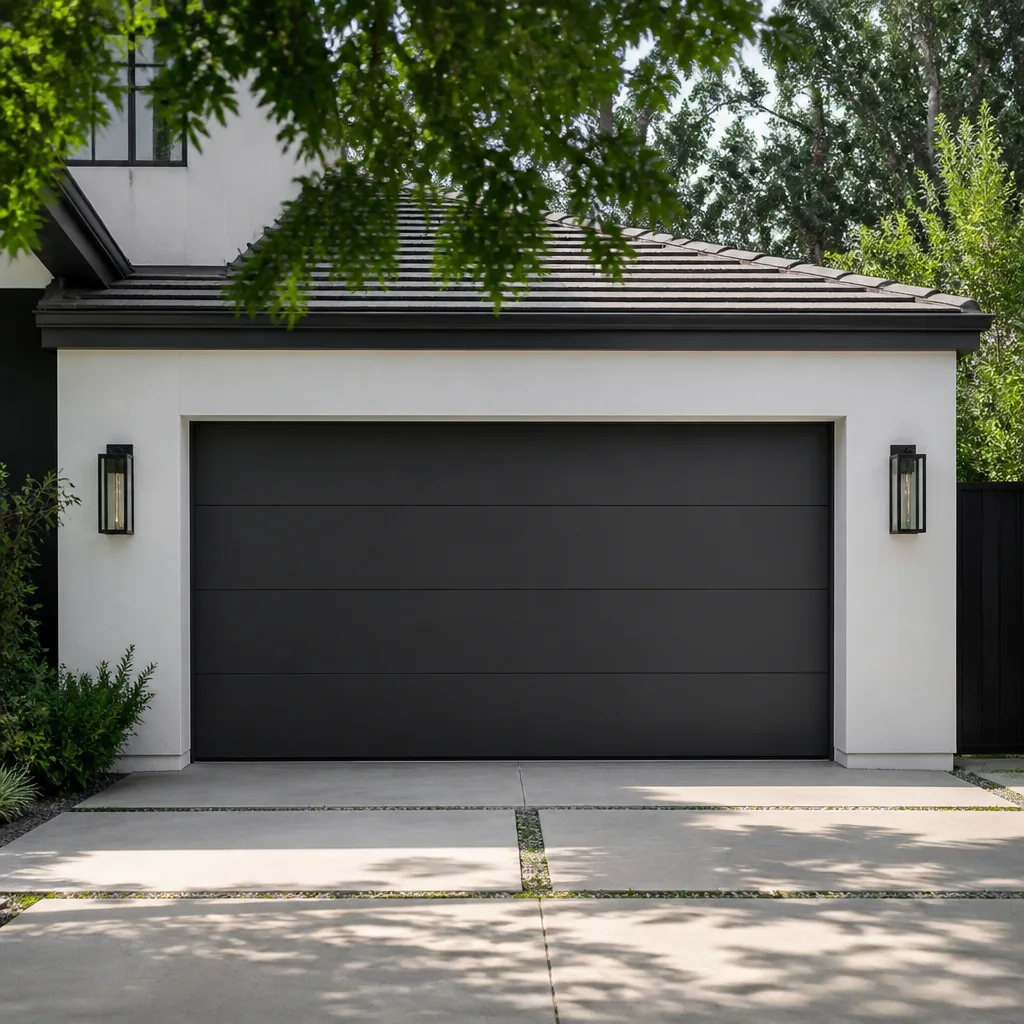
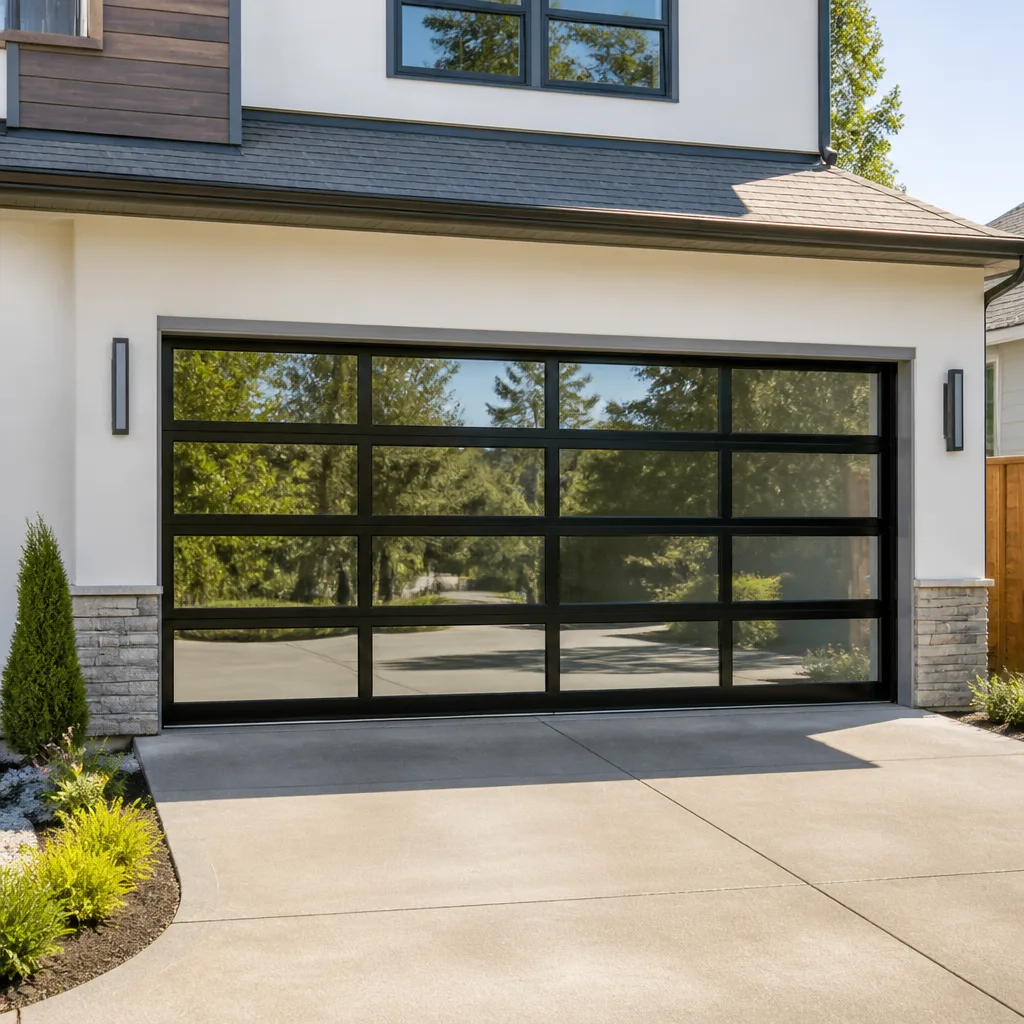
 Before
 After
After Before
 After
After Before
 After
AfterGarage Door Permits, Codes & Inspections in CA: What You Need to Know
Most California homeowners don’t realize that the most expensive garage door mistake they can make isn’t choosing the wrong model. It’s getting the permit question wrong. A like-for-like door swap in Simi Valley will rarely require a permit, but the moment you widen a rough opening or alter framing above an attached garage, you’ve triggered a cascade of requirements: structural review, Title 24 energy documentation, and fire-wall verification. Fail to pull that permit, and the problem doesn’t disappear with the next coat of paint. It attaches to the property title and resurfaces when you sell. This guide walks through the exact triggers, the inspection process, the energy code nobody explains, and the retroactive path if you’re already on the wrong side of it; for more guides & resources, see our blog.
Quick Answer
In California, a garage door replacement requires no permit when the door fits the existing opening and the framing stays untouched. A permit becomes mandatory in most jurisdictions, including Ventura County and Simi Valley, when you alter the rough opening size, change structural framing, cut into a fire-rated wall, or convert garage space to living area. Even when no permit is required, California’s Title 24 Part 6 energy code still demands documentation of insulation R-value for doors adjacent to conditioned space, and every new opener must meet UL 325 entrapment protection standards.
Table of Contents
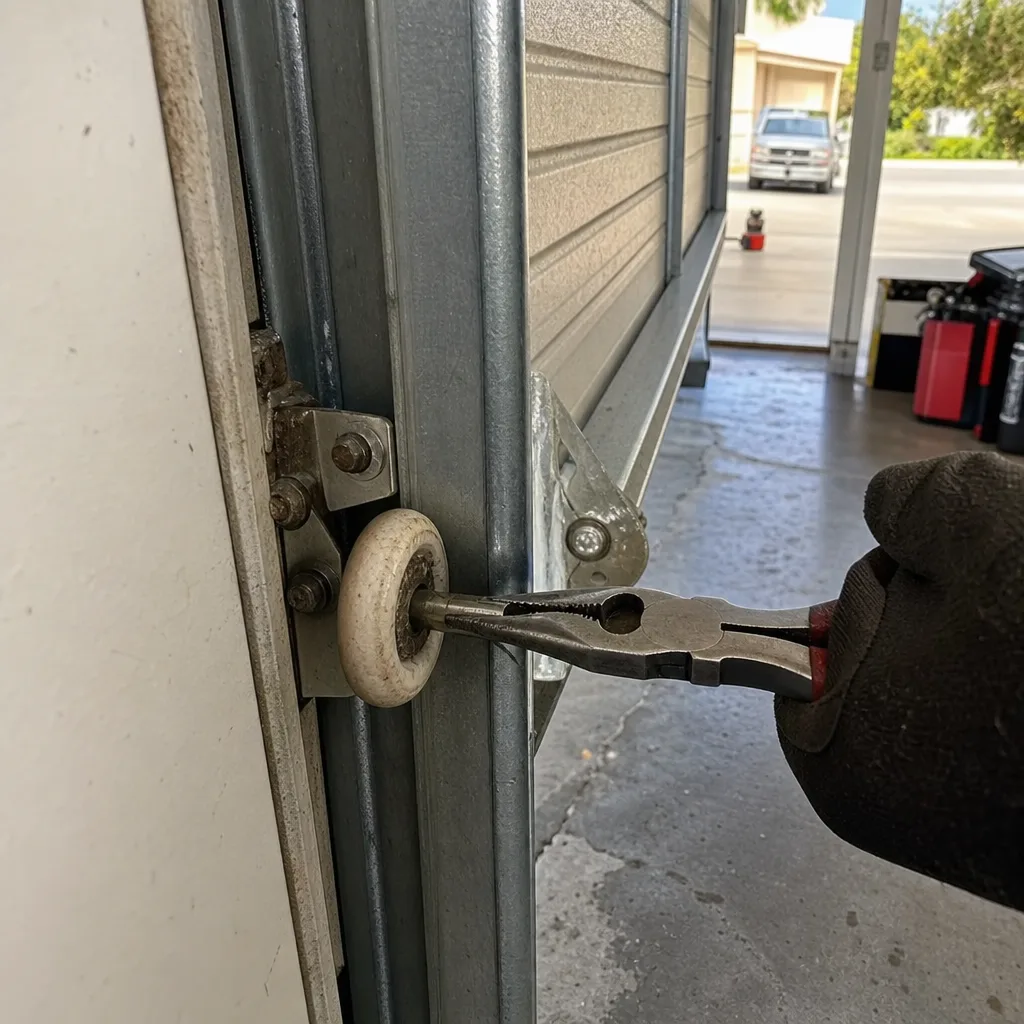
- When a Garage Door Permit Is Required in California
- Simi Valley and Ventura County: Local Permit Rules That Differ From State Baseline
- Title 24 Part 6: The Energy Code Nobody Volunteers
- UL 325 and California: What Inspectors Actually Check on the Opener
- Attached Garages and Fire-Wall Ratings: The Framing Change That Changes Everything
- Unpermitted Garage Door Work: Property Disclosures, Title Insurance, and Resale
- Retroactive Permit Application in Ventura County: When It Works, When It Doesn’t
- DIY Installation and Code Compliance: What a Homeowner Can and Cannot Self-Certify
BeforeAfterWhen a Garage Door Permit Is Required in California
California building codes apply uniformly at the state level through the California Building Standards Code, Title 24 of the California Code of Regulations. But enforcement lives at the city and county level. That means the permit trigger in Simi Valley follows the same logic as Sacramento or San Diego, with local interpretation layered on top.
The state baseline is simple: replacing a garage door with a like-for-like unit in the same opening does not require a building permit. “Like-for-like” means the door dimensions match the existing rough opening, the mounting hardware attaches to existing framing, and no structural member is cut, moved, or altered. We replace doors under these conditions in Simi Valley regularly, and the work is classified as maintenance, not construction.
A permit becomes mandatory when any of the following occur:
- You widen or heighten the rough opening. This means moving a header, trimming a stud, or installing a new header beam. Framing changes require plan review.
- You convert a single-car opening to a double-car opening. The header above that opening carries roof or second-floor load, and the new span requires engineered calculations.
- You cut a new opening where no door existed. This is structural work and always requires permits, drawings, and inspections.
- You alter the wall between an attached garage and living space. That wall carries a fire-resistance rating, and any penetration changes the assembly.
- You install a door in a detached structure that changes its use classification, such as converting a garage to an ADU or workspace.
The distinction we emphasize with Simi Valley homeowners, including those following our Garage Door Repair Maintenance Checklist for Simi Valley Homeowners: the permit question is not about the door, it is about the framing. A $4,000 premium door in the existing opening needs no permit. A $900 builder-grade door in a widened opening requires a full permit package. The permit cost tracks the structural work, not the door quality.
If you’re uncertain whether your project touches framing, the safe path is a call to the Simi Valley Building and Safety Division before any cutting starts. A two-minute conversation with a plan checker settles it. We’ve watched homeowners spend more on fixing an unpermitted header than they would have paid for the permit and the inspection combined.
Simi Valley and Ventura County: Local Permit Rules That Differ From State Baseline
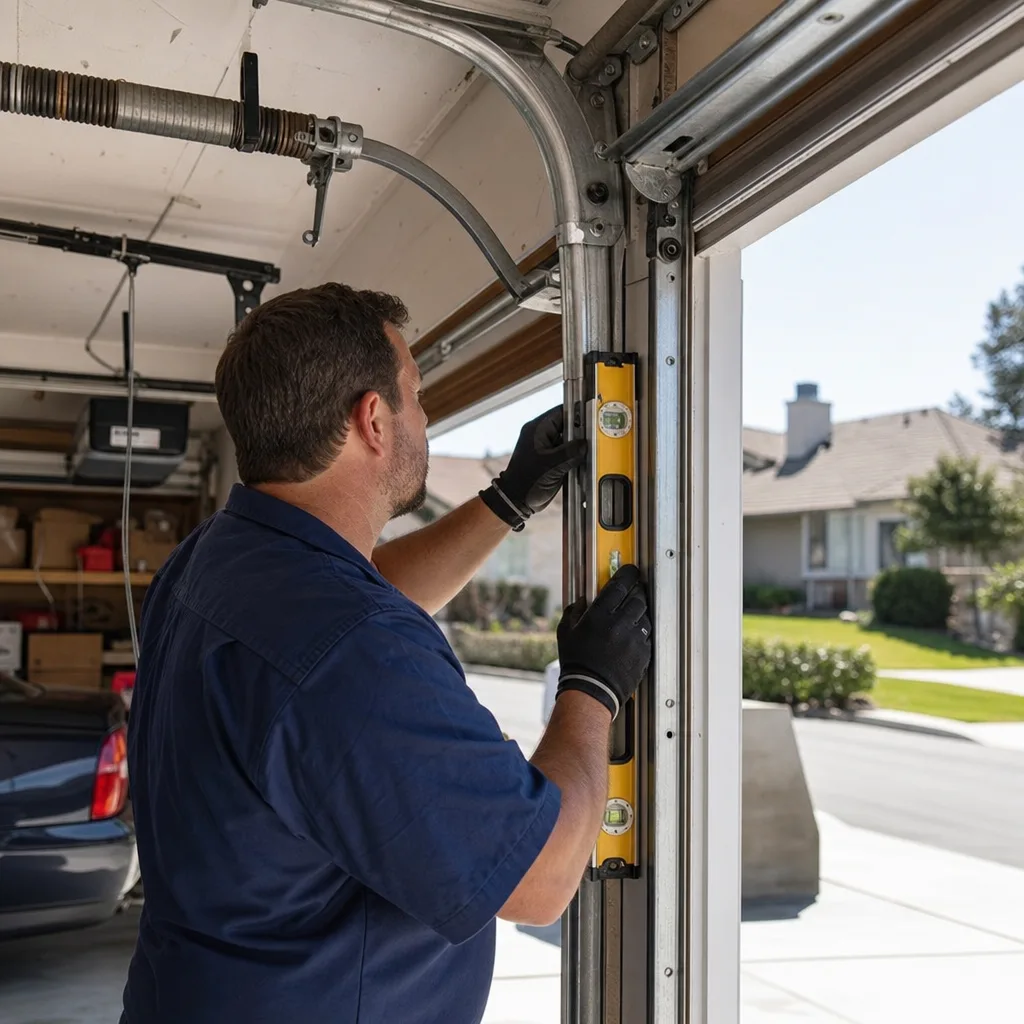
Simi Valley operates under the Ventura County Building and Safety Division’s enforcement framework, adopting the California Residential Code (CRC) and California Building Code (CBC) with local amendments. The practical difference for garage doors is narrower than most people expect.
Here’s what matters locally:
- Like-for-like replacement: no permit, no inspection. Simi Valley follows the state position. If the door fits the existing opening and the opener is a direct replacement, the city doesn’t want to see it. We handle these jobs daily, and the only paperwork involved is the written scope we provide before work starts.
- Rough opening changes: full permit required. The moment framing moves, Simi Valley requires a permit application, plan review, and at least two inspections: one at the framing stage, one at final. The city wants to see the new header before it’s covered.
- Fire-wall separation on attached garages: inspected even on some replacements. If your garage shares a wall or ceiling with living space, Simi Valley’s plan checkers may require verification that the existing fire-rated assembly remains intact after door work. This comes up most often on homes built before 1990, when the separation was not always continuous.
- HOA overlays add a layer the city doesn’t enforce. Many Simi Valley neighborhoods, particularly in Wood Ranch and Big Sky, have CC&Rs governing door appearance, material, and even color. The HOA approval is separate from the city permit, and neither substitutes for the other.
In our experience, the confusion point for Simi Valley homeowners-who may have missed garage door warning signs earlier-is the attached garage wall. Most assume permits only track structural changes they can see. But the wall between a garage and the house is a fire-rated assembly, and California treats any alteration to it as a life-safety matter, not a cosmetic one. A door replacement that leaves the framing alone won’t trigger this, but widening the opening into that wall always does.
Title 24 Part 6: The Energy Code Nobody Volunteers
Here’s the rule that catches homeowners off guard: even when no building permit is required, garage door work adjacent to conditioned space can trigger California’s Title 24 Part 6 energy code requirements. The energy code governs insulation values on any door that separates a conditioned area from unconditioned space or exterior air.
The requirement breaks down by door location:
- Detached garage: no Title 24 trigger. If the garage is not connected to the house and has no conditioned space above it, the door is classified as an exterior door with no specific R-value mandate.
- Attached garage with living space above: R-value documentation required. The garage door may be required to meet a minimum insulation value because it sits beneath or beside conditioned space. This is where the documentation element matters: the installer must provide manufacturer specifications showing the door’s tested R-value.
- Garage converted to conditioned space: full Title 24 compliance required. If the garage becomes a living room, office, or bedroom, the door must meet the same energy standards as any exterior door in a conditioned envelope, including U-factor and R-value minimums.
The practical issue we see in Simi Valley: homeowners replace an uninsulated steel door on an attached garage and never receive a manufacturer R-value sheet. The door goes in, the work looks fine, and nobody mentions energy code. Five years later, at resale, a sharp home inspector flags the missing documentation. The homeowner is left chasing a spec sheet from a manufacturer or paying for a site inspection to establish the door’s thermal performance.
This is exactly why we document the door spec on every replacement, including the R-value from the manufacturer’s data sheet. You get it with your written scope and your photo record. The documentation costs nothing to provide and everything to lack. Brands like Clopay and Amarr publish tested R-values for their insulated lines, and that paper trail travels with the house.
For homeowners in Simi Valley’s older neighborhoods, where attached garages with living space above are common in tracts built from the 1950s through the 1980s, the Title 24 documentation gap is a recurring resale issue. The door works fine. The paperwork doesn’t exist. Both matter when the title changes hands.
UL 325 and California: What Inspectors Actually Check on the Opener
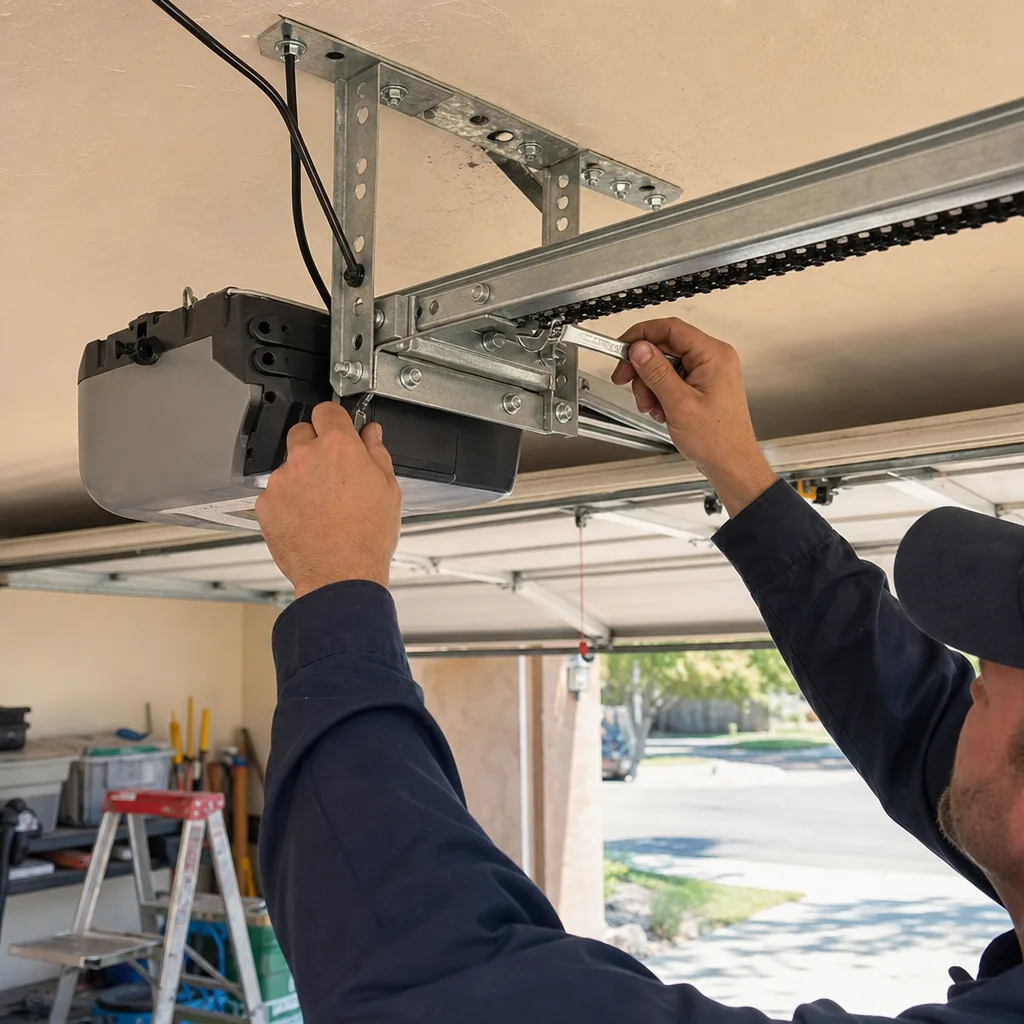
UL 325 is the safety standard for garage door openers in the United States, governing entrapment protection, force settings, and reversing mechanisms. California adopts UL 325 through Title 24 Part 3, but enforcement in the field differs from the federal baseline in one specific way: California inspectors verify function, not just installation.
Here’s what an inspector or a trained technician checks on every opener, whether or not a permit was pulled:
- Photo eye placement and function. The infrared sensors mounted within 6 inches of the floor on each side of the opening must interrupt the close cycle. California inspectors in Simi Valley will block the beam with a test object and watch for reversal.
- Force setting verification. The opener must reverse when it encounters a 1.5-inch obstruction at floor level. Inspectors use a test block or a rolled towel. If the door crushes the block instead of reversing, the setting is too high and the unit fails.
- Manual release function. The red emergency release handle must disengage the door from the trolley carriage. Inspectors verify it works with the door in the open position, where tension on the system is highest.
- Battery backup compliance. California has required battery backup on all newly installed residential openers since 2019, following the wildfire-driven power shutoff concerns. If your opener was installed after that date and lacks a battery, it’s out of compliance.
The UL 325 standard also covers the safety reverse on the motor itself. Most homeowners never see this tested. We test it on every service call because it fails quietly. A torsion spring that loses tension or a garage door that slips out of balance can defeat the force-setting logic, and the door won’t reverse when it should.
One point worth naming directly: UL 325 compliance does not expire, but components do. Photo eyes cloud over or shift out of alignment. Logic boards on older openers from LiftMaster or Chamberlain can develop faults that disable the safety reverse without any visible symptom. The opener runs, but the protection doesn’t. That’s the inspection gap that matters most.
Attached Garages and Fire-Wall Ratings: The Framing Change That Changes Everything
The wall between an attached garage and your living space is not a regular wall. The California Residential Code requires a fire-resistance rating, typically one hour, on that separation. The garage door itself doesn’t carry the rating, but the wall does, and any change to the rough opening changes that assembly.
Here’s where it gets specific. In Simi Valley, homes built after the mid-1980s typically have a continuous fire-rated separation between garage and house. Older homes often do not. A door replacement in a modern home rarely touches the fire wall. But a rough opening widening on the wall between garage and interior space means cutting into that rated assembly, and the building department will want to see how the new header and framing restore the rating.
The elements that must be preserved or restored include:
- Type X drywall on the garage side of the wall. Standard drywall doesn’t carry the rating. Type X does, and the thickness varies by requirement.
- Continuous drywall across the top plate. Gaps in the drywall at the top of the wall are a common fire-spread path.
- Proper sealing around any penetrations. The new door frame must not create a gap that bypasses the rated assembly.
- Self-closing door requirements where applicable. If the person door from garage to house is being replaced at the same time, it typically must be solid-core or rated.
The practical consequence: a garage door project that starts as a simple widening can become a fire-safety work order. That’s not a contractor inventing scope. That’s the building code treating the garage-to-house wall as the most dangerous wall in the house, because it is. Vehicle fires start in garages and spread upward quickly, and the separation is what buys you time to get out.
Brand matters here too. A door from Wayne Dalton or Amarr won’t change the fire-wall requirement, but door weight and mounting hardware do affect how the new framing performs. Heavier doors need better attachment points, and the plan reviewer will want to see the connection detail.
Unpermitted Garage Door Work: Property Disclosures, Title Insurance, and Resale
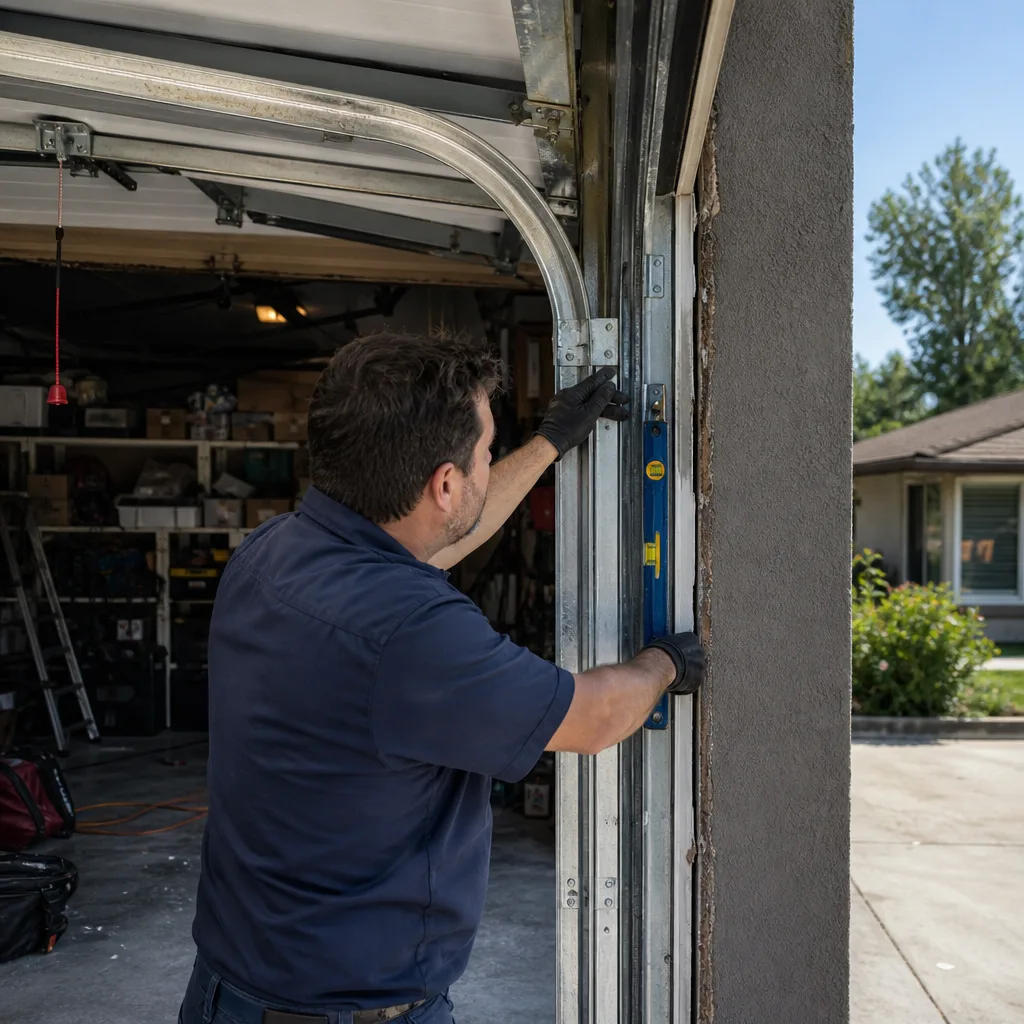
If an unpermitted garage door modification happened on your watch, or on the watch of the previous owner, the problem doesn’t stay hidden. California’s real estate disclosure laws require sellers to disclose known unpermitted work. Most sellers claim ignorance. The better-informed buyer brings an inspector, and the inspector checks the header span above the garage door.
Here’s how an unpermitted modification surfaces:
- The home inspector flags it. A widened opening with non-engineered framing is visible to an inspector who knows what a standard header looks like. The telltale signs are undersized lumber, missing jack studs, or a header spliced from scrap pieces.
- The buyer’s lender asks questions. Conventional lenders won’t finance a home with significant unpermitted structural work. The deal stalls until the issue is resolved.
- The title insurer excludes the issue. Title insurance covers unknown defects. When a defect is disclosed or discovered before closing, the insurer may exclude it from coverage, leaving the buyer to negotiate a fix or walk away.
- The seller pays either way. Retroactive permitting usually costs more than the original permit would have, and the seller typically covers it as a closing condition.
The penalty isn’t a fine, in most cases. It’s a transaction problem. The work gets flagged at the worst possible moment, and the seller is negotiating from the weakest position. We’ve seen Simi Valley sellers take a $10,000 hit on a closing because a previous owner widened a garage opening without a permit in 1998. The header was still standing, but no engineered drawing existed, and the buyer’s lender demanded one before funding.
The disclosure form, specifically the Transfer Disclosure Statement, asks whether any improvements were made without required permits. Sellers who answer truthfully invite scrutiny. Sellers who answer dishonestly expose themselves to fraud claims after closing. Neither path is comfortable. The cheapest fix is the permit before the work happens.
Retroactive Permit Application in Ventura County: When It Works, When It Doesn’t
Ventura County does allow retroactive permits in many cases. The process is less forgiving than pulling the permit before the work, and in some situations, the county will not accept the existing framing without destructive inspection.
The retroactive path looks like this:
- Application and disclosure. You file for a permit and note that the work is already complete. The application is routed to plan review for the original construction’s scope.
- Structural verification. If the header is concealed, the county may require removal of drywall or exterior surfacing to expose the framing. A structural engineer’s letter may be accepted in place of a destructive inspection, but the county makes that call, not the homeowner.
- Correction work. If the exposed framing doesn’t meet current code, you’re rebuilding it. This is where retroactive permits turn expensive: the original shortcut is now exposed, and the county won’t sign off on non-compliant work.
- Final inspection and clearance. Once the framing is verified or corrected, the inspector signs off, and the permit is issued retroactively. You now have a documented, legal modification.
When the county will not accept the existing work, the only path is demolition and rebuild. This happens when the header span was made from undersized lumber, when fire-rated separation was compromised and cannot be restored without rebuilding the wall, or when the original work was so far out of compliance that no engineer will sign it.
Costs vary widely. A straightforward retroactive permit for a widened opening with good framing might run $800 to $2,000 in fees and engineering. Correction work on a bad header can push the total to $5,000 or more, before you touch the door itself. Compare that to the cost of pulling the permit correctly the first time, which is typically $300 to $800 in Ventura County.
For Simi Valley homeowners specifically, the retroactive permit process goes through the same Building and Safety counter that handles initial permits. The counter staff are pragmatic, but they will not waive structural verification just because the door has been working for ten years. Working and compliant are different standards.
DIY Installation and Code Compliance: What a Homeowner Can and Cannot Self-Certify
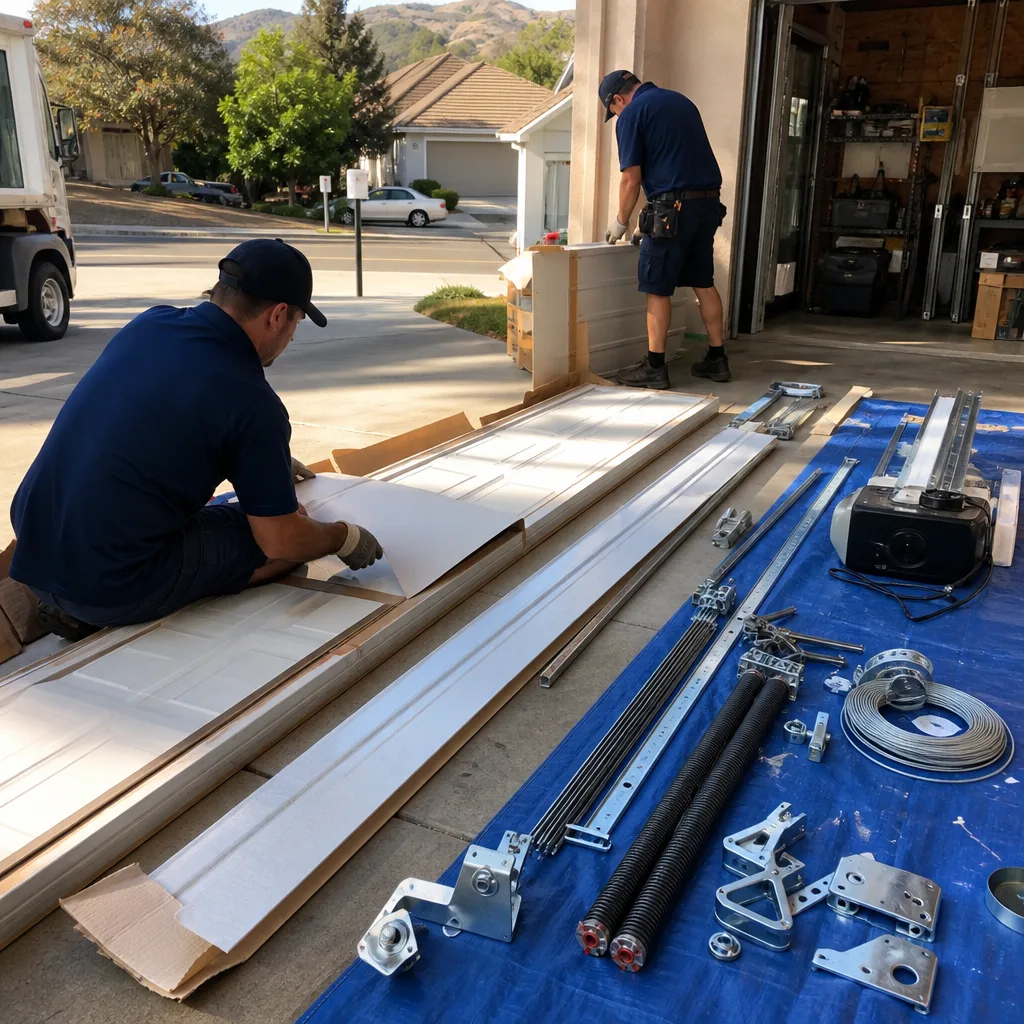
California allows homeowners to act as their own contractor on their primary residence, including pulling permits and doing the work. But the standard that applies is the same one applied to a licensed contractor. You either meet code or you don’t, and the inspector doesn’t care who did the work.
What a homeowner can reasonably handle:
- Like-for-like door replacement with no framing changes. This requires no permit and no inspection. The door bolts to existing hardware, and the opener plugs into existing electrical.
- Opener replacement with the same motor type and mounting pattern. Also no permit, but the UL 325 checks still apply. You’re responsible for photo eye alignment and force setting.
What a homeowner should not self-perform without a structural engineer or licensed contractor:
- Rough opening widening or height changes. The header carries load, and getting it wrong doesn’t fail immediately. It sags over years, and the failure shows up as cracks above the door or a door that won’t stay aligned with the track.
- Any cut into a fire-rated assembly. The fire separation is not a place for experimentation. The stakes are your family’s evacuation time during a garage fire.
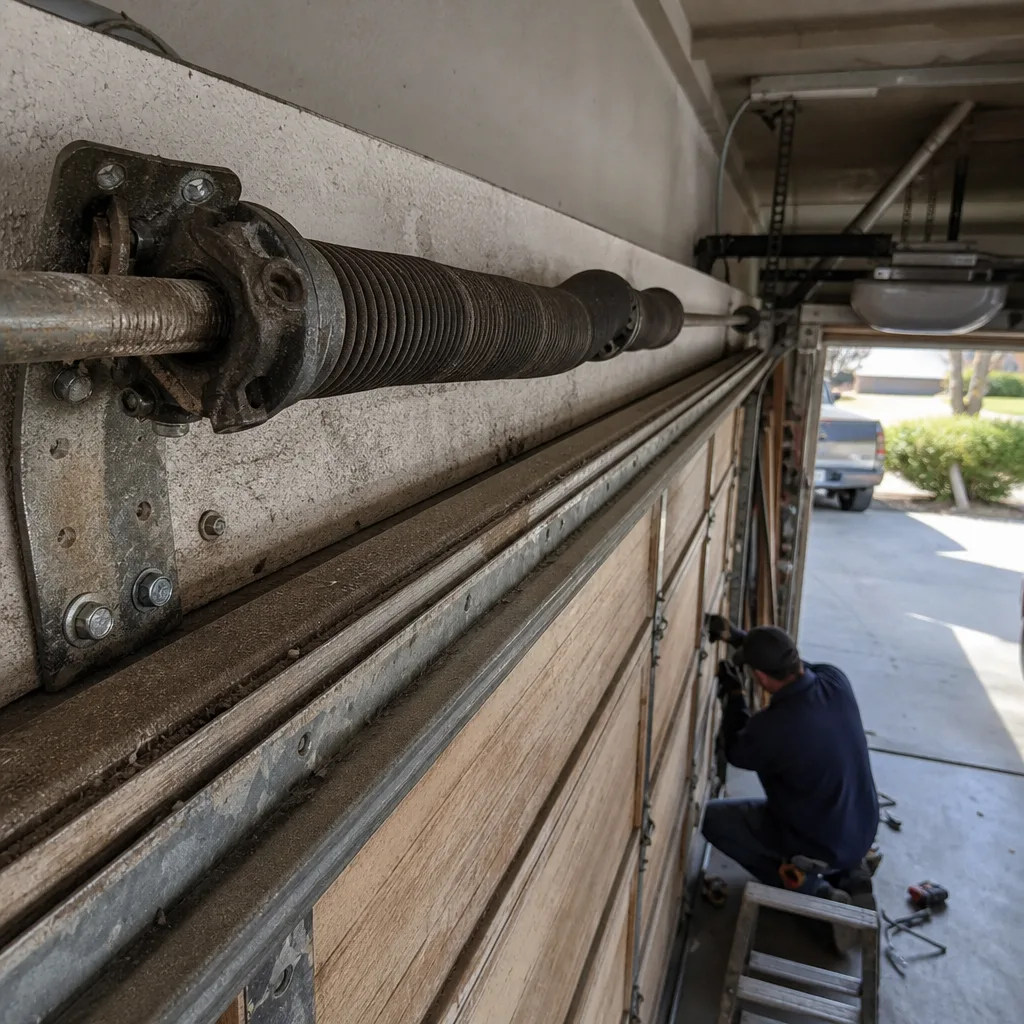
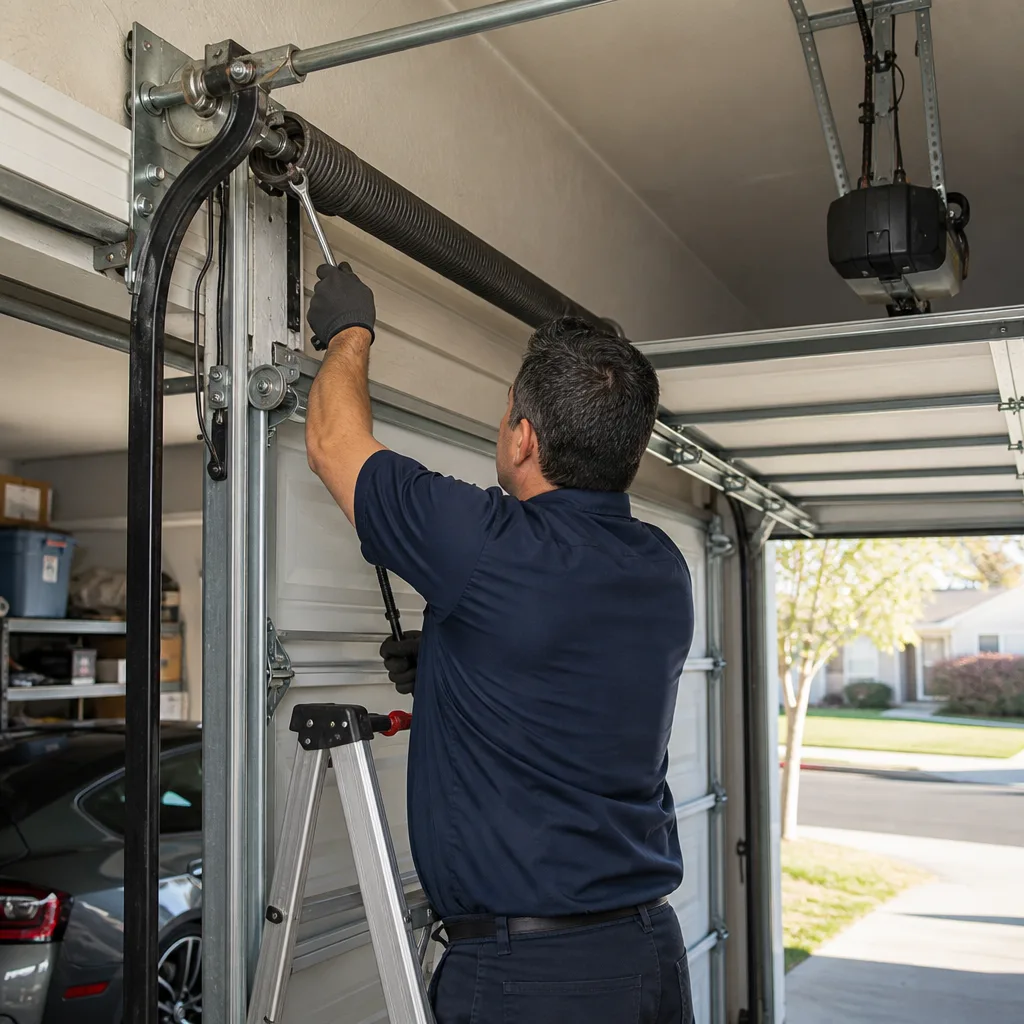
- Spring system work. Torsion springs are under extreme tension, and the injury risk is severe. This is not a code issue, but it’s a safety threshold we won’t cross as a recommendation. High-tension springs should be serviced by a trained professional, and that’s not a sales line. It’s a hospital-visit avoidance line.
The Simi Valley building department will issue permits to homeowners directly. That isn’t the question. The question is whether you can produce the drawings, calculations, and execution that pass inspection. Most homeowners who pull a permit for structural work hire a contractor to do the build, and the homeowner simply holds the paper.
Where Servo fits: we handle the door side of the work, and when framing changes are involved, we tell the homeowner before anything gets cut. Clause 4 of The Haven Standard is why the technician photographs the failed part before quoting a replacement. The same principle applies to permits: we document what exists, name what needs to change, and you get a written scope before any work begins. That scope tells you whether you’re in like-for-like territory or heading into permit territory.
Common Mistakes to Avoid
- Assuming a bigger door needs a permit and a same-size door doesn’t, without checking the framing. The permit trigger is the rough opening, not the door panel. A same-size door on altered framing still requires a permit.
- Skipping the Title 24 documentation on an attached garage door. The R-value sheet from the manufacturer costs nothing to keep and becomes a resale issue when it’s missing. Ask for it and file it.
- Treating the garage-to-house wall as a standard wall. It’s a fire-rated assembly. Cutting into it without restoring the rating is a code violation and a life-safety failure, even if the door works perfectly afterward.
- Letting a contractor talk you out of a permit to save money. The contractor who says “we can skip the permit” is transferring the risk to you. The title disclosure problem lands on the homeowner, not the installer.
- Ignoring HOA requirements in Simi Valley neighborhoods with active associations. A city permit doesn’t override a CC&R restriction, and the HOA can compel you to change a door that violates its standards.
- Assuming a retroactive permit will be easy because the work is standing. The county won’t sign off on framing it can’t see, and exposing the work often reveals shortcuts that now must be fixed at current code.
- Skipping the UL 325 checks on a DIY opener replacement. Photo eyes that aren’t aligned and force settings set too high are the difference between a door that opens and a door that stops a child. Test both before you call the job done.
When to Call a Professional
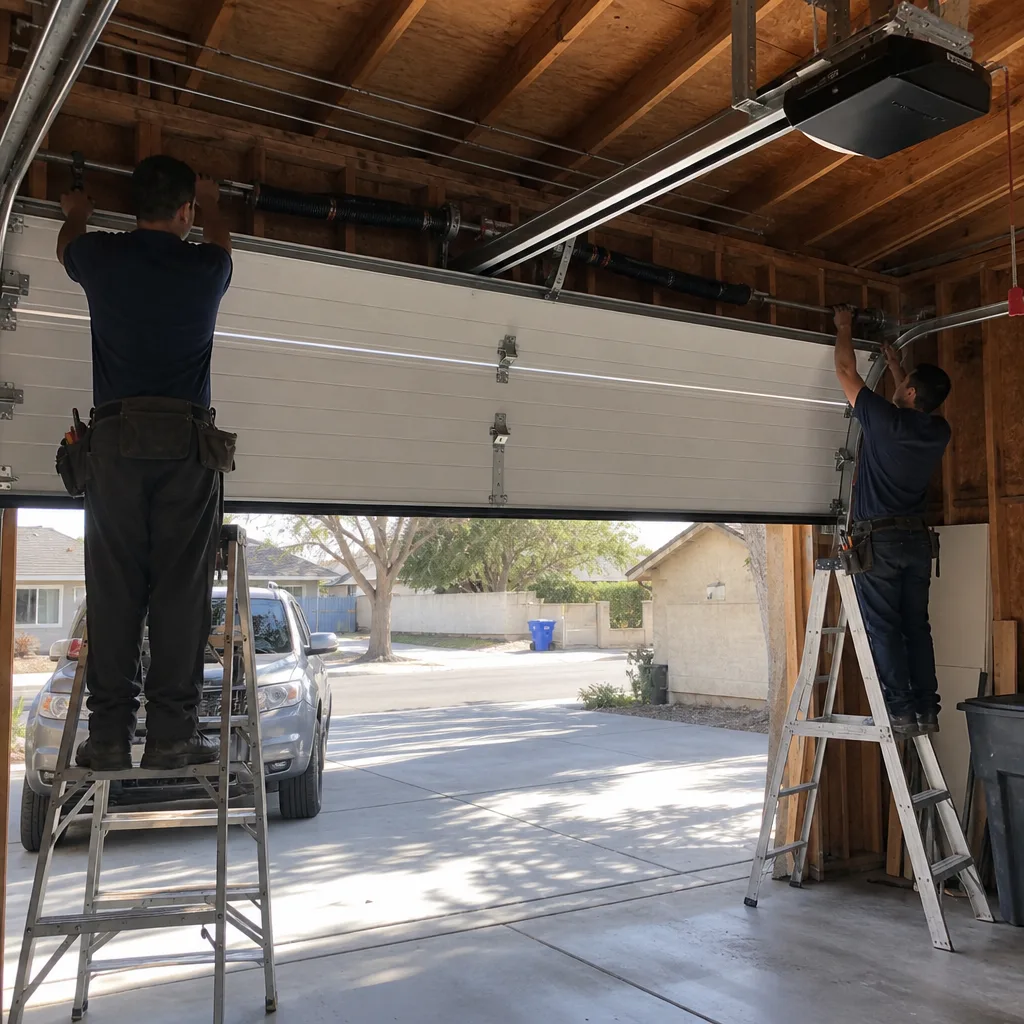
You need a licensed contractor when the work touches framing, when the fire-rated wall is involved, and when you can’t produce the structural drawings the county will ask for-see how to hire a garage door contractor in Simi Valley for guidance. You also need a technician who carries high-tension spring training when torsion springs are part of the job, and the injury risk is real, not theoretical.
You need documentation when the work is done. Servo Garage Doors Simi Valley offers free estimates in Simi Valley, and every visit includes a documented photo record of what was found and what was done. The written scope and flat price come before any work starts, per Clause 1 of The Haven Standard. Call (661) 964-4530 for a free estimate, and we’ll tell you whether your project needs a permit before any cutting happens.
Frequently Asked Questions
No permit is required for a like-for-like garage door replacement that fits the existing rough opening and leaves all framing untouched. If you’re changing the opening size, altering the header, modifying the fire-rated wall, or cutting new framing, a permit from the Simi Valley Building and Safety Division is required. The trigger is the framing, not the door. Call (661) 964-4530 if you’re unsure whether your project crosses the line, and we’ll give you a straight answer without a site visit.
A standard residential permit for garage door work that involves framing changes typically runs $300 to $800 in Ventura County, covering plan review and inspection fees. Correcting non-compliant framing discovered during a retroactive permit can push total costs past $5,000. The original permit is always the cheaper option. Get the Garage Door Installation in Simi Valley details on what a permitted project includes before you start.
The unpermitted work stays with the property and surfaces during resale through the Transfer Disclosure Statement, a home inspector’s findings, or a lender’s review. You’ll likely pay for retroactive permitting or structural correction before the sale can close, and the buyer’s title insurer may exclude the issue from coverage. The fix happens, but on the buyer’s timeline and at the seller’s expense. If you’re already in this position, start with a retroactive permit application and be prepared for structural verification.
No permit is required for replacing an existing garage door opener with a new unit in the same location using existing electrical. California does require battery backup on newly installed residential openers, and the UL 325 safety standards still apply: photo eyes must be aligned and the force setting must reverse on a 1.5-inch obstruction. If you need opener work in the area, see Garage Door Opener Repair & Installation in Simi Valley for the details.
A like-for-like replacement in the same opening is not structural, and no permit is required. Changing the rough opening size, moving a header, altering studs, or cutting into the fire-rated wall between an attached garage and the house is structural work, and those changes require a permit, engineered drawings, and inspections. The distinction is whether load-bearing framing changes. If framing changes, the permit applies regardless of the door’s size or price. Our Garage Door Repair in Simi Valley page covers the difference between maintenance and structural work in more depth.
Yes, Ventura County allows retroactive permits in many cases, but the path requires exposing the concealed framing for inspection, and any work that doesn’t meet current code must be corrected before sign-off. If the framing was done correctly, the process is straightforward. If it wasn’t, you’re rebuilding it. In worst cases, demolition and rebuild is the only way to achieve compliance. The Servo Garage Doors Simi Valley home page has more on how we approach documentation and compliance on every job.
The Bottom Line
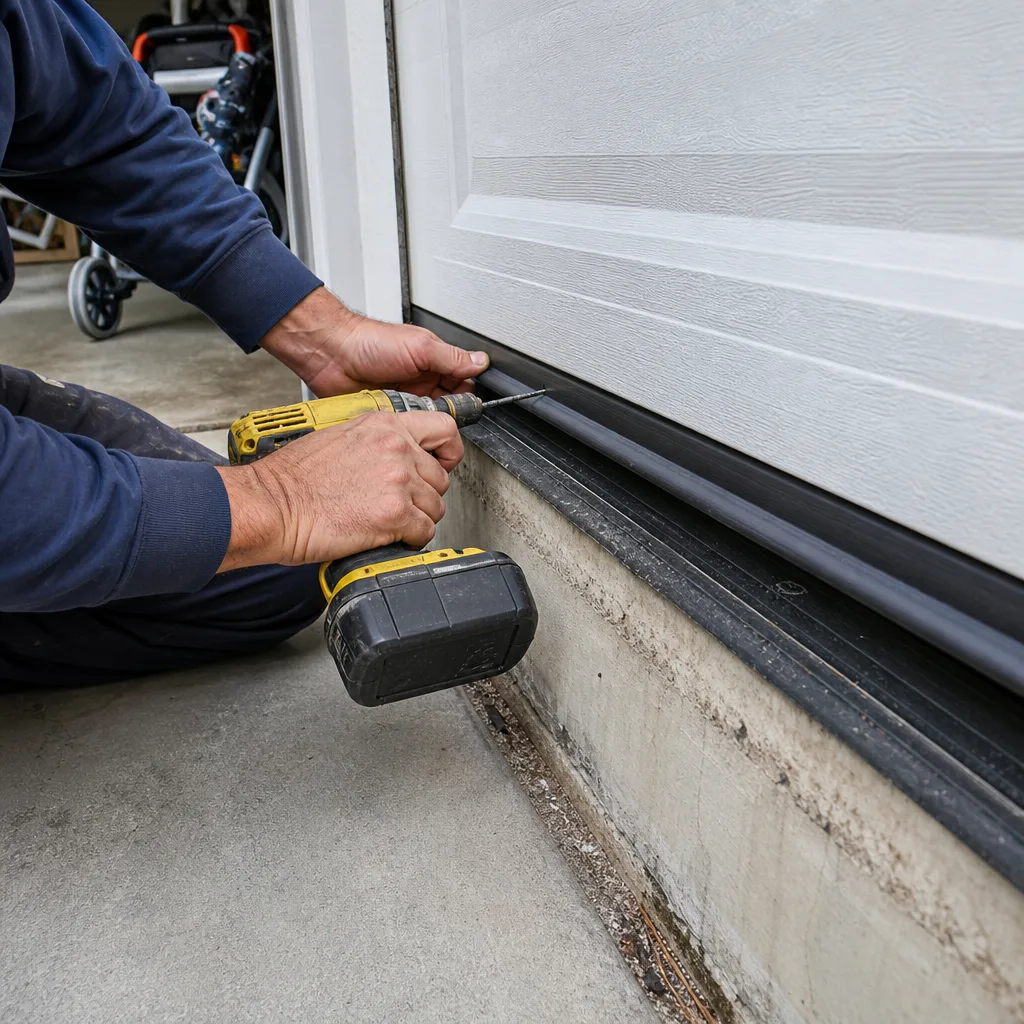
Garage door permits in California are not complicated once you understand the one variable that matters: whether the rough opening changes. Like-for-like replacement stays permit-free. Any framing change pulls the project into permit, inspection, and documentation territory, and the fire-rated wall on an attached garage raises the stakes beyond what most homeowners expect. California’s Title 24 energy code adds a paper-trail requirement that follows the property, and unpermitted work surfaces at resale on terms you won’t control. The cheapest version of this is paying for the permit before the work. The most expensive version is explaining the absence of one at the closing table. Call Servo at (661) 964-4530 if you want a written answer on whether your project needs a permit, before any cutting starts.
Written by Marcus Deller, Owner at Servo Garage Doors Simi Valley, serving Simi Valley since 2015.