
Last updated September 20, 2026
Full 25-point door and opener safety check with every visit - springs, cables, rollers, tracks, and your LiftMaster or Chamberlain opener included
You get a price before we start. It does not change when the truck arrives.
 Before
 After
After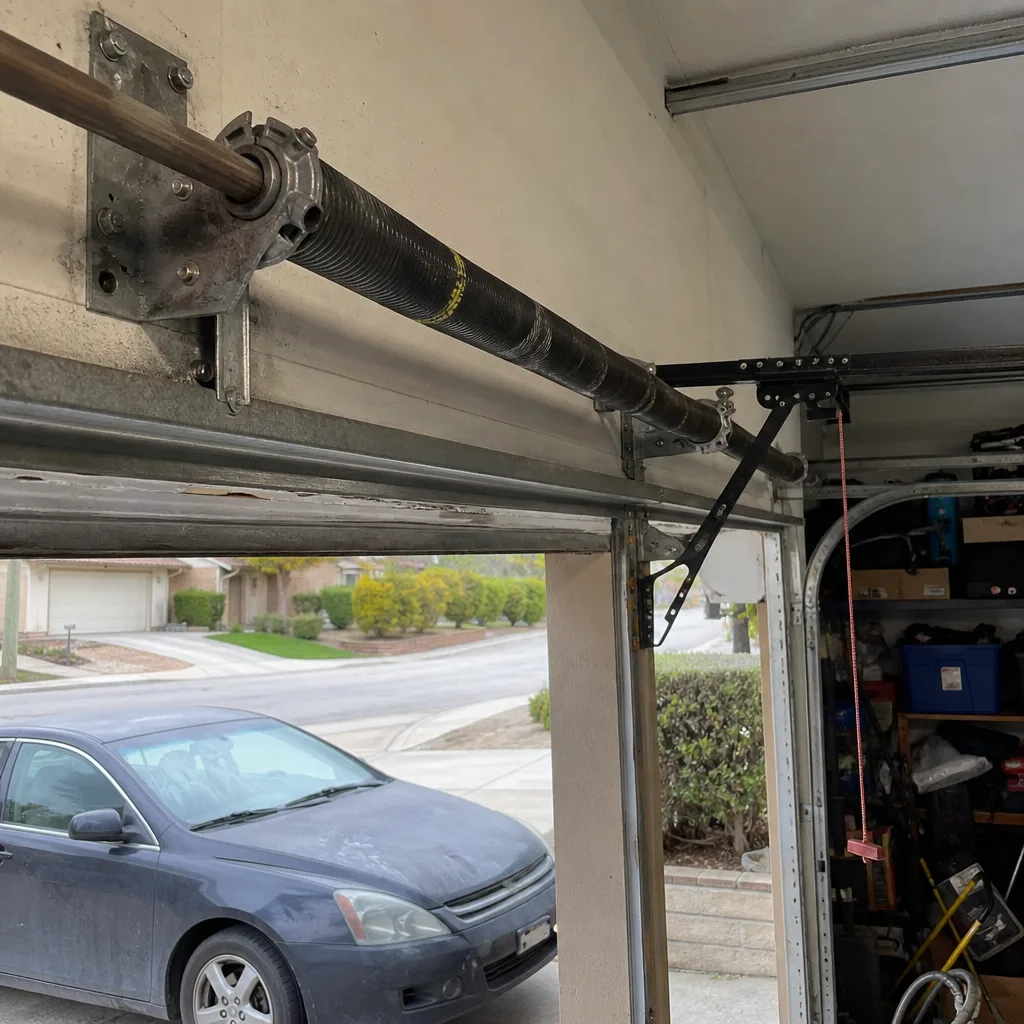 Before
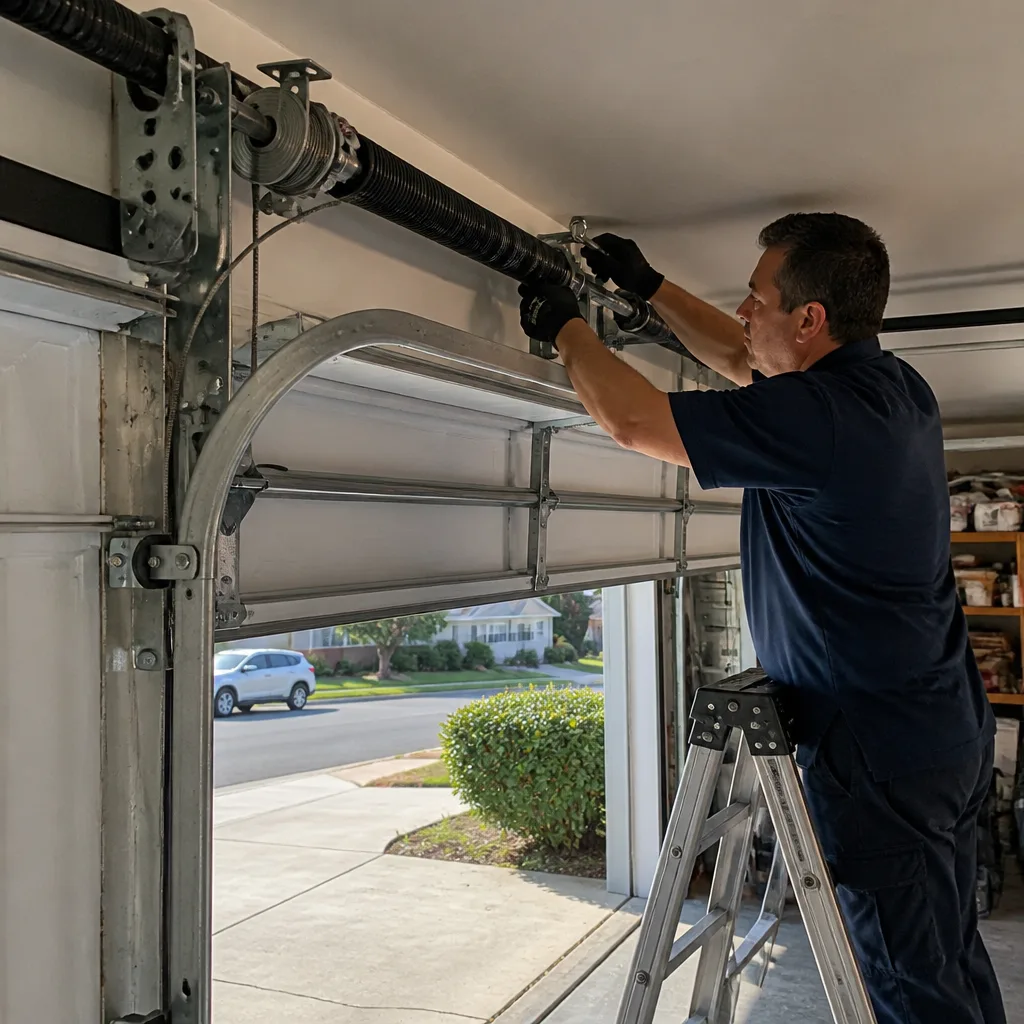 After
After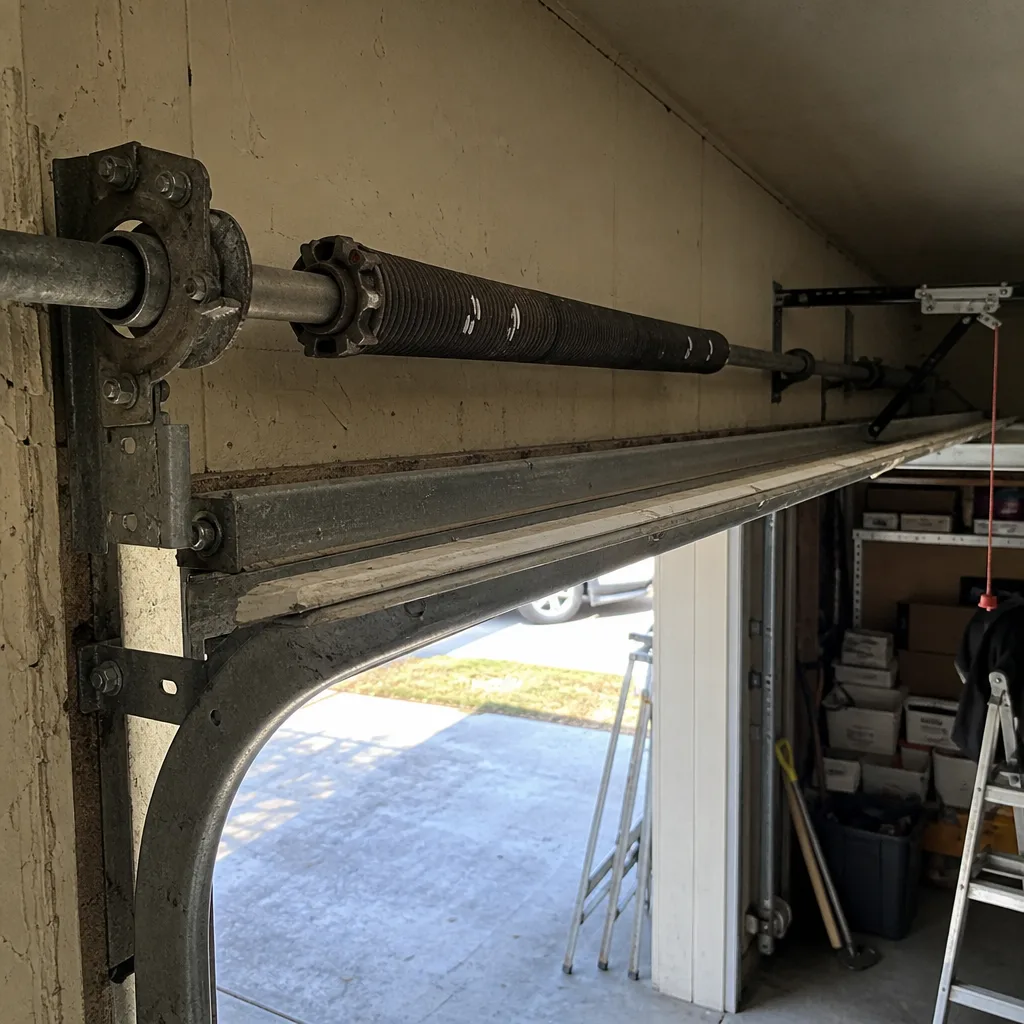 Before
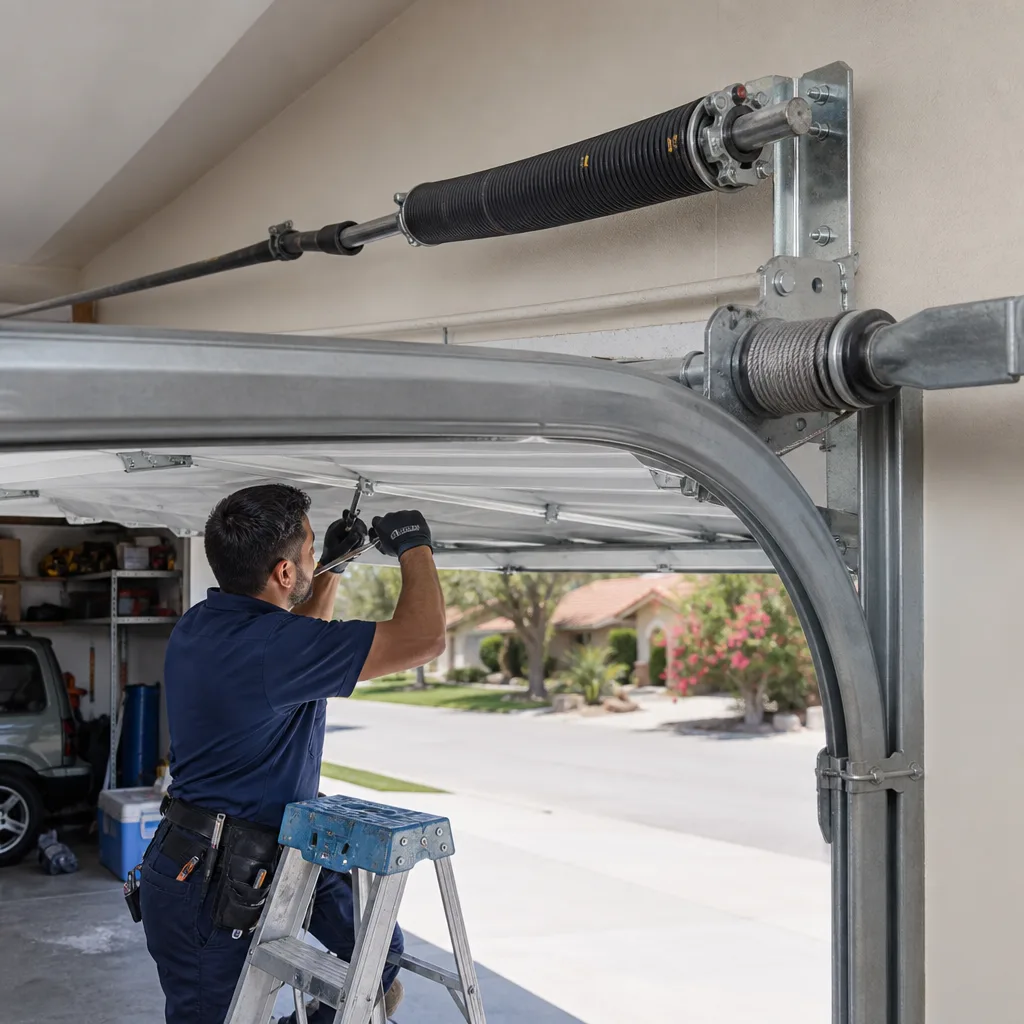 After
AfterSeasonal Garage Door Care for Simi Valley: Year-Round Homeowner’s Guide
Most garage door maintenance guides were written for places with four real seasons. Simi Valley doesn’t have four seasons. It has two stress periods that actually damage doors: the dry heat spike from June through September, when bay temperatures push past 100 degrees and bake the lubricant out of your rollers and hinges, and the Santa Ana wind season from October through February, when sustained gusts flex the door, shift track alignment, and drive grit into every moving surface. If you follow a generic spring-and-fall maintenance calendar here, you’re lubricating on a schedule that assumes a climate we don’t live in. This guide replaces that calendar with one built for Simi Valley, with the exact tasks, intervals, and failure modes that matter for garage doors in this specific valley. For a deeper dive, see our Complete Guide to Garage Door in Simi Valley.
Quick Answer
Seasonal garage door maintenance in Simi Valley should follow a two-period calendar, not four seasons. Service the door in early June, before the heat spike accelerates lubricant breakdown, and again in late October, after the first Santa Ana wind event exposes any shifted tracks, worn bottom seals, or cable drum alignment issues. Between those periods, inspect the bottom seal and track alignment monthly, and reapply the correct high-temperature lubricant every 60 to 90 days during summer.
Table of Contents
- The Simi Valley Two-Period Maintenance Calendar
- Summer Heat: The June Service Window and Why It Matters
- Santa Ana Winds: What They Do to a Garage Door
- Lubricant Selection and Summer Reapplication Intervals
- Dry Climate and Wooden Door Panels: What to Measure
- The Post-Windstorm Check Most Homeowners Skip: Cable Drum Alignment
- Monthly Visual Inspection Checklist for Simi Valley Homeowners
- Common Mistakes to Avoid
BeforeAfterThe Simi Valley Two-Period Maintenance Calendar
Simi Valley’s climate is classified as hot-summer Mediterranean, which sounds pleasant until July arrives and your garage interior measures 110 degrees at 4 p.m. The failure points on a garage door are temperature-sensitive and wind-sensitive, and in Simi Valley those two forces arrive on a predictable schedule. Heat arrives reliably every June and holds through September. Santa Ana winds arrive less predictably but concentrate between October and February, with peak frequency in November and December. That means the maintenance year splits into two service windows, not four.
The late-May to early-June window prepares the door for the heat spike. This is when you lubricate every moving component with a product that won’t break down before Labor Day, check the opener’s force settings because heat changes the door’s weight distribution slightly as metal expands, and inspect the bottom seal for cracks that the dry air will only widen.
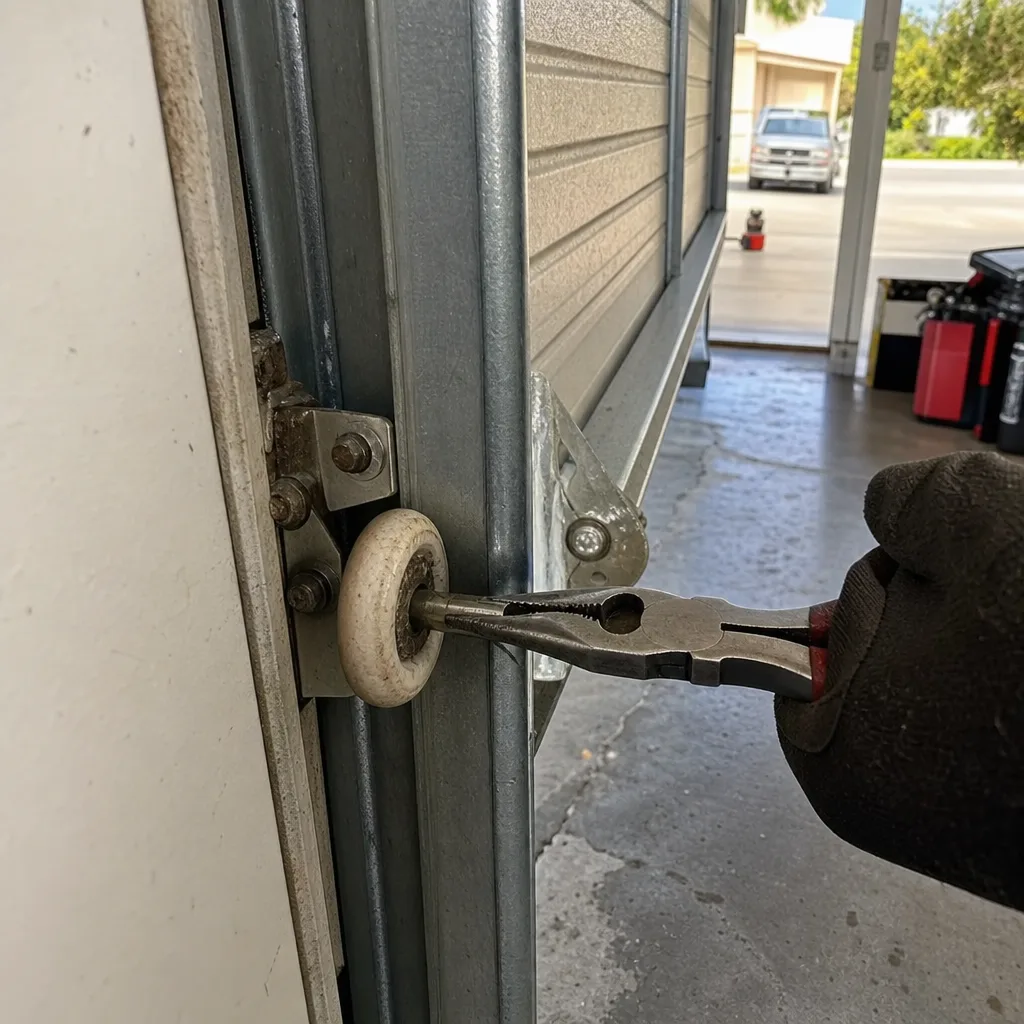
The late-October to early-November window addresses what the first serious wind event has already done. You check track bolts for loosening, verify the bottom seal still contacts the floor evenly, inspect cable drums for any shift, and reapply lubricant before the cooler, dustier air settles in.
A garage door maintained on a standard spring-and-fall schedule in Simi Valley will have its lubricant degraded before the first scheduled reapplication, because 105-degree bay temperatures in July accelerate oxidation at roughly twice the rate those intervals assume. The result is a door that gets progressively louder through August, and by the time the generic fall service date arrives, the rollers have been running dry for six weeks. In our experience across Simi Valley, the doors that need the fewest repairs are the ones serviced in early June and again in late October, with a quick visual check once a month between those windows. Not sure whether to handle checks yourself or call a pro? Read our DIY vs Professional Garage Door: The Simi Valley Homeowner’s Decision Guide.
Summer Heat: The June Service Window and Why It Matters
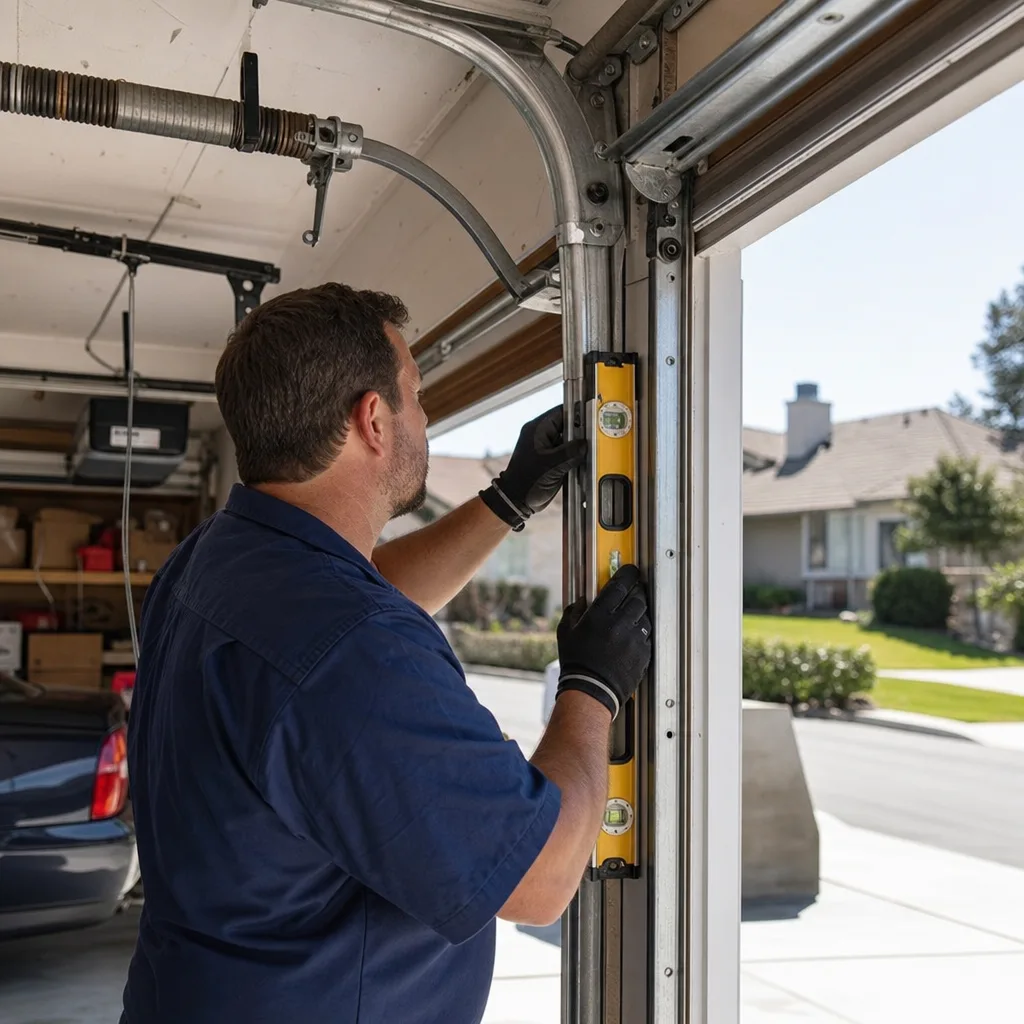
The June service window exists because of what heat does to three specific components: lubricant, torsion springs, and opener logic boards.
Lubricant. A garage door in Simi Valley doesn’t just get hot. It gets hot and stays hot, cycling from a 60-degree overnight low to a 105-degree afternoon high. That daily swing forces lubricant to thin out during the day and congeal at night. Cheap lithium grease, which works fine in coastal climates, tends to separate into oil and thickener under sustained heat, leaving the rollers effectively dry by August. The fix is straightforward: use a garage-door-specific lubricant designed for high-temperature operation, and apply it in June, not March.
Torsion springs. Steel springs lose tension gradually in any climate, but heat accelerates the process because metal fatigues faster at elevated temperatures. A spring that’s been in service for seven or eight years and survived last winter may snap in July simply because the heat pushed it past its fatigue threshold. The June window is when you want a technician to measure spring tension and check for rust or deformation, especially if you own a home built before 2018 where the original springs may be reaching end-of-life.
Logic boards. Garage door openers in Simi Valley garages are often installed in uninsulated spaces that reach 115 degrees by mid-afternoon. LiftMaster, Chamberlain, and Genie logic boards all have thermal limits. Excess heat degrades capacitors more quickly, and a logic board that’s been cooked for three consecutive summers may start showing intermittent failures: the door won’t respond, or it reverses unexpectedly. Checking the opener’s ventilation and making sure nothing is stacked against the motor housing is a simple June task that prevents a September call.
June Service Window Task List
- Lubricate rollers, hinges, springs, and the opener rail with a high-temperature garage-door lubricant.
- Inspect the bottom seal for cracks, checking the full width including the corners where Simi Valley dust accumulates.
- Check torsion spring tension and look for rust, gaps, or deformation.
- Test the opener’s auto-reverse by placing a 2×4 flat on the ground under the door’s path; the door should reverse within two seconds of contact.
- Clear debris from around the opener motor housing to allow air circulation.
- Wipe down photoelectric sensors with a dry cloth; summer dust buildup is a common source of false reversals.
Santa Ana Winds: What They Do to a Garage Door
Santa Ana winds in Simi Valley are not a mild breeze. They’re sustained northeast winds that regularly hit 40 to 60 mph in the foothills and the areas east of the 118, and they arrive with very low relative humidity, often below 10 percent. For a garage door, that combination creates three specific stress points that most maintenance guides never address.
Bottom seal wear. The wind drives dust, sand, and small debris against the bottom of the door. This grit accumulates on the seal and gets dragged across the concrete with every open-close cycle, sanding the rubber down from below. A bottom seal that looked fine in September may show visible gaps by December, and those gaps admit dust, insects, and cold air into the garage. The inspection step is simple: with the door closed, look for daylight under any section of the seal. If you see light, the seal isn’t sealing.
Track alignment. High wind pushes against the exterior face of the door. If the door sits in a side-facing garage that catches the wind directly, the force flexes the door panels and transfers that load to the track. Track brackets can loosen by a quarter-inch or more during a single strong Santa Ana event, especially on older installations with wood framing that has dried and shrunk. A track that’s out of alignment by even an eighth of an inch makes the door work harder on every cycle and accelerates roller wear. The check is visual but precise: run the door up halfway and eyeball the gap between the roller stems and the track on both sides. The gap should be even top to bottom.
Opener limit settings. When wind gusts hit a partially open door, the opener’s RPM sensor reads the increased resistance and the logic board may adjust the travel limits in response. This is a known failure mode with older Chamberlain and Genie openers. The symptom is a door that doesn’t quite close all the way, or closes and immediately reverses. After a major wind event, test the limits by running the door through a full open and close cycle while watching for complete contact with the floor.
If you live in a Simi Valley neighborhood with direct Santa Ana exposure, such as the hillside homes north of Alamo Street or the open areas near Sinaloa Lake, your door takes more wind loading than one tucked into a cul-de-sac on the valley floor. That’s not a reason to panic. It’s a reason to check the track bolts a little more often.
Lubricant Selection and Summer Reapplication Intervals
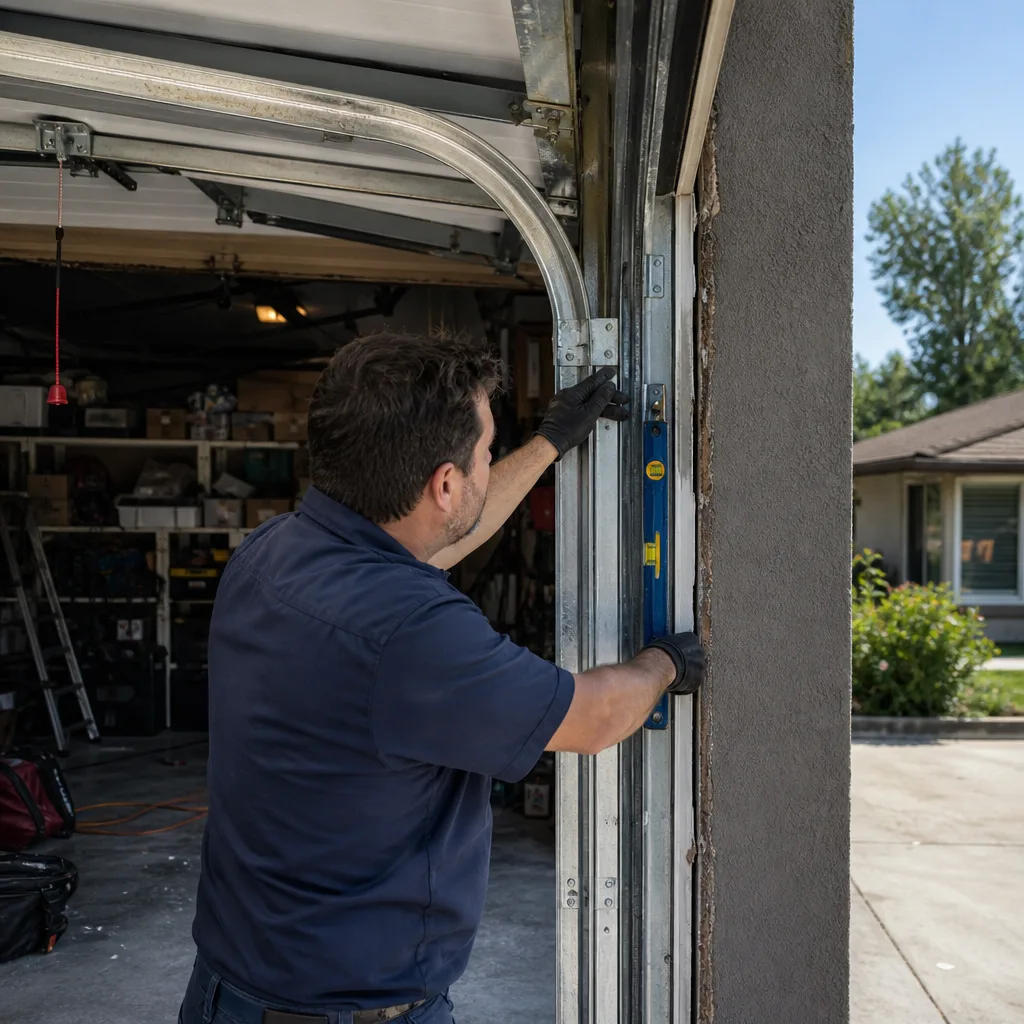
Buying the wrong lubricant for a Simi Valley garage door is the single most common maintenance mistake we run into, and it happens because most hardware store shelves are stocked for climates that don’t exist here.
What holds up in the heat: A garage-door-specific spray lubricant with a base that stays put above 100 degrees. Look for white lithium grease in a sprayable form designed for garage doors, or a dry-film PTFE spray. Products from brands like Clopay and Genie are formulated for this application, but the key specification is not the brand, it’s the high-temperature rating printed on the can. You want something rated for continuous operation at 100 degrees Fahrenheit or higher.
What doesn’t hold up: Standard WD-40 is not a lubricant, it’s a water displacer, and using it on garage door rollers will strip whatever lubrication was there and leave the metal dry within a week. Thick axle grease, the kind you’d pack into a wheel bearing, is too heavy for garage door rollers and will attract dust, turning the roller stems into miniature grinding compounds by August. Three-in-one household oil works on a chain opener rail but breaks down quickly on rollers in high heat.
Corrected reapplication interval. In a moderate climate, lubricating garage door components every six months is sufficient. In Simi Valley, the summer heat cuts that interval roughly in half for products that aren’t specifically formulated for high temperatures. From June through September, reapply lubricant to rollers and hinges every 60 days. If you use a high-temperature dry-film product, you can stretch that to 90 days. The October service window then resets the cycle for the cooler months, when a standard six-month interval works until June arrives again.
One more point that’s specific to our valley: because Simi Valley receives very little rain, the lubrication doesn’t wash away, it oxidizes in place. The old lubricant doesn’t leave, it breaks down into a sticky residue. When you apply fresh lubricant, wipe the rollers and hinges with a clean dry cloth first to remove the degraded film. Otherwise you’re layering fresh product over a layer of varnish.
Dry Climate and Wooden Door Panels: What to Measure
Wooden garage doors in Simi Valley face a different enemy than their steel counterparts. The average relative humidity here runs between 20 and 40 percent for most of the year, and drops into the single digits during Santa Ana events. Wood responds to that dryness by shrinking, and the shrinkage doesn’t happen evenly because the exterior face dries faster than the interior face. That differential creates stress across the panel.
Moisture-cycling warp versus cosmetic checking. The term for what happens to a wooden door panel in a dry climate is moisture-cycling warp. The panel curves because one face is drier than the other. The term for surface cracks that appear in the finish or the outer layer of the wood grain is cosmetic checking. Checking looks alarming but is usually harmless. Warp is the one that matters, because a warped panel binds against the track or the adjacent panel and makes the door work against itself.
The measurement that distinguishes the two is simple, and it’s worth taking once a year. With the door closed, lay a straight edge, such as a carpenter’s level, flat across the interior face of each panel. If you can slide a nickel under the straight edge at the center of the panel, that’s a gap of about 0.075 inches, and it indicates the panel has warped. If the straight edge sits flush but you see hairline cracks in the paint or stain, that’s checking, and it’s cosmetic.
If the measurement shows warp, the panel wasn’t properly sealed on both faces, or the door wasn’t painted with enough edge coverage. Amarr and Clopay both produce wood and wood-look doors, and both instruct that every surface, including the top and bottom edges, must be sealed. In Simi Valley’s dry air, an unsealed bottom edge will pull moisture out of the panel and accelerate warp within a single season. The fix for warp is rebalancing or panel replacement, not re-painting. Painting a warped panel seals the wood but doesn’t correct the deformation.
If you’re planning to buy a wooden garage door for a Simi Valley home, this is the number one thing to discuss with the installer before ordering. Doors can be specified with kiln-dried, vertical-grain boards that are more stable in low humidity, but that specification has to be made at order time. It costs more, and it’s the difference between a door that stays flat for 15 years and one that starts binding in the third Santa Ana season.
The Post-Windstorm Check Most Homeowners Skip: Cable Drum Alignment
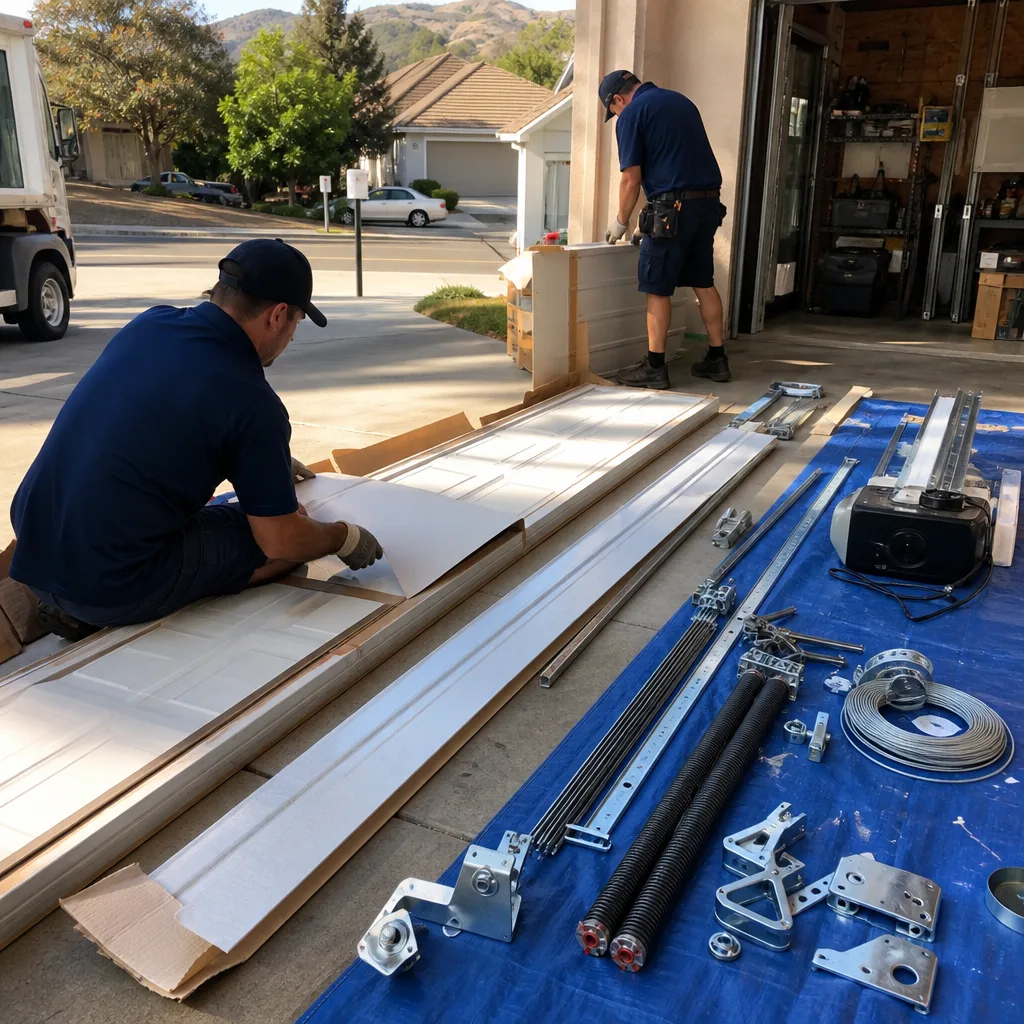
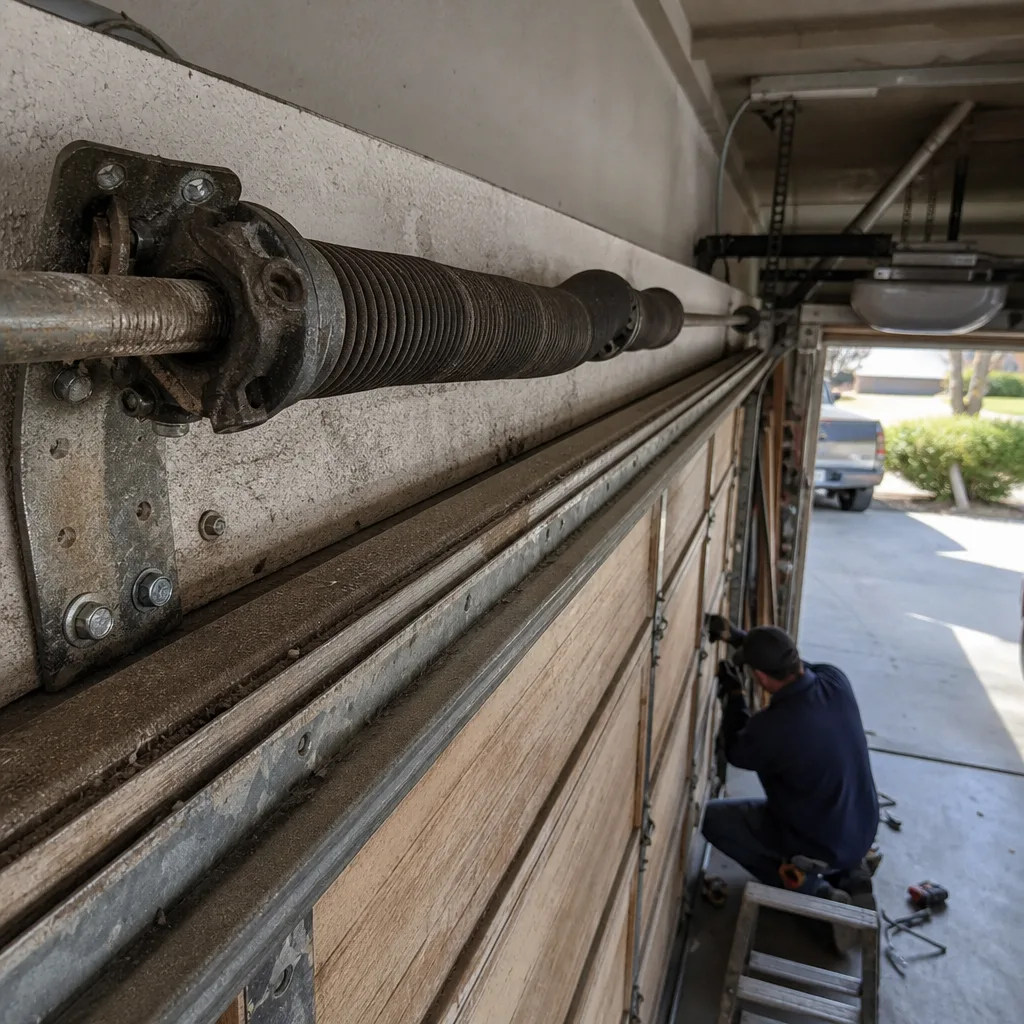
Every garage door with a torsion spring system has two cable drums mounted on the spring shaft, one at each end. The lift cables wind around these drums as the door opens and closes. The drums have machined grooves that keep the cable wrapped neatly in a single layer. When a drum is properly aligned, the cable feeds into the groove cleanly and winds evenly across the drum face. When the drum shifts, even by a sixteenth of an inch, the cable can start to overlap itself. An overlapped cable gets pinched, then it frays, and eventually it jumps the drum entirely.
Santa Ana winds create the conditions for this shift. When high wind flexes the door panels against their track, the load transfers through the lift cables to the cable drums. On doors where the set screws on the drums were never re-torqued after the initial installation, that cyclical loading can back the drum off its original position on the shaft. The door keeps working for a while, then one morning you hear a sharp bang and the door drops crooked, with one cable hanging loose and the other wound tight against the drum.
The inspection takes two minutes and requires no tools. Open the door to about waist height. Look at each cable drum from the side. The cable should be winding into the groove squarely, with no visible gap between the cable wraps and no sign of the cable riding up the side of the drum flange. Look also at the set screws on each drum. They should be tight against the shaft with no visible gap or rust staining around the screw head, which would indicate the screw has been moving.
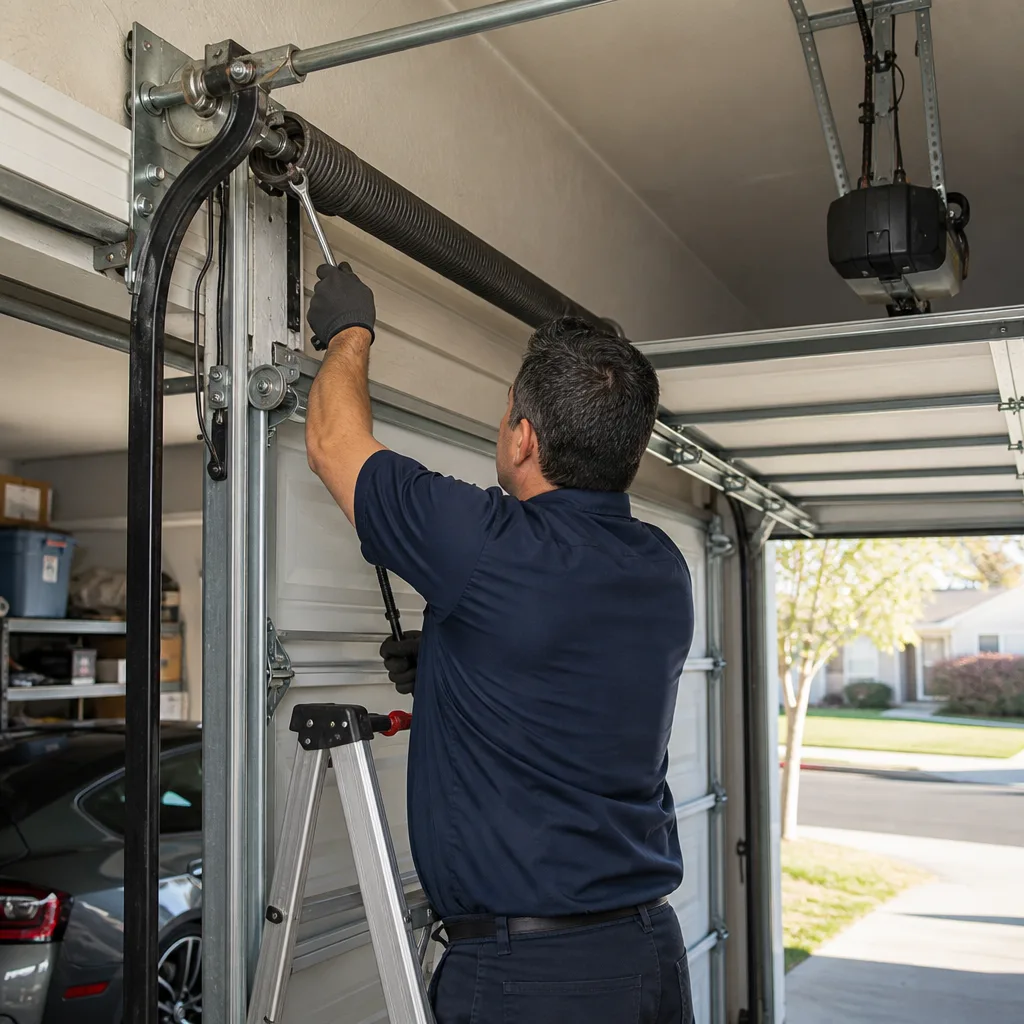
If the cable is not winding cleanly, do not try to adjust the drum yourself. The torsion spring is under enough tension to cause serious injury if it releases. This is one of those components where the safe action is to call a trained technician, and in Simi Valley, the wind season is exactly when we see these calls come in. A drum that’s caught early gets re-seated and the set screws re-torqued. A drum that’s caught late means a snapped cable, a dropped door, and usually a replacement of both cables as a matched pair.
Monthly Visual Inspection Checklist for Simi Valley Homeowners
Between the June and October service windows, a monthly visual check catches the problems that develop gradually. This is a five-minute routine, and most of it is looking, not touching.
- Bottom seal. With the door closed, look along the bottom from inside the garage. Any daylight means the seal needs replacement. In Simi Valley’s dry air, seals crack faster than they wear down, so look for splits in the rubber, especially at the corners.
- Track alignment. Run the door up and watch the rollers. They should stay centered in the track without the stems scraping the track edges. Listen for grinding or clicking that changes pitch as the door moves.
- Lubricant condition. Wipe a finger along the roller stem. If it comes away dry and dusty rather than lightly oily, the rollers need lubrication, regardless of what the calendar says.
- Cable condition. Look at the lift cables on both sides. Fraying usually starts near the bottom bracket, where the cable attaches to the door. If you see individual wire strands separating, the cable is on its way out.
- Sensor lenses. The photoelectric sensors at the bottom of the track openings collect dust quickly in Simi Valley’s dry air. Wipe them with a dry microfiber cloth every month, or more often during Santa Ana season.
- Balance test. Pull the opener release handle and lift the door manually. It should move smoothly and stay put at the halfway position. If it drops, a spring has lost tension and the opener is doing more work than it should be.
Writing these findings down helps. A simple note on the calendar with the date and what you saw gives you a record, and it gives a technician a starting point if something does go wrong. For more guides & resources on keeping your door running smoothly, visit our blog. That’s the same philosophy we work by at Servo Garage Doors Simi Valley: documentation before diagnosis, so the evidence leads the repair.
Common Mistakes to Avoid
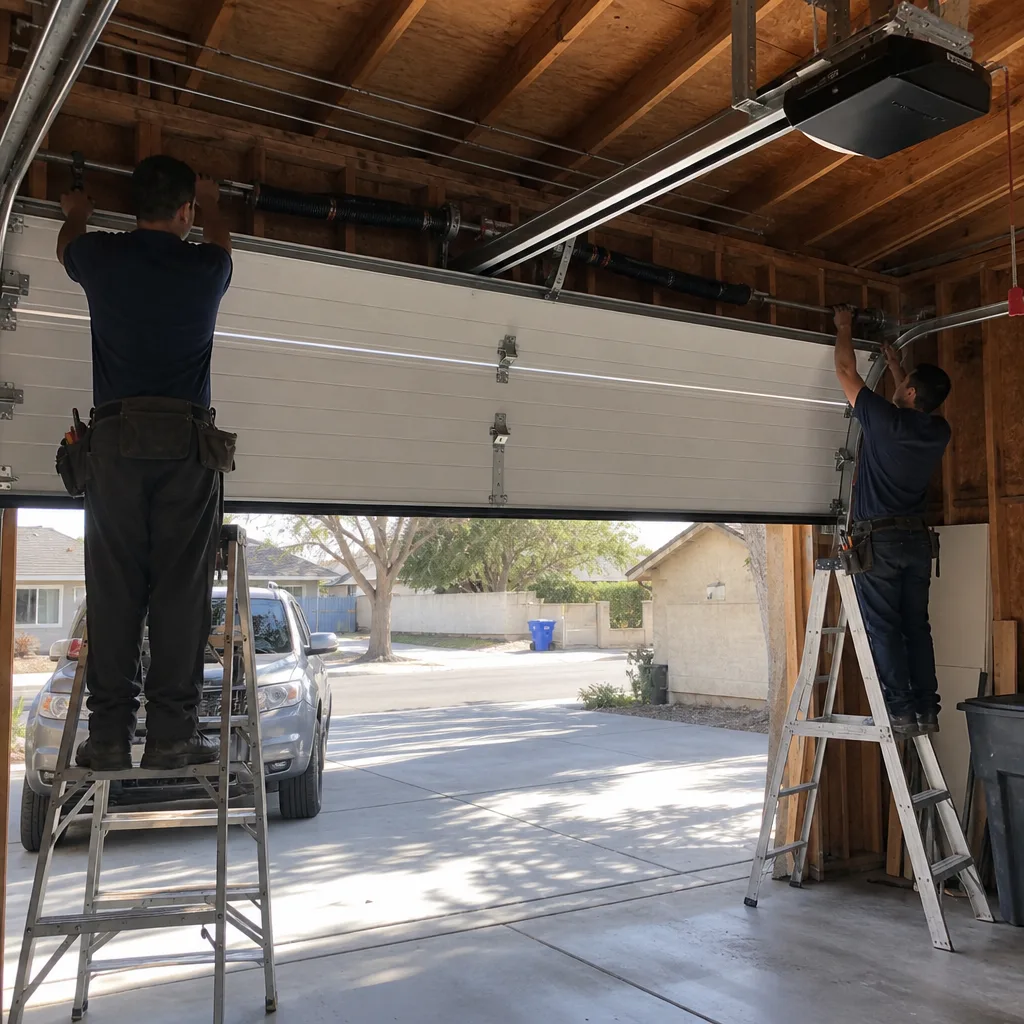
- Lubricating on a spring and fall schedule. Simi Valley’s heat spike makes that calendar wrong. If you lubricate in March and again in September, you’re running dry through August, which is exactly when the heat is doing the most damage. Switch to early June and late October.
- Using WD-40 on rollers and hinges. WD-40 displaces moisture, and it will strip existing lubricant from the metal. Within a week the component is drier than it was before you sprayed it. Use a garage-door-specific lubricant with a high-temperature rating.
- Ignoring a noisy door because it still opens. A grinding or scraping noise is the door telling you something is wrong. If you wait until the door actually fails, the repair is almost always more expensive. Noise is the cheapest diagnostic signal your door will ever give you.
- Skipping the cable drum check after wind events. When the Santa Ana winds come through, most Simi Valley homeowners check their fences and roof tiles, but not their garage door cables. A drum that’s shifted a fraction of an inch is a $150 re-alignment. A cable that jumps the drum is a dropped door and a $350 to $600 repair.
- Painting a warped wooden panel to fix it. Paint seals the wood, but it doesn’t pull a warped panel back into plane. The panel will keep binding against the track and the paint will crack along the stress line. Measure the warp with a straight edge and decide from the measurement, not the appearance.
- Calling a technician without knowing what you’re hearing. Before you call, run the door through a cycle and write down when the noise happens, where it’s coming from, and whether the door moves smoothly. A homeowner who can describe the symptom accurately saves the technician diagnostic time, and it gets you a more accurate estimate on the first visit.
When to Call a Professional
Some tasks in this guide are safe for a homeowner. Lubricating rollers, wiping sensors, checking the bottom seal, running a balance test: all fine. Two things are not safe. The torsion spring and the lift cables are under high tension at all times, and if either one lets go while you’re working near it, the injury is serious and permanent. Do not attempt to adjust, replace, or reposition a torsion spring, a cable drum, or a lift cable on your own. If your balance test shows a dropping door, if you see frayed cables, or if the cable drum has shifted after a wind event, that’s the point where you call a professional. Servo Garage Doors Simi Valley offers free estimates in Simi Valley, and we bring the documentation: a written price before any work starts, per Clause 1 of The Haven Standard, and a photo record of what we found when we leave. Call (661) 964-4530.
Frequently Asked Questions
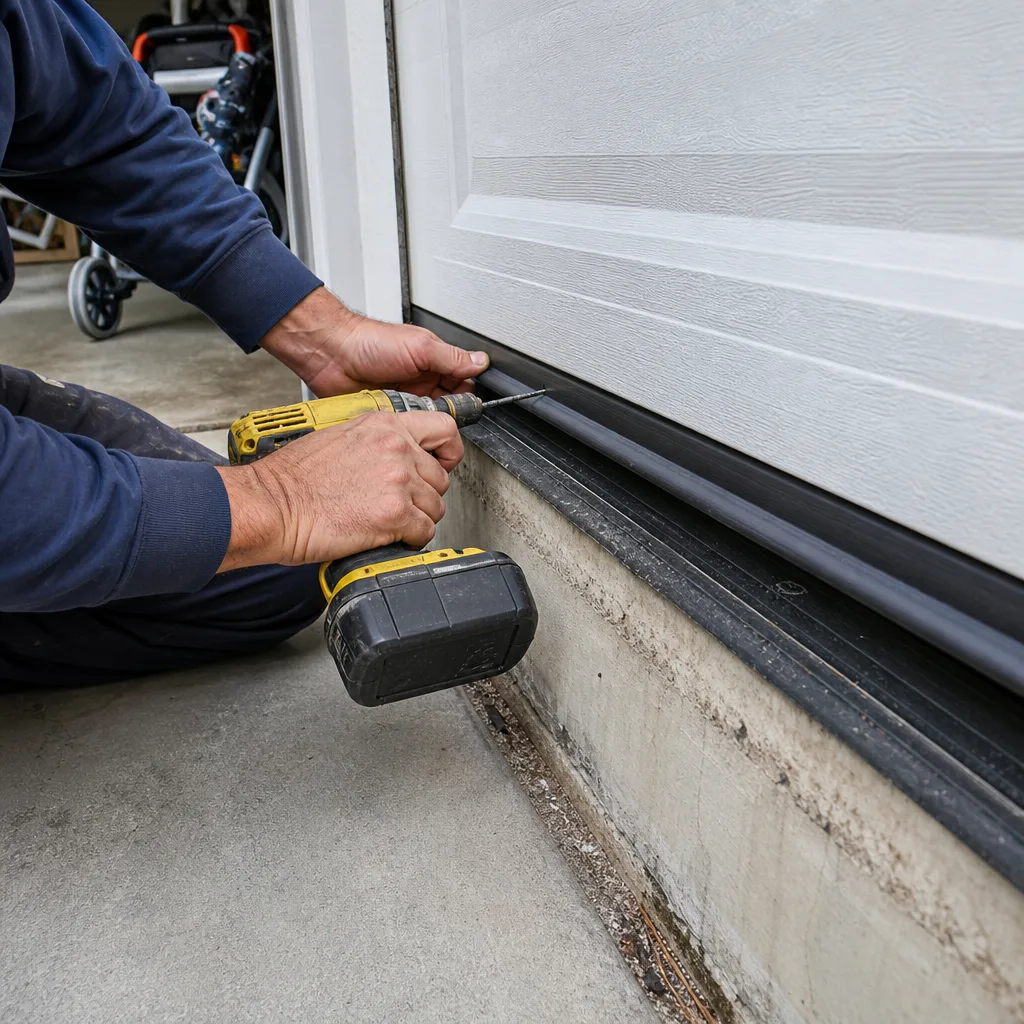
Every 60 to 90 days during the summer heat season, from June through September, and then again in late October. The 105-degree temperatures here break down standard lubricants roughly twice as fast as the six-month interval that generic guides recommend. Between October and May, a single lubrication in the late-October service window carries the door through the cooler months. For a full walkthrough of what a Simi Valley garage door needs, see our Garage Door Repair in Simi Valley guide.
A standard tune-up in Simi Valley typically runs $120 to $200, including lubrication, track inspection, spring tension check, and opener force testing. For a full breakdown of what drives these numbers, see our Garage Door Cost Breakdown: The Simi Valley Homeowner’s Reference for 2026. If a technician finds worn rollers, cracked seals, or a failing spring, those parts are additional, and you should see a written line-item price before any work is approved. That’s how we work at Servo Garage Doors Simi Valley: a flat, written price and written scope before the first tool comes out, per Clause 1 of The Haven Standard. Call (661) 964-4530 for an exact quote, and the estimate is free.
Yes. Emergency calls are answered by a real person 24 hours a day, 7 days a week, including holidays, and a named technician is dispatched with an on-the-way text, not a callback window. If your door won’t open and you live in Simi Valley, call (661) 964-4530 and we’ll get a technician out the same day. For more on what to expect when your door fails, see our Garage Door Opener Repair & Installation in Simi Valley page.
The heat evaporates and oxidizes the lubricant on your rollers and hinges, so by August the metal is running dry. The parts don’t fail all at once, they wear gradually, and the noise is the first sign. Re-lubricating with a high-temperature product in June and again in August usually quiets the door. If the noise persists after lubrication, the rollers themselves may be worn, and that’s worth a professional look. Our Servo Garage Doors Simi Valley home page has more on what to expect from a service visit.
No. The price is quoted in writing and agreed before any work starts, and it doesn’t change unless you approve additional work in writing. Clause 1 of The Haven Standard means a flat, written price with a written scope delivered to you before the first tool comes out. You’ll also receive a documented photo record of what the technician found and what was done, so you can see the evidence for yourself. Call (661) 964-4530 for a free estimate.
Yes. We service and install all eight major brands, including LiftMaster, Chamberlain, Genie, Clopay, Amarr, Wayne Dalton, Craftsman, and Raynor. If you have a newer opener or an older one, the parts are available and our technicians carry the common replacements on the truck. For a full overview of what we do with openers specifically, see Garage Door Installation in Simi Valley or call (661) 964-4530 with your brand and model.
Written by Marcus Deller, Owner at Servo Garage Doors Simi Valley, serving Simi Valley since 2015.